0
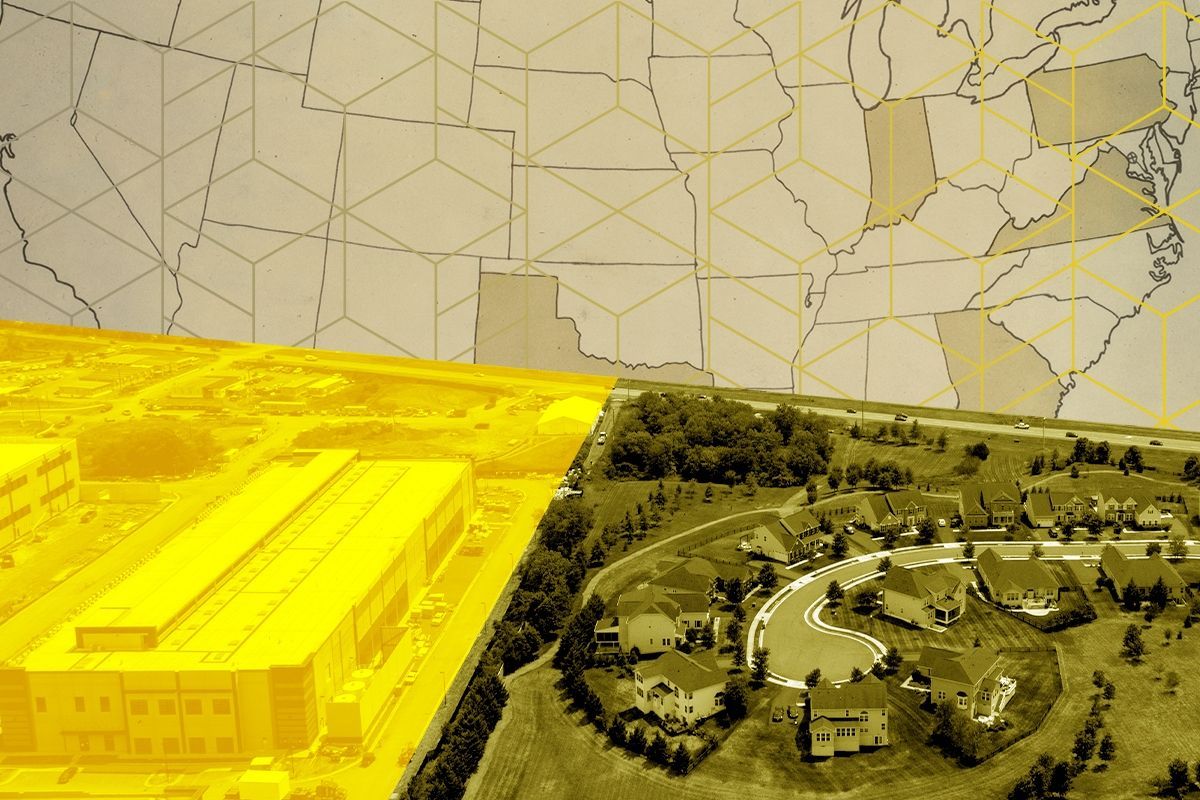
Data centers are swallowing American politics. But on the policy front, states are only in the infant stages of regulating them.
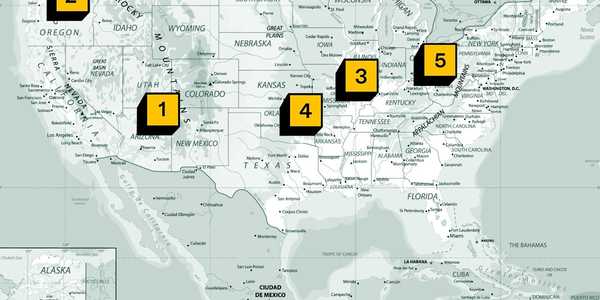
After reviewing legislative responses in the top five states for data center fights – Virginia, Pennsylvania, Texas, Georgia and Indiana – I found the seeds of new rules around sales taxes for computer equipment, project siting, energy and water usage, non-disclosure agreements and grid upgrade costs. But it’s unclear how much can actually be accomplished in any one direction – development restrictions, environmental protections, or tax revenue – in many of these places without changes in political control and approaches to governance.
At the same time, the need for action is only growing more urgent. Polling clearly shows that Americans dislike data centers, especially when they serve artificial intelligence. Thanks to the twin political pressures of inflation and energy prices, this is fast becoming one of the key issues dominating state policymaking.
“This has moved from the world of energy wonks to political crisis,” Costa Samaras, director of the Scott Institute for Energy Innovation at Carnegie Mellon University, told me. Samaras, a former senior policy adviser to the Biden White House, thinks we’re still just at the “first stage” of policymaking at the state level, driven largely by elected leaders’ fear of being dinged at the ballot box should electricity bills continue to rise. “Issues like these can escape containment from one subsector to being a governor’s problem. And it is now a governor’s problem.”
If you ask representatives of the data center sector, they’ll certainly agree that policymakers are in fight-or-flight mode. “There’s a tendency for policies to be reactive in much more of a heavy-handed, negative, we-need-to-stop type of respect,” Dan Diorio, vice president of state policy for the Data Center Coalition, told me Thursday evening in an interview.
Some smaller states like Maine are considering blanket moratoria that would clamp a lid on halt industry growth. But those are the exceptions at the moment. That’s much less likely to happen in a place like Virginia, the industry’s No. 1 destination for new development, which is also the top state for data center conflicts according to Heatmap Pro data. The Commonwealth is almost certainly the furthest ahead on regulating data centers, but is also far from enacting any blanket restrictions.
The three big issues where Virginia lawmakers have focused their attention are site restrictions, water use requirements, and changes to the state’s largest tax exemption for data centers. On siting and water policy, state legislators are moving forward with changes that industry sees as amenable and reached through consensus, Diorio told me. For example, on Tuesday, the state legislature sent a bill to Governor Abigail Spanberger’s desk that would set up a new “high use energy facility” permitting program. If enacted, this special process would provide for data center-centric conflicts to be resolved through a site assessment process, with an eye toward noise and proximity to schools or residential homes. Alongside that bill was another requiring data centers to publicly disclose water use, a nod to calls from activists for greater transparency around H2O consumption.
Beyond those bills, though, the big kahuna in Virginia is the state’s ginormous sales tax exemption for most data centers. The tech sector credits this exemption for the industry’s major growth in the state, as it allows developers to write off computer equipment if they create at least 50 new jobs. An increasing number of lawmakers, however, argue that the tax break costs more than it’s bringing in, both in revenues and in employment gains. The state Senate leadership wants to scale back or scrap the exemption entirely in the state’s next budget, though members of the House have pushed back in response to opposition from the electrical trades.
In Pennsylvania, the No. 2 spot for data center conflicts, there’s a bit more tension on the horizon. State House Democrats shepherded legislation in late March to set up a comprehensive regulatory program that would compel data center companies to cover energy infrastructure upgrade costs, reduce their power usage when there’s higher strain on the grid, and pair any increase in incremental electricity demand with new solar, wind or battery storage. Opposition from industry groups, including the Data Center Coalition, has made legislators skittish, however. The bill now sits in the state Senate, where it has yet to be scheduled for a hearing.
Like Pennsylvania, Georgia is a politically-purple state where significant reform seems unlikely. The state legislature adjourned Friday with lawmakers opting not to advance a bill ending a large tax break for data center computer equipment, and a separate bill banning non-disclosure agreements couldn’t get out of a single committee.
Both states are struggling to resolve the disparate concerns held by cliques of lawmakers, from big business Republicans to moderate Democrats to stalwart anti-data center politicians of either party. In both states, it’s likely that policy – and populist angst – will register most quickly at the local level, at least through the remainder of the year, while broader statewide changes ride on outcomes in the 2026 election, as Pennsylvania and Georgia will each vote on control of the governor’s mansion.
The gubernatorial agenda is a bit of a mystery in both states at the moment, however. Pennsylvania’s Josh Shapiro – a rumored 2028 presidential contender – has claimed in recent weeks that he’ll advance an executive-level suite best practices for data center development called GRID, or the Governor’s Responsible Infrastructure Development standards, though he has not yet disclosed how they will be implemented other than to say they’ll be requisites for accessing faster permitting timelines at the state level. His office did not respond to a request for comment on the matter. But a broad-stroke description of the standards states they’ll force data center developers to “bring their own power generation online or fully fund new generation to meet their needs – without driving up costs.” The standards will purportedly also mandate some sort of “transparency and community engagement,” a nod to the rampant conflict over non-disclosure agreements playing out in pockets across the Keystone State.
Meanwhile, in Georgia, leading Republican candidate Brad Raffensberger has said only that he’ll make data center companies pay more for power they use.
The other two states in the top five – Texas and Indiana – are solidly under Republican control and, for the most part, stable politically. Of the two, Texas is further ahead of the curve; last year, the state passed a bill teeing up new large load interconnection standards that will soon come into effect for facilities using 75 megawatts of power or more. Many of these standards exist to ensure that projects attached to the grid are actually bankable by requiring companies to provide ERCOT with details on siting, permitting and energy use. In March, the Texas Republican Party, which has long been ideologically pro-business, adopted a resolution requesting that state agencies require independent assessments of data center projects and create “planning and regulatory standards” on their water use, potentially by mandating “water-efficient cooling technologies.”
In Indiana meanwhile, the likeliest outcome is no progress towards anything particular. While there is pressure from the grassroots to act on something, the legislative conversation is mostly focused on siting and taxes, with elected leaders split on whether to prioritize streamlining permitting for energy and tech infrastructure or scrapping the sales tax exemption for data centers to plug holes in the state budget. “Its hard to predict whether this different dynamic we’re in right now is going to change things at the state level, shake up major elections, or be confined to local fights,” Indiana environmental activist Ben Inskeep of Citizens Action Coalition told me.
Where this leaves us is holding a grab bag, waiting on the results of elections that may or may not provide any additional clarity. Data centers have become the watchword for politicians trying to invoke the pain of inflation, so they’ll certainly be a factor in campaigns. But where actual policy will go is anybody’s guess and could remain mired in factional tug-of-wars.
“Some folks are trying to attack it from the data center side. Some folks are trying to attack it from the supply side. Some folks are doing both,” Samaras told me. “It’s because inflation is still a high concern for people. They’re focused on prices.”