0
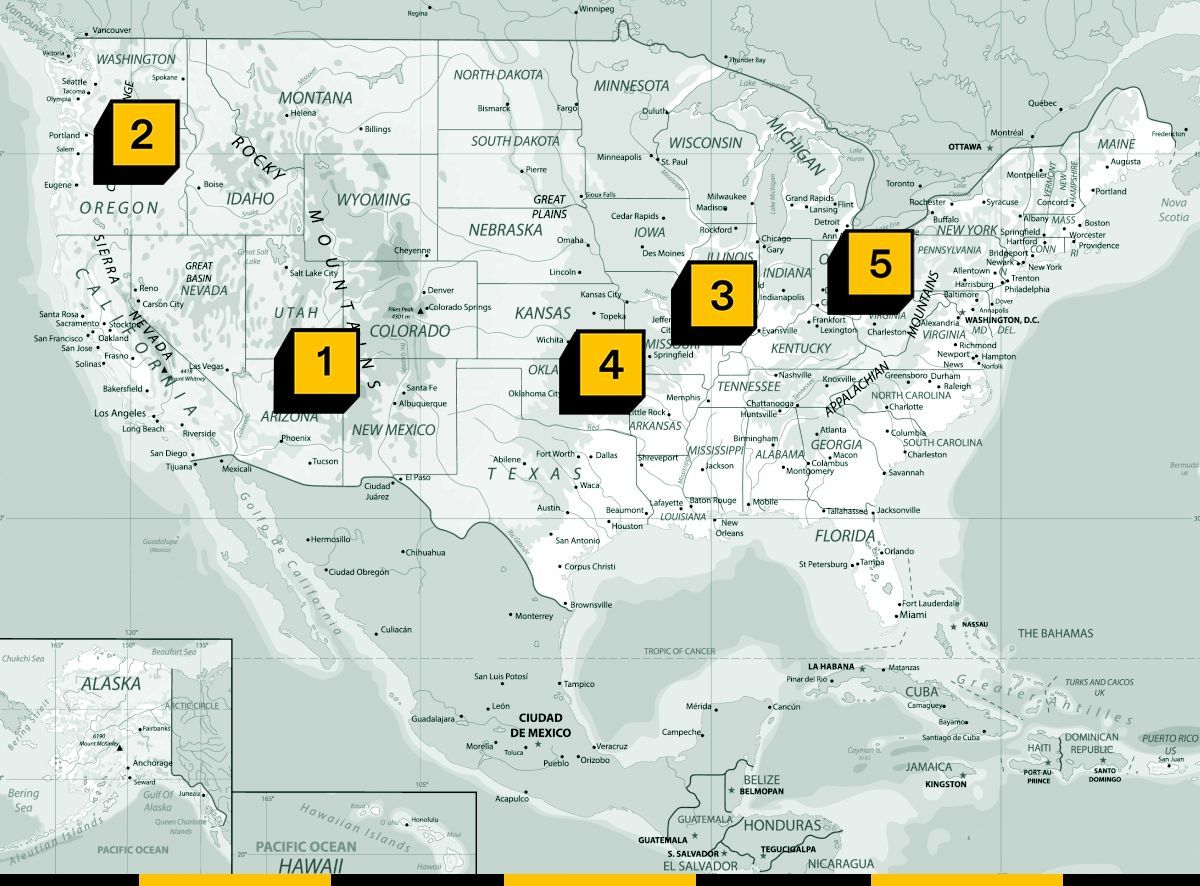
1. Apache County, Arizona – A Republican member of Congress is now trying to convince the Trump administration to intercede against a large, controversial wind farm in the White Mountains of northern Arizona.
- Representative Eli Crane, a stalwart supporter of President Trump, is lobbying three separate federal agencies – the Federal Aviation Administration, the Fish and Wildlife Service, and the Federal Communications Commission – to stop Repsol’s Lava Run wind project, according to audio of a tele-town hall from late March posted to social media this Thursday. Per the audio, Crane told attendees he opposes the project and is doing everything he can to get Trump officials to intercede in order to stop future construction.
- Lava Run is situated entirely on state and county land, which Crane said will make it challenging for him to intercede. But the project is definitely vulnerable to federal intervention — it’ll likely require federal permits for disturbing protected birds, according to court filings we scooped last year. I reached out to the Fish and Wildlife Service to ask about Crane’s letter, and I’ll let you know if I hear back from them.
- Apache County, a signpost for renewable energy’s struggles in the sunniest state, is in the process of updating its renewable energy ordinance to be more restrictive, including by raising the wind turbine setback to 1.5 times the turbine’s height from properties and roadways. It’s a weird county in terms of renewable energy risk, with only a 49 risk score in the Heatmap Pro database but a significant quantity of protected land that weighs heavily on that score.
2. Morrow County, Oregon – Amazon has settled a lawsuit over its headline-grabbing data center pollution concerns.
- Last fall, an investigative report published by Rolling Stone alleged that an Oregon data center campus overseen by Amazon Web Services was potentially responsible for poisoning the drinking water for surrounding communities with nitrate chemicals. The story compared the situation to Flint, Michigan, and it became one of the more oft-referenced examples of water impacts I hear from Average Joes about data centers.
- This week Amazon agreed to pay Oregonians suing the tech company for damages around the alleged contamination. The sum may benefit those affected, but it’s worth noting that the agreed-upon amount – a little over $20 million, is relatively paltry for the company – a little over $20 million, and somewhere from 25% to-30% will go to the plaintiffs’ lawyers, per local media reporting. The company is making no admission of guilt through the settlement agreement.
3. Jefferson County, Missouri – If you’re looking for a data center approved despite frustrations on the ground, look no further than Festus, Missouri.
- Real estate company CRG Acquisition won big on Monday as the city council in the mid-size town greenlit moving forward with consideration of its data center project, which the company has said will involve more than $6 billion in capital investment. Festus will now ink an infrastructure development deal with CRG, largely because of potential tax revenue, according to local TV news reporting. The company will still need to submit comprehensive plans for the project before it can begin construction.
- Despite this progress, Festus is also a clear case of transparency troubles. Anti-center advocates have made hay of texts and emails between city officials and CRG, which has in fueled contests for each of the city council’s seats.
4. Wagoner County, Oklahoma – Speaking of feuds with local elected officials, pour one out for the city manager of the small Oklahoma town of Coweta.
- In Coweta, activists fighting a large Beale Infrastructure data center project requested the text messages of their city manager, Julie Casteen. What they found: Casteen telling a colleague that data center protestors “are just not very smart and can’t accept change.” Casteen wound up issuing an apology, saying that the statement “was inappropriate and hurtful.”
- Funny enough, the Beale project is already dead. The real estate company withdrew its application for the project right around when the text messages went public.
5. Belmont County, Ohio – Here’s a split-screen with environmental consequences, as thousands of acres of wildlife habitat go to fracking while large solar projects elsewhere in the state stutter.
- Ohio’s Oil and Gas Land Management Commission approved four different parcels of land for fracking this week in the Egypt Valley Wildlife Area, a refuge previously home to mining before it was quartered off for conservation. Taken together, the parcels total more than 7,000 acres.
- It’s worth noting that the commission reportedly approved these parcels for sale to fracking interests in a 20-minute meeting. Compare that to the lengthy public comment periods and hearing schedules required for solar projects in areas with opposition – like in Clark County, where Invenergy’s Sloopy Solar project is slowly working its way through public meetings with aggrieved would-be neighbors. Or in Morrow County, where local frustrations vented in public meetings led the Ohio Power Siting Board to reject an Open Road Renewables solar farm in mid-March.
- This isn’t to say public comment is inherently good or bad. But when you consider how fracking interests have it easy in Ohio … Well, the state continues to look unfriendly for any renewables developer.