Over the past decade, the oil and gas industry has sharpened its drilling skills, extracting fossil fuels at greater depths — and with more precision — than ever before. What if there was a way to tap those advances to generate zero-carbon energy?
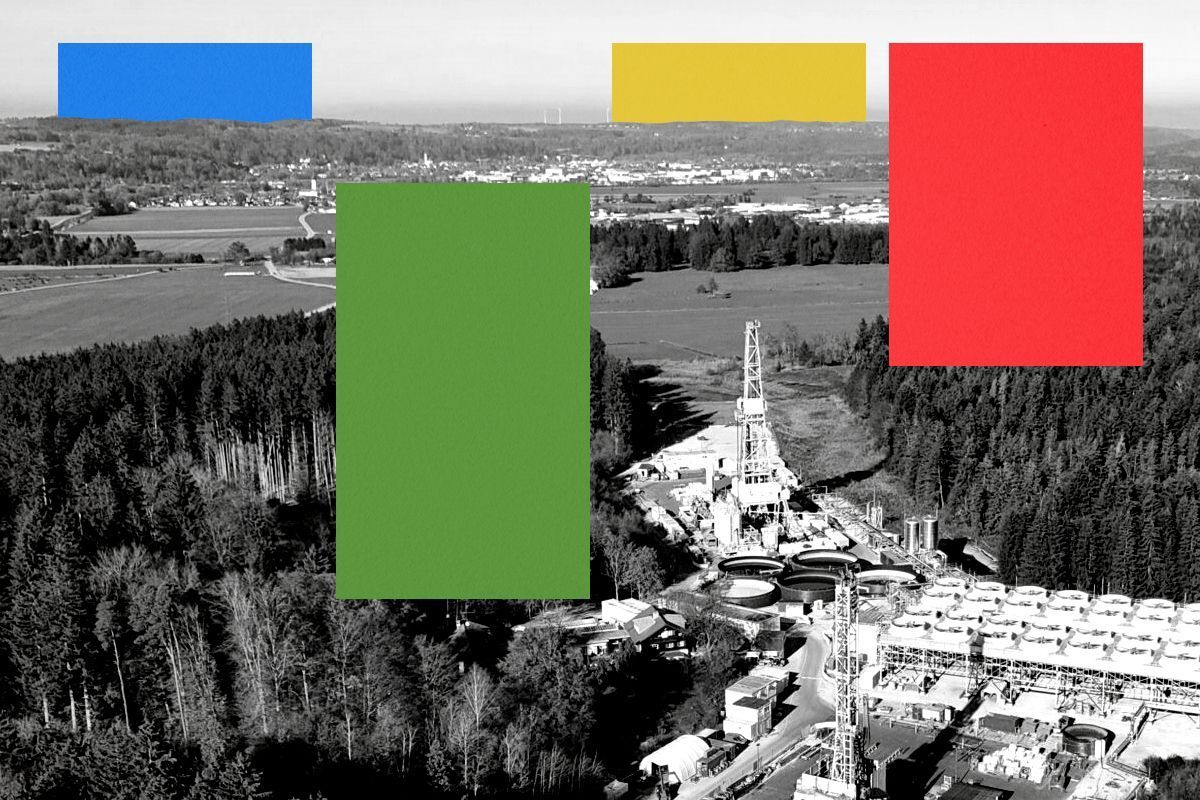
The Canadian company Eavor (pronounced “ever”) says it can do so. Its closed-loop geothermal system is already producing heat at competitive prices in Europe, and it says it will soon be able to drill deep enough to fuel the electricity system, too. It just opened a first-of-its-kind demonstration facility in Germany, which is successfully heating and powering the small hamlet of Geretsreid, Bavaria.
On this week’s episode of Shift Key, Rob and Jesse chat with Mark Fitzgerald, the president and CEO of Eavor, about how its new technology works, how it differs from other forms of advanced geothermal, and why Europe is a good test bed for heat-generating projects. We also chat about what Mark, who previously ran Petronas Canada, learned in his 35 years in the oil industry.
Shift Key is hosted by Robinson Meyer, the founding executive editor of Heatmap, and Jesse Jenkins, a professor of energy systems engineering at Princeton University.
Subscribe to “Shift Key” and find this episode on Apple Podcasts, Spotify, Amazon, or wherever you get your podcasts.
You can also add the show’s RSS feed to your podcast app to follow us directly.
Here is an excerpt from our conversation:
Jesse Jenkins: So at the surface, this is a very limited footprint, right? It’s a fairly small power plant, and then underground, you’ve got this kilometer-scale heat exchanger effectively that you’ve built without fracturing, but with a lot of drilling involved, right? So the key, I think, for making that work is to continually advance the economics of drilling.
What is Eavor’s strategy there for bringing down the cost of drilling these closed loops so that they become cost competitive despite the large amount of total miles drilled that you have to — or kilometers drilled that you have to put down?
Mark Fitzgerald: That’s a great point, Jesse, and I would reinforce that drilling technology, or drilling efficiency, has been something that’s been talked about and understood across the globe for a hundred-plus years. So we are not creating a new method of drilling. We are not looking for something that hasn’t been already done across any of the unconventional players in North America, any of the big drilling or service companies or operators around the globe.
What we are doing is changing the trajectory, and changing the application of that drilling methodology to create the underground radiator, as you would talk about. My background — I spent 36 years in oil and gas, a great proportion of that in the unconventional space before I had this amazing opportunity to join Eavor. And so I understand how, through sound engineering, sound geoscience, proper modeling, that cost compression will occur. One of the best examples that I point to is, we completed six laterals — so six of these horizontal wells, or these forks, at a time, connected them in Geretsreid, our first facility in Germany. The fourth and fifth laterals were done at 50% of the cost of the first two. And so already, in moving from lateral one to lateral six, we’ve seen a reduction of 50% in the cost structure.
The second is that in terms of pace of drilling, the faster you drill the lower costs you incur. The pace of drilling for us on those fifth and six laterals was three times what it was on lateral one and two.
Mentioned:
Previously on Shift Key: Why Geothermal Is So Hot Right Now
Jesse’s upshift; Rob’s downshift.
This episode of Shift Key is sponsored by …
Heatmap Pro brings all of our research, reporting, and insights down to the local level. The software platform tracks all local opposition to clean energy and data centers, forecasts community sentiment, and guides data-driven engagement campaigns. Book a demo today to see the premier intelligence platform for project permitting and community engagement.
Music for Shift Key is by Adam Kromelow.