GLOBALVARS
0
The appeal of next-generation nuclear technology is simple. Unlike the vast majority of existing reactors that use water, so-called fourth-generation units use coolants such as molten salt, liquid metal, or gases that can withstand intense heat such as helium. That allows the machines to reach and maintain the high temperatures necessary to decarbonize industrial processes, which currently only fossil fuels are able to reach.
But the execution requirements of these advanced reactors are complex, making skepticism easy to understand. While the U.S., Germany, and other countries experimented with fourth-generation reactors in earlier decades, there is only one commercial unit in operation today. That’s in China, arguably the leader in advanced nuclear, which hooked up a demonstration model of a high-temperature gas-cooled reactor to its grid two years ago, and just approved building another project in September.
Then there’s Japan, which has been operating its own high-temperature gas-cooled reactor for 27 years at a government research site in Ibaraki Prefecture, about 90 minutes north of Tokyo by train. Unlike China’s design, it’s not a commercial power reactor. Also unlike China’s design, it’s coming to America.
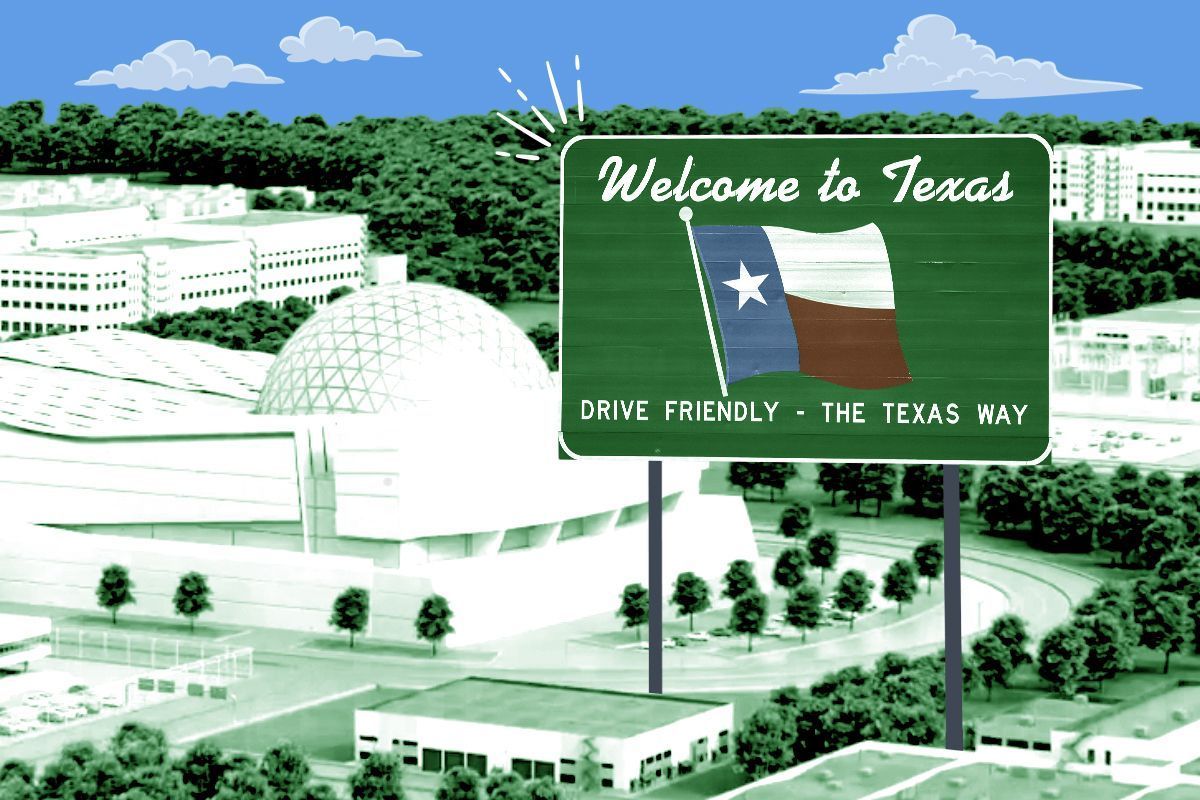
Heatmap has learned that ZettaJoule, an American-Japanese startup led by engineers who worked on that reactor, is now coming out of stealth and laying plans to build its first plant in Texas.
For months, the company has quietly staffed up its team of American and Japanese executives, including a former U.S. Nuclear Regulatory Commission official and a high-ranking ex-administrator from the industrial giant Mitsubishi. It’s now preparing to decamp from its initial home base in Rockville, Maryland, to the Lone Star State as it prepares to announce its debut project at an as-yet-unnamed university in Texas.
“We haven’t built a nuclear reactor in many, many decades, so you have only a handful of people who experienced the full cycle from design to operations,” Mitsuo Shimofuji, ZettaJoule’s chief executive, told me. “We need to complete this before they retire.”
That’s where the company sees its advantage over rivals in the race to build the West’s first commercial high-temperature gas reactor, such as Amazon-backed X-energy or Canada’s StarCore nuclear. ZettaJoule’s chief nuclear office, Kazuhiko Kunitomi, oversaw the construction of Japan’s research reactor in the 1990s. He’s considered Japan’s leading expert in high-temperature gas reactors.
“Our chief nuclear officer and some of our engineers are the only people in the Western world who have experience of the whole cycle from design to construction to operation of a high temperature gas reactor,” Shimofuji said.
Like X-energy’s reactor, ZettaJoule’s design is a small modular reactor. With a capacity of 30 megawatts of thermal output and 12 megawatts of electricity, the ZettaJoule reactor qualifies as a microreactor, a subcategory of SMR that includes anything 20 megawatts of electricity or less. Both companies’ reactors will also run on TRISO, a special kind of enriched uranium with cladding on each pellet that makes the fuel safer and more efficient at higher temperatures.
While X-energy’s debut project that Amazon is financing in Washington State is a nearly 1-gigawatt power station made up of at least a dozen of the American startup’s 80-megawatt reactors, ZettaJoule isn’t looking to generate electricity.
The first new reactor in Texas will be a research reactor, but the company’s focus is on producing heat. The reactor already working in Japan, which produces heat, demonstrates that the design can reach 950 degrees Celsius, roughly 25% higher than the operating temperature of China’s reactor.
The potential for use in industrial applications has begun to attract corporate partners. In a letter sent Monday to Ted Garrish, the U.S. assistant secretary of energy in charge of nuclear power — a copy of which I obtained — the U.S. subsidiary of the Saudi Arabian oil goliath Aramco urged the Trump administration to support ZettaJoule, and said that it would “consider their application to our operations” as the technology matures. ZettaJoule is in talks with at least two other multinational corporations.
The first new reactor ZettaJoule builds won’t be identical to the unit in Japan, Shimofuji said.
“We are going to modernize this reactor together with the Japanese and U.S. engineering partners,” he said. “The research reactor is robust and solid, but it’s over-engineered. What we want to do is use the safety basis but to make it more economic and competitive.”
Once ZettaJoule proves its ability to build and operate a new unit in Texas, the company will start exporting the technology back to Japan. The microreactor will be its first product line.
“But in the future, we can scale up to 20 times bigger,” Shimofuji said. “We can do 600 megawatts thermal and 300 megawatts electric.”
Another benefit ZettaJoule can tap into is the sweeping deal President Donald Trump brokered with Japanese Prime Minister Sanae Takaichi in October, which included hundreds of billions of dollars for new reactors of varying sizes, including the large-scale Westinghouse AP1000. That included financing to build GE Vernova Hitachi Nuclear Energy’s 300-megawatt BWRX-300, one of the West’s leading third-generation SMRs, which uses a traditional water-cooled design.
Unlike that unit, however, ZettaJoule’s micro-reactor is not a first-of-a-kind technology, said Chris Gadomski, the lead nuclear analyst at the consultancy BloombergNEF.
“It’s operated in Japan for a long, long time,” he told me. “So that second-of-a-kind is an attractive feature. Some of these companies have never operated a reactor. This one has done that.”
A similar dynamic almost played out with large-scale reactors more than two decades ago. In the late 1990s, Japanese developers built four of GE and Hitachi’s ABWR reactor, a large-scale unit with some of the key safety features that make the AP1000 stand out compared to its first- and second-generation predecessors. In the mid 2000s, the U.S. certified the design and planned to build a pair in South Texas. But the project never materialized, and America instead put its resources into Westinghouse’s design.
But the market is different today. Electricity demand is surging in the near term from data centers and in the long term from electrification of cars and industry. The need to curb fossil fuel consumption in the face of worsening climate change is more widely accepted than ever. And China’s growing dominance over nuclear energy has rattled officials from Tokyo to Washington.
“We need to deploy this as soon as possible to not lose the experienced people in Japan and the U.S.,” Shimofuji said. “In two or three years time, we will get a construction permit ideally. We are targeting the early 2030s.”
If every company publicly holding itself to that timeline is successful, the nuclear industry will be a crowded field. But as history shows, those with the experience to actually take a reactor from paper to concrete may have an advantage.