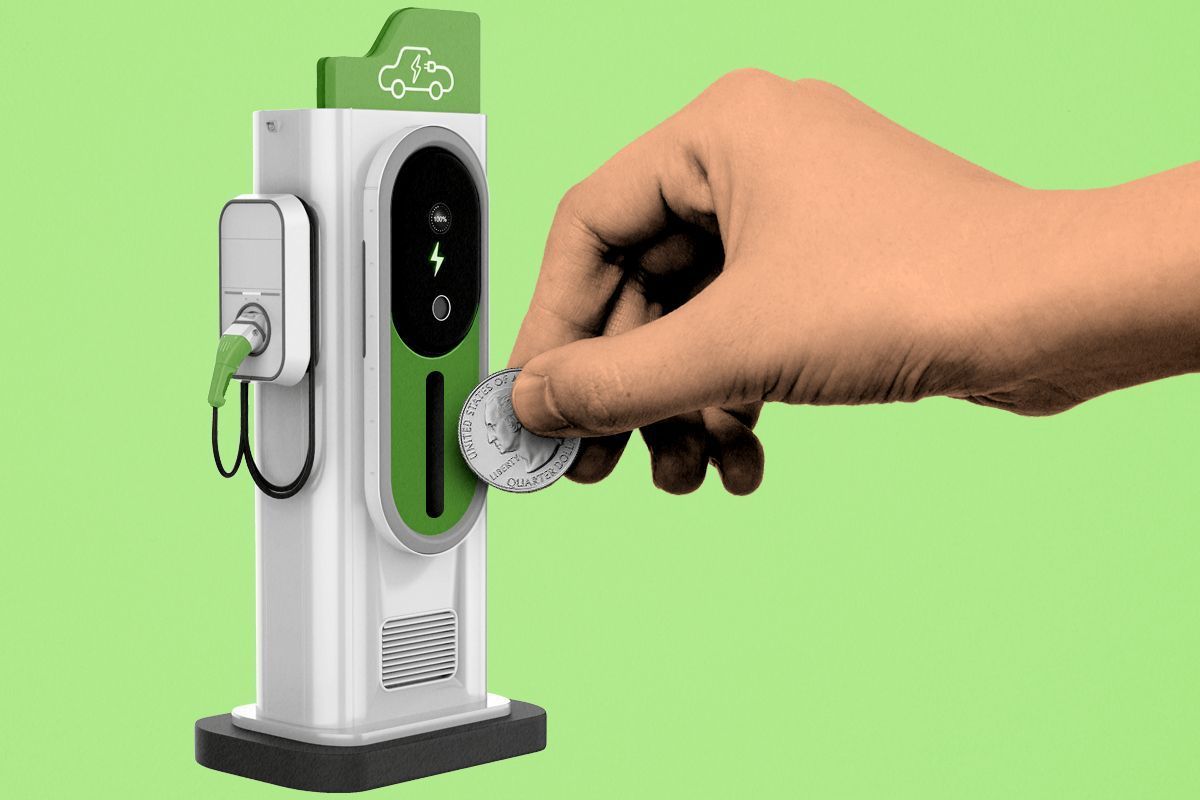
The car bubble couldn’t last forever. For years now, the steadily rising cost of new vehicles has led American drivers to take on longer and longer car loans — six, seven, even eight years, as opposed to the four or five that used to be typical. The average new car sale in America crept up to nearly $50,000 in November, a seemingly unsustainable number for a country drowning in debt.
But as 2025 draws to a close, we’re seeing more signs that Americans are starting to change their behavior, according to the Wall Street Journal. With people keeping their old cars even longer and more shopping used, new car sales saw very little growth this year, and are projected to look flat again in 2026. Even the seemingly bulletproof full-size trucks that make up the backbone of the U.S. auto industry aren’t immune. Kelley Blue Book says the Ram 1500, which has had a lock on the number three spot in all U.S. auto sales behind the Ford F-150 and Chevrolet Silverado, is slated to drop out of the top three this year.
A bear market sounds especially bleak for electric vehicles. EVs, after all, have long suffered an affordability problem, and the Trump administration this fall killed off the federal tax break meant to make them more cost-competitive with fossil fuel vehicles. A country of cost-conscious drivers is even less likely to pay a premium for battery power.
Yet as a new year dawns, EVs in America might be better positioned than you think.
For one thing, this isn’t the EV market of a couple years ago. That reckoning for too-expensive pickup trucks? Electrics already went through it. Consider the Ford F-150 Lightning, which was quietly discontinued this month. The fully electric version of America’s best-selling vehicle was an amazing piece of technology, with breakthrough features like the ability to back up a home’s power supply with the truck battery. But the pickup cost a fortune because of how much battery it takes to make an EV truck do the kinds of things a gas-powered F-150 can do. The inflated price, along with many truck buyers’ reluctance to go EV for political and cultural reasons, led to disappointing sales and shattered any dreams of an easy electrification of America’s massive pickup truck market.
As a result, electric pickup trucks were already moving toward the smaller, more affordable end of the market even before the F-150 Lightning died. Ford’s maintains that its mission to fix its flailing EV division will start with a far more affordable $30,000 midsize pickup. One of the most anticipated electric models is the bare-bones Slate truck, which is slated (pun intended) to start in the mid $20,000s.
We’re also on the cusp of seeing more new EVs that are cost-competitive with gas-burners even without the big tax credits. I’ve repeatedly lauded Chevy for delivering a version of the Equinox EV at $35,000, which helped the vehicle become the third-best-selling electric in America (and top seller that’s not a Tesla). A variety of electric cars arriving in 2026 will come in close to the $30,000 mark or below, a group that includes Toyota’s battery-powered version of its C-HR small crossover and the promising revivals of both the Nissan Leaf and the Chevy Bolt.
No, we still don’t have the $25,000 EV that would compete directly with a Toyota Corolla. But there’s ample opportunity for electrics to compete at the budget end of the car market, with no economy car segment left to speak of. KBB notes that the car industry this year offered just five models that truly cost less than $25,000, all things considered, down from 36 such vehicles in 2017. The car companies went all-in on more expensive — and more lucrative — trucks and SUVs as Americans displayed a limitless hunger for them. Now that buyers are finally curbing that appetite, there is a window of opportunity for the new wave of economy-focused EVs.
That’s not to say the EV market is headed for smooth sailing. As Mack Hogan at InsideEVs has written, battery-powered cars still have a major problem with “uncompetitive” models. Beyond the familiar success stories — Tesla’s Model 3 and Model Y, the Ford Mustang Mach-E, Hyundai’s Ioniq 5, and a few others — the car market is littered with EVs that sell just a few hundred or thousand models per year, often because they simply don't measure up to their gas rivals on cost or performance. It’s hard to see how those vehicles find their place, especially when some of them still suffer from disappointing battery ranges and driving comfort that doesn’t measure up to their more polished petroleum-powered cousins.
Still, there’s reason for hope that some of the affordable electrics will find their footing among penny-counting drivers, especially as more of them are enticed by the potential of saying goodbye to pumping gas and paying for oil changes. Because they started out expensive, EVs have yet to be seen as economy cars — in the United States, at least. But with more affordable models arriving just as the car market starts to creak, that could soon change.