
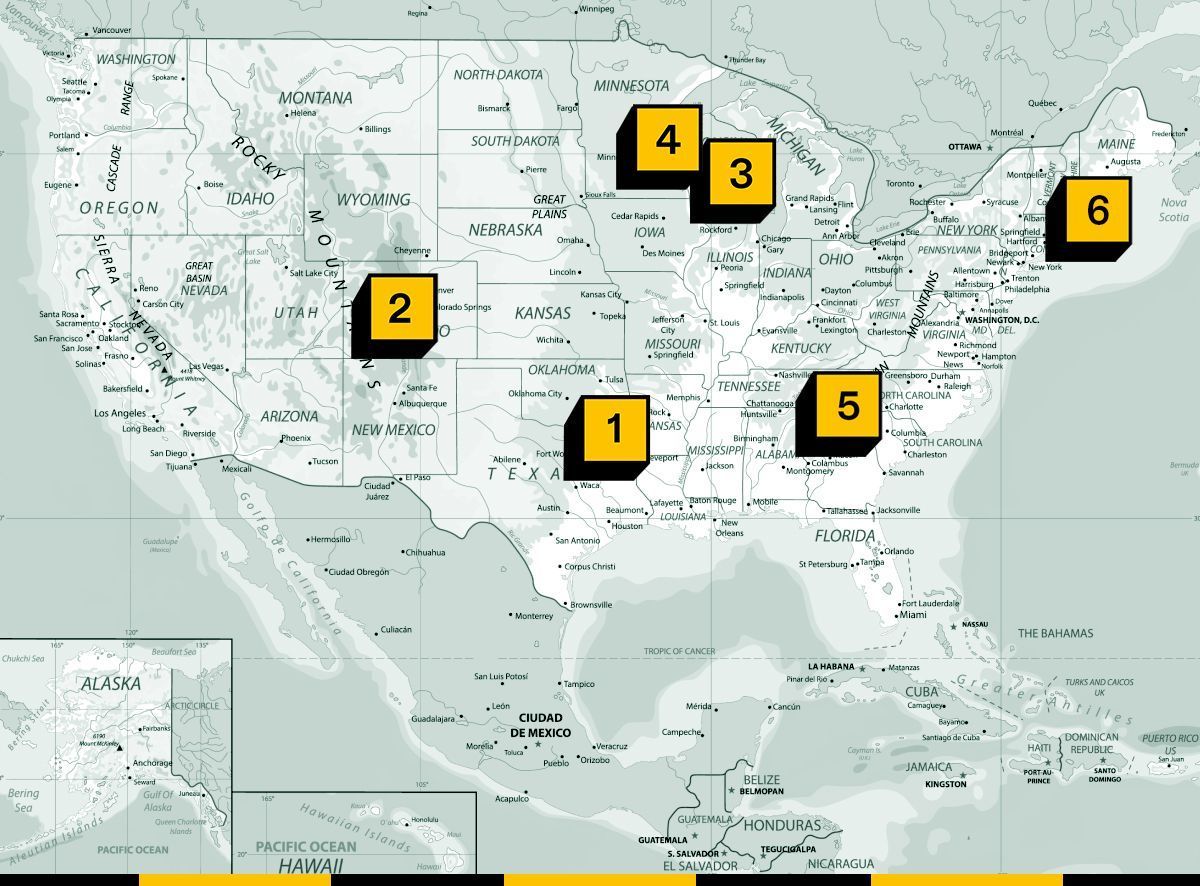
1. Hopkins County, Texas – A Dallas-area data center fight pitting developer Vistra against Texas attorney general Ken Paxton has exploded into a full-blown political controversy as the power company now argues the project’s developer had an improper romance with a city official for the host community.
- For those who weren’t around for the first go, here’s the low-down: The Dallas ex-urb of Sulphur Springs is welcoming a data center project proposed by a relatively new firm, MSB Global. But the land – a former coal plant site – is held by Vistra, which acquired the property in a deal intended for remediating the site. After the city approved the project, Vistra refused to allow construction on the land, so Sulphur Springs sued, and in its bid to win the case, the city received support from Texas attorney general Ken Paxton, whose office then opened an antitrust investigation into the power company’s land holdings.
- Since we first reported this news, the lawsuit has escalated. Vistra’s attorneys have requested Sulphur Springs’ attorney be removed from the court proceedings because, according to screenshots of lengthy social media posts submitted to the court, the city itself has confirmed that the attorney dated a senior executive for MSB Global as recently as the winter of 2024.
- In a letter dated December 10, posted online by activists fighting the data center, Vistra’s attorneys now argue the relationship is what led to the data center coming to the city in the first place, and that the attorney cannot argue on behalf of the city because they’ll be a fact witness who may need to provide testimony in the case: “These allegations make awareness of negotiations surrounding the deed and the City’s subsequent conduct post-transaction, including any purported ‘reliance’ on Vistra Parties’ actions and omissions, relevant.”
- I have not heard back from MSB Global or Sulphur Springs about this case, but if I do, you’ll be hearing about it.
2. La Plata County, Colorado – This county has just voted to extend its moratorium on battery energy storage facilities over fire fears.
- The county is at odds with itself over whether to adopt battery storage property setbacks that align with national fire safety standards or ones that are more like those in place at the local level for oil and gas facilities, which are far larger and more onerous. It’s the first time I have ever seen battery storage siting policy recommendations aligned with treatment of the fossil fuel sector, a surprising comparison point.
- La Plata’s moratorium will last through mid-January at which point the county will again vote on whether to adopt an ordinance regulating the sector or continue to halt development.
3. Dane County, Wisconsin – The city of Madison appears poised to ban data centers for at least a year.
- Madison mayor Satya Rhodes-Conway introduced the measure last week with near universal support from the city council. If adopted, the one-year moratorium would make the city one of the largest in the U.S. to ban new facilities outright, and it would be the first such move from a major city in Wisconsin.
- There’s pressure for Madison to act because data centers are drawing up drama elsewhere in Dane County. This week, the village of DeForest rolled out a slower approval process for an annexation agreement sought by data center developer QTS for a massive facility I have been tracking, stating that “guardrails” need to be in place amidst rampant concern from nearby residents.
- While Dane County certainly is a more liberal corner of the Badger State, Heatmap Pro data shows why this backlash is happening: The county has an especially high risk score driven by a white racial mix, higher income bracket, and a growing Trump-y voting bloc.
4. Goodhue County, Minnesota – The Minnesota Center for Environmental Advocacy, a large environmentalist organization in the state, is suing to block a data center project in the small city of Pine Island.
- The Project Skyway data center, overseen by Ryan Companies, is not immediately affected by the lawsuit, but MCEA is seeking an injunction with a court date set in early February. The lawsuit argues that the project violates local zoning codes and therefore should be stopped until development is aligned with the regulations.
5. Hall County, Georgia – A data center has been stopped down South, at least for now.
- Proposed outside of Atlanta, Project Turbo has received considerable opposition over water use because of its close proximity to a large lake, resulting in county officials halting any further consideration of the project indefinitely. In a bid to appease locals’ concerns, Project Turbo’s application for a special use permit has now been withdrawn, and the two men developing the data center now say they’ll pursue an industrial zoning permit, which requires more stringent environmental protections.
6. Dukes County, Massachusetts – The fight between Vineyard Wind and the town of Nantucket seems to be over.
- The coastal town has reached an agreement with Vineyard Wind that resolves multiple outstanding issues after the infamous blade breakage sent fiberglass onto its tourist-heavy beaches. The agreement does not include many of the town’s requests, including an ask for payment that will not be met, but it does require the offshore wind project’s personnel to update the town every month about safety and operation.