0
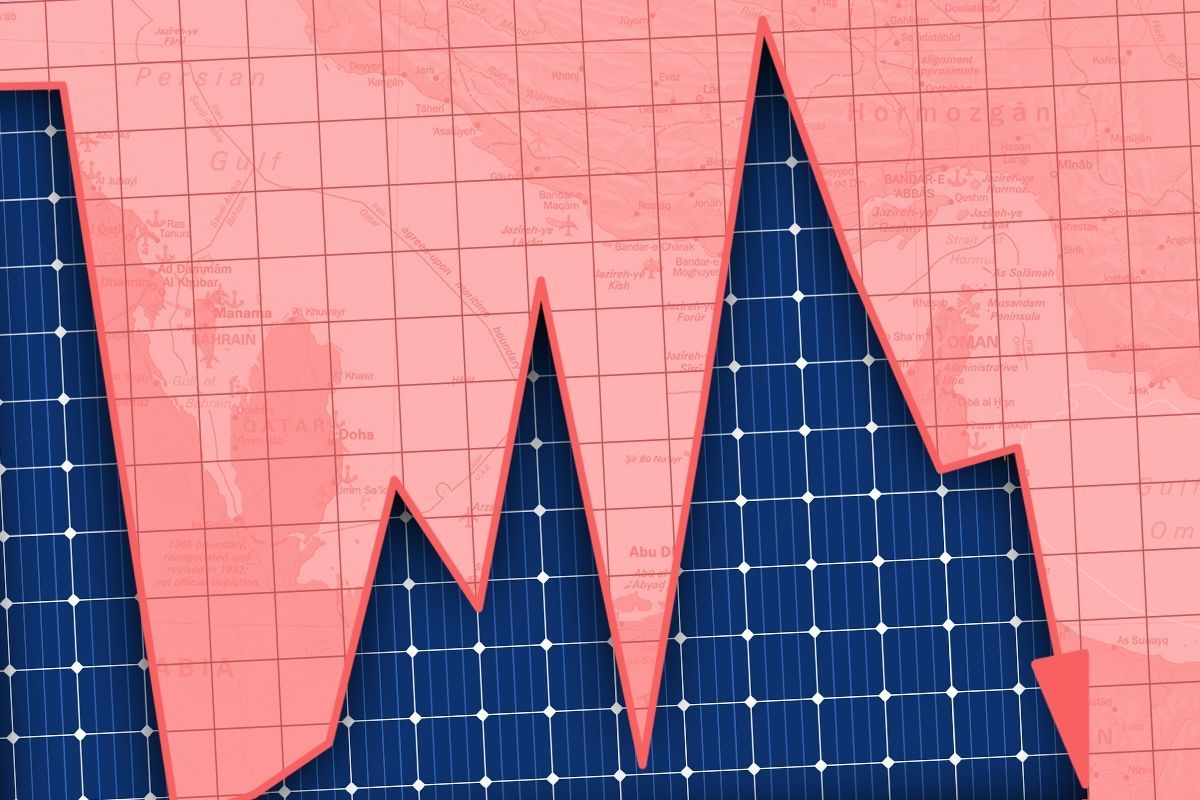
The fragility of the global fossil fuel complex has been put on full display. The Strait of Hormuz has been effectively closed, causing a shock to oil and natural gas prices, putting fuel supplies from Incheon to Karachi at risk. American drivers are already paying more at the pump, despite the United States’s much-vaunted energy independence. Never has the case for a transition to renewable energy been more urgent, clear, and necessary.
So despite the stock market overall being down, clean energy companies’ shares are soaring, right?
Wrong.
First Solar: down over 1% on the day. Enphase: down over 3%. Sunrun: down almost 8%; Tesla: down around 2.5%
Why the slump? There are a few big reasons:
1. It’s the market
Several analysts described the market action today as “risk-off,” where traders sell almost anything to raise cash. Even safe haven assets like U.S. Treasuries sold off earlier today while the U.S. dollar strengthened.
“A lot of things that worked well recently, they’re taking a big beating,” Gautam Jain, a senior research scholar at the Columbia University Center on Global Energy Policy, told me. “It’s mostly risk aversion.”
Several trackers of clean energy stocks, including the S&P Global Clean Energy Transition Index (down 3% today) or the iShares Global Clean Energy ETF (down over 3%) have actually outperformed the broader market so far this year, making them potentially attractive to sell off for cash.
And some clean energy stocks are just volatile and tend to magnify broader market movements. The iShares Global Clean Energy ETF has a beta — a measure of how a stock’s movements compare with the overall market — higher than 1, which means it has tended to move more than the market up or down.
Then there’s the actual news. After President Trump announced Tuesday afternoon that the United States Development Finance Corporation would be insuring maritime trade “for a very reasonable price,” and that “if necessary” the U.S. would escort ships through the Strait of Hormuz, the overall market picked up slightly and oil prices dropped.
2. It’s interest rates
It’s often said that what makes renewables so special is that they don’t rely on fuel. The sun or the wind can’t be trapped in a Middle Eastern strait because insurers refuse to cover the boats it arrives on.
But what renewables do need is cash. The overwhelming share of the lifetime expense of a renewable project is upfront capital expenditure, not ongoing operational expenditures like fuel. This makes renewables very sensitive to interest rates because they rely on borrowed money to get built. If snarled supply chains translate to higher inflation, that could send interest rates higher, or at the very least delay expected interest rate cuts from central banks.
Sustained inflation due to high energy prices “likely pushes interest rate cuts out,” Jain told me, which means higher costs for renewables projects.
3. It’s energy security
While in the long run it may make sense to respond to an oil or natural gas supply shock by diversifying your energy supply into renewables, political leaders often opt to try to maintain stability, even if it’s very expensive.
“The moment you start thinking about energy security, renewables jump up as a priority,” Jain said. Most countries realize how important it is to be independent of the global supply chain. In the long term it works in favor of renewables. The problem is the short term.”
In the short term, governments often try to mitigate spiking fuel prices by subsidizing fossil fuels and locking in supply contracts to reinforce their countries’ energy supplies. Renewables may thereby lose out on investment that might more logically flow their way.
The other issue is that the same fractured supply chain that drives up oil and gas prices also affects renewables, which are still often dependent on imports for components. “Freight costs go up,” Jain said. “That impacts clean energy industry more.”
As for the Strait of Hormuz, Trump said the Navy would start escorting ships “as soon as possible.”