GLOBALVARS
0

Here’s some trivia for you: What was the first state to see its average temperature break the 2-degree Celsius threshold for warming above pre-industrial levels? It wasn’t Alaska, the fastest-warming state, nor was it California or Florida, states with some of the most visible impacts of the extreme weather crisis. It was not Arizona or Texas, either, though “hot” and “warming” are often conflated.
The answer, in fact, is humble Rhode Island, which passed the international benchmark for accelerated climatic impacts back in 2019. It is perhaps less surprising, then, to learn that in the Ocean State’s largest city, Providence, climate change and how to adapt to it have become one of the central talking points in a heated mayoral race, which in the deep-blue city is likely to culminate in the September 9 primary.
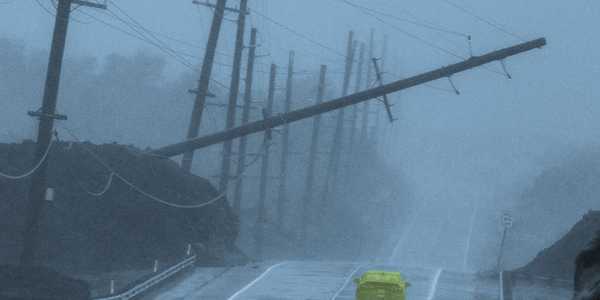
There is plenty to worry voters. Providence sits at the head of Narragansett Bay, which has warmed 1.6 degrees Celsius, enough to drive lobsters from the region and convert the local lobstermen into crabbers, fishing for crustaceans they previously considered bycatch. The sea level has risen on Rhode Island’s 400-plus miles of coastline by more than 10 inches since 1930, more than in Venice or Miami, meaning the city floods frequently. Locals hold their breath every hurricane season; a hit from a category 4 or larger storm could tally billions in damages. And as home to the biggest port in the region, Providence is also an unfortunate case study in industrial and fossil-fuel-related pollution affecting historically redlined neighborhoods.
“Since I’ve been in office, we’ve had dramatic, chronic flooding. We’ve had high heat days in the fall that have closed public schools, which is not something that ever happens here in September,” Providence Mayor Brett Smiley told me. “We had some of the highest snowfall in recorded history [in the city]. We’re seeing the effects.”
Smiley, who was elected in 2022, has described investing in infrastructure upgrades for the nearly four-century-old city as one of his “principal responsibilities” as mayor. During his second year in office, he signed an ordinance requiring all of the 122 city-owned buildings to decarbonize by 2040, and that fall published a 10-year plan that introduced air quality, heat, and stormwater management goals, provisions aimed at curbing pollution at the Port of Providence, and would have effectively banned the construction of new gas stations. (A later amendment relaxed the restrictions.) He’s also invested in long-overdue repairs to the city’s hurricane barriers.
This year, Smiley also announced the creation of a Green Revolving Fund to support Providence’s ambitious carbon neutrality goals. “I’ve been in government long enough to know that operating budgets can change as priorities change, and so having a dedicated recurring revenue stream is vital to ensuring that this work continues,” he said.
In the face of federal headwinds, and at a time when the political currency of “climate change,” at least in so many words, is on the downswing, Smiley’s focus on climate issues stands out. That is especially true against the backdrop of a broader state-level reassessment of environmental goals, with Democratic Governor Dan McKee proposing a budget earlier this year that would have slashed climate programs funded by monthly utility charges in the name of affordability. Though Rhode Island lawmakers ultimately rejected that rollback, McKee’s move fits into a larger trend in the region of blue-state politicians in places like Maryland, Massachusetts, and New York curbing or weakening climate ambitions under the pressure of affordability politics. (McKee also faces his own competitive primary.)
“Providence alone can’t solve the climate crisis. But our actions, at least in Rhode Island, are pushing other communities in the state to take action,” Smiley said.
But there are others — including Smiley’s progressive challenger, State Representative David Morales — who say the mayor’s tenure has been a lot of talk and little action, and that he’s neglected Providence’s low-income and frontline communities. “Over the years, and also in dealing with Mayor Smiley as an incumbent, I’ve had some real difficulty with what I would even call basic honesty out of his administration,” Steve Ahlquist, an independent reporter who follows environmental justice-related issues in Rhode Island, told me, adding that the mayor’s office has a history of downplaying and denying police harassment of unhoused people in particular.
Ahlquist also finds Smiley’s talk about affordability and clean energy false. Smiley notably vetoed a rent control ordinance, despite the city having some of the highest rates in the country, and while serving as former Governor Gina Raimondo’s chief of staff between 2016 and 2019, he helped push for the expansion of fossil fuel infrastructure in the form of a $1 billion fracked gas and diesel oil power plant that was ultimately thwarted by community pushback.
Morales, 27, is a Democratic Socialist and has won the backing of Vermont’s Independent Senator Bernie Sanders. His scrappy campaign against an establishment incumbent Democrat has earned him comparisons to New York City’s young, charismatic Mayor Zohran Mamdani. Unlike Mamdani, however, Morales has made climate central to his campaign.
Morales has gone after Smiley particularly hard on environmental justice issues, sensing a weak spot in his record. “Industrial facilities near the Port of Providence have polluted our neighborhoods for decades,” his issues page reads. “David will require them to contribute more toward the city services and infrastructure our communities deserve.” (Morales’ campaign did not get back to me for this article, despite requests through multiple channels.)
A nearly two-mile stretch of Allens Avenue, which flanks the port, is home to asphalt plants, scrap metal recyclers, oil and gas companies, and petroleum storage tanks with a history of leaks, spills, dumps, and other forms of contamination. Locals complain that even just driving along the avenue is enough to make you sick, with 11 identified polluters within a mile radius of National Grid’s newest LNG plant. Traffic to and from the port adds to the odor — and health impacts — in the neighboring communities of South Providence and Washington Park, which have some of the highest hospitalization rates in southern New England. Notably, South Providence’s population is 90% people of color; Washington Park’s is above 60%.
Smiley bristled at Morales’ plan to tax polluters. “Many of my opponent’s proposals — which continue to evolve, by the way — are illegal or not allowed, and he leaves some of those details out, and sometimes changes his position,” he told me. Ahlquist, who issued a rare endorsement of Morales last spring, contends that “we know for a fact it is not illegal” to tax polluters at a different rate. (In truth, it’s a bit of a legal gray area; Providence’s tax code allows it to adopt a classification system with different rates for industrial properties, but whether that classification can be used to single out specific polluters on Allens Avenue is murkier.)
In an interview with Ahlquist, Morales has also proposed buying out the Rhode Island Recycled Metals property — where some of the worst contamination has originated — and pursuing “brownfield mediation” in the area. “I find it shameful that Public Street, one of the few shoreline access points around the Port of Providence, is not a very welcoming environment,” he said. On the adaptation side, he’s proposed passing a green energy bond to invest in renewable energy and upgrade the sewage system with an eye on future flooding.
A week ago, it might have seemed as though Morales had progressive momentum on his side. But after the upset of Democratic Socialist Francesca Hong in Wisconsin on Tuesday night and the narrow victory by progressive up-and-comer Abdul El-Sayed in Michigan the week before, the narrative is now more complicated. Meanwhile, the first primary poll shows Smiley with a 4-point edge — within the margin of error, but still likely to have the Morales campaign in a state of jitters.
Climate adaptation can sometimes fall under a variation of the refrain parodied in urban infrastructure circles: One more study would fix this. That’s especially true in Rhode Island, where study after study has highlighted the problems Morales and Smiley are circling, and yet here they still are, at the center of yet another mayoral race.
“One of the things that frustrates me is when you write a plan and then put it on the bookshelf, and that’s the end of it,” Smiley told me, sounding genuinely irked as we spoke on the phone. “That’s not how I do plans.” He told me stormwater infrastructure would be a major focus of his administration if he’s elected to another term, while he hopes his decarbonization roadmap and the green revolving fund will outlast his mayoralty, whenever and however it may end.
Morales has been stymied before, too. Ahlquist recalled watching the young legislator in the State House at the end of a legislative session, when, in the waning hours, he was told by leadership that a bill he’d been working on wasn’t going to get through. “David, when he’s in public, he’s very controlled, very managed,” Ahlquist said. But from his vantage point, Ahlquist could see Morales had started to cry.
“It’s midnight, the last days of session, and I just saw something raw in him then,” Ahlquist said. “It was like, Wow, this is a guy who really gives a shit.”