GLOBALVARS
0
This is an edition of Heatmap Daily, an evening review of the day’s news written by our executive editor. Sign up for it here.
Perhaps data centers don’t matter as much as we think.
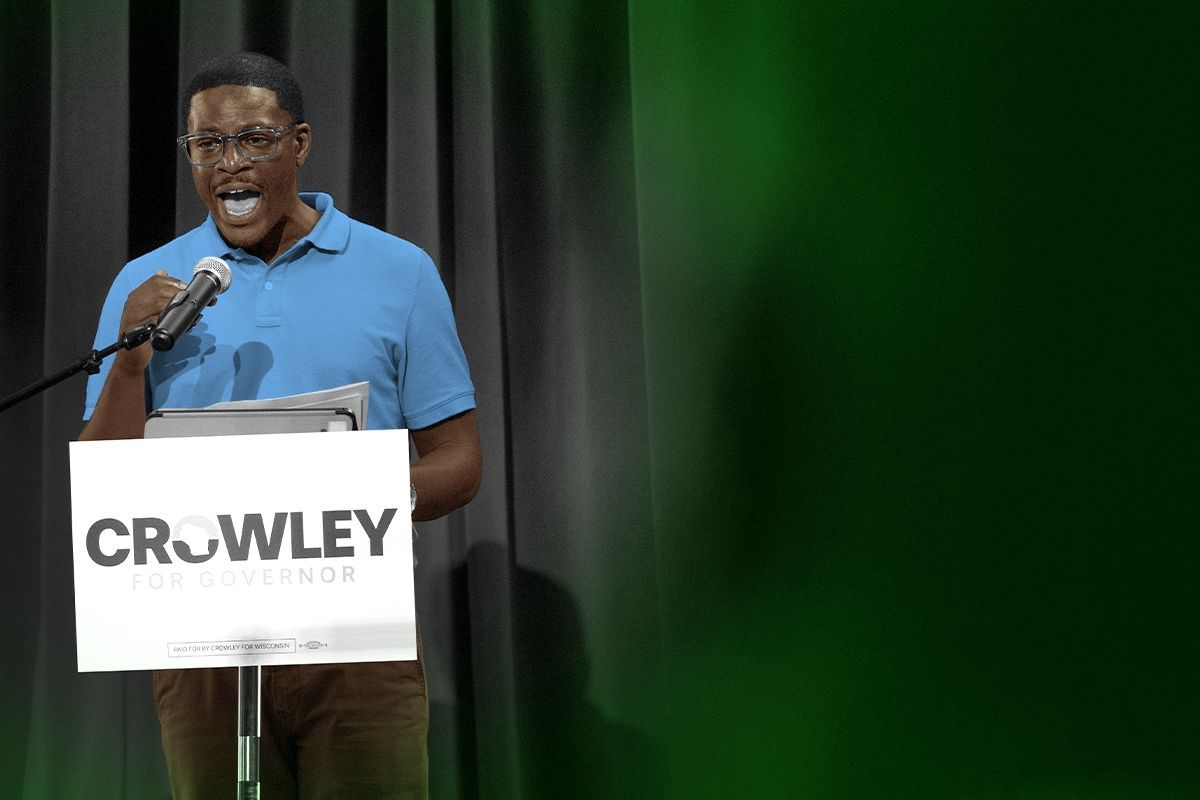
That was my takeaway after last week’s Wisconsin Democratic gubernatorial primary, where the liberal candidate David Crowley edged out a victory over the progressive insurgent Francesca Hong.
Hong, a socialist, had run an aggressively anti-data-center campaign, pledging to pause their development across the state and then “control-alt-delete” them with regulations. Yet as my colleague Jael Holzman recently detailed, Hong lost many of the state’s jurisdictions that have fought data centers the hardest. Port Washington, the site of an acrimonious battle over a $15 billion Oracle and OpenAI facility, went for Crowley by eight points. Hong could not even secure a majority in the small town of Wrightstown, even though voters passed a data center ban by referendum on the same night.
I found the result illuminating. I’ve spent much of the past few months covering the size and scale of the data center backlash. Yet viewed at a remove, the Hong-Crowley result looked like nothing so much as a traditional post-2016 Democratic map, with Hong taking progressive college towns like Madison and Crowley winning more moderate black and rural voters. You would have to squint hard to locate an emergent anti-AI axis in the results. And more critically, you would find little evidence that the data center backlash is changing how voters define themselves ideologically. If Americans hate data centers — and polling shows that they do — then the results suggest that there are limits to their antipathy.
I stand by that conclusion. Yet since then, data centers have become an even bigger issue in Wisconsin state politics, dominating the first week of the general election. In doing so, they’ve demonstrated the risk that the data center backlash poses for Democrats — as well as for decarbonization.
The saga began when Crowley, newly victorious, told NBC News that one of the issues where he “disagreed most” with Hong was data centers: He wanted stronger guardrails on new and existing data centers but didn’t support a moratorium, he said, because he didn’t want to forbid communities that want them from accepting the facilities. Tom Tiffany, the Republican gubernatorial nominee, pounced, sharing a deceptively cut clip of the interview (to put it generously) and framing Crowley as both pro-corporate and tragically woke. If Crowley most disagreed with Hong about data centers, Tiffany asked, does he agree with her about “abolishing the police or prisons?”
Tiffany followed up with a TV ad labeling his opponent “Data Center David Crowley.” “My priority is protecting Wisconsin families, taxpayers, farmland, and water, not turning our state into a data center hub for the 'entire globe," Tiffany said.
This move succeeded in splitting the left. The socialist influencer Hasan Piker — who endorsed and campaigned for Hong — criticized Crowley for not endorsing an outright moratorium on data centers. “david crowley i know you hate me but please don’t do this!” he said [sic].
Let us interject here to say: Crowley and Tiffany have many overlapping policies about data centers — and as we shall see, Crowley’s policies would be more restrictive. Neither candidate supports a data center moratorium, but both say that they would allow communities to veto a local proposal, ban the use of non-disclosure agreements in data center development, and require data centers to cover the cost of their grid upgrades. One of their most salient divisions is on tax policy: Tiffany now supports ending a state tax carveout for some data center equipment, while Crowley would preserve it.
Where the two candidates really disagree is not about data centers at all — it’s about clean energy. Tiffany has argued that data centers are, like renewables, a form of industrial development overtaking agricultural land. He wants to restrict them accordingly.
“We should not be converting our beautiful farmland here in Wisconsin to industrial-scale wind, solar, or data centers,” he posted on Facebook in June. “As the next governor of Wisconsin, I’m going to make sure we stop the conversion of our beautiful farmland in Wisconsin to these industrial sites.”
Tiffany has attacked Crowley, in fact, for saying that data centers should use 100% renewable energy, because that will require the conversion of even more farmland to energy development.
This isn’t a new hangup for Tiffany: He has long sought to block renewables from getting built on farmland. Since 2022, he has repeatedly sought to end federal tax incentives for solar and wind projects built on private agricultural land, and he has opposed individual solar projects in the state that he claimed used too much farmland. (The Trump administration, as part of its broader war on clean energy, has also cut some subsidies for solar on “prime farmland.”)
In other words, Tiffany is using data centers as a kind of trojan horse to restrict clean energy development. By appearing to seem more anti-data-center than Crowley in theory, he is going to be more anti-solar in practice. The stakes here are real for the clean energy industry and for decarbonization more broadly. As governor, Tiffany could implement his longstanding preferences by naming new members to the Wisconsin Public Service Commission, which oversees the state’s utilities. In a letter sent last year, he urged the commission to look more favorably at coal.
What remains notable about this story — and lost in much of the commentary — is that Crowley is not even a moderate on data centers. On some fronts, he would regulate data centers more aggressively than the Michigan Democratic Senate nominee Abdul El-Sayed would, even though the former has been branded as a pragmatist and the latter as a progressive.
Crowley, of course, wants data centers to use 100% renewable electricity and cover their full grid and infrastructure upgrade costs. El-Sayed hasn’t made the same commitment on clean energy. Crowley says data center developers “must build … with union labor,” while El-Sayed would require only that the facilities must be built by contractors with state-registered apprenticeship programs. I even think Crowley’s insistence on local control over data centers is a more expansive commitment than El-Sayed’s demand that communities must get a “meaningful say.” (El-Sayed’s language around water, by comparison, is more specific and binding, requiring data centers to use “closed loop systems.”)
You could say this is all a function of framing: It is Crowley who has declined to endorse a data center moratorium, while El-Sayed railed against data centers repeatedly on his campaign. On a vibes basis, El-Sayed is more the more anti-data-center candidate. But policies are not made by vibes. And it is notable that socialists like Piker have endorsed El-Sayed’s approach while begging for Crowley to go further — when Crowley had the stricter policy all along.