GLOBALVARS
0

Current conditions: Lake Powell just dropped to its lowest level since the reservoir straddling the border between northern Arizona and Utah began filling 60 years ago • A dangerous new heat dome has formed over the American Southeast, driving midday highs north of 110 degrees Fahrenheit in cities such as Jacksonville, Florida • Temperatures in Bandar-e Mahshahr are rising past 124 degrees, making the Iranian port city at the northern end of the Persian Gulf, near the border with Iraq, the current hottest place on Earth.
THE TOP FIVE
1. Nvidia and OpenAI are building America’s biggest fossil fueled power plant
Less than two weeks ago, Amazon confirmed its plans to build a data center complex powered by a 7.65-gigawatt, off-grid natural gas plant. As my colleague Emily Pontecorvo wrote, the facility would handily surpass the output of the nation’s biggest power station, the 7-gigawatt Grand Coulee hydroelectric plant in Washington State, and Georgia’s Plant Vogtle, which recently vaulted to No. 2 after the completion of the country’s only two wholly new nuclear reactors in decades increased its output to nearly 5 gigawatts. An even bigger gas plant is now eyeing the top spot on the list. On Monday, ChatGPT-maker OpenAI inked a deal for a sweeping new data center campus in Ohio, backed by $105 billion from chipmaker Nvidia. As part of the agreement, SoftBank’s SB Energy will construct a 9.2-gigawatt gas plant that will be owned by the U.S. government and financed by Japan, according to The Wall Street Journal. “Today, we are helping secure the critical infrastructure required to build these factories,” Jensen Huang, Nvidia’s chief executive, wrote in a blog post on the company’s website. “We are investing in the long-lived foundations of AI factories so our customers can deploy the most productive compute platform in the world, generation after generation.”
The biggest impediment, at least according to North America’s quasi-governmental grid watchdog, is power. “The only thing China is ahead of us in the AI race is power,” Jim Robb, the chief executive of the North American Electric Reliability Corporation, told reporter Arianna Skibell on the Politico Energy podcast episode that went live Monday. “We have better models, we have better engineers, we have better scientists — but we’re challenged in our society to build the infrastructure that’s going to be required to support the growth.”
2. Belgium battles its biggest wildfire on record
Europe’s hellish summer continues to shatter records. Just weeks after wildfires scorched Spain and France in what the French president called the country’s “hardest” challenge “since World War II,” Belgium is now battling its biggest blaze in recorded history. Hundreds fled as the flames approached the German border, though rainfall on Monday helped slow the spread. But the High Fens fire has already exposed political fissures in the country. On Monday, Belgian Defense Minister Theo Francken blamed anti-American sentiment for preventing the government from purchasing Chinook helicopters that would have strengthened the country’s firefighting capacities, according to The Brussels Times, an English-language news website. In the Flemish-language Het Laatste Nieuws, the country’s most widely circulated newspaper, columnist Isolde Van den Eynde complained that the episode highlighted the gap between how much government infrastructure exists for climate policy and how little there is for actually dealing with warming-fueled disasters. “While quite a few citizens are wondering where our little army of climate ministers is,” she wrote, “soldiers are on the ground.”
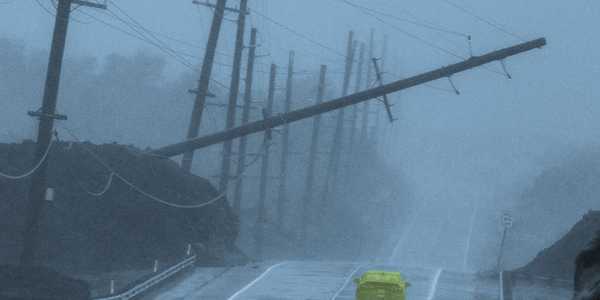
Hawaii, meanwhile, was still reeling from the first hurricane to damage the Big Island in more than a century. Tropical Storm Lala, which strengthened into a Category 1 storm at its peak, knocked out power for nearly 200,000 homes and businesses across the state. As I told you yesterday, the utility that covers 95% of Hawaii has warned it could be months before power is restored. Today we got a clearer sense of the other damage. More than 100 homes were washed away in the storm, and the damage to roads and bridges, according to The New York Times, cut off access to a town with the only hospital in its region.
3. America’s oil giants eye Africa
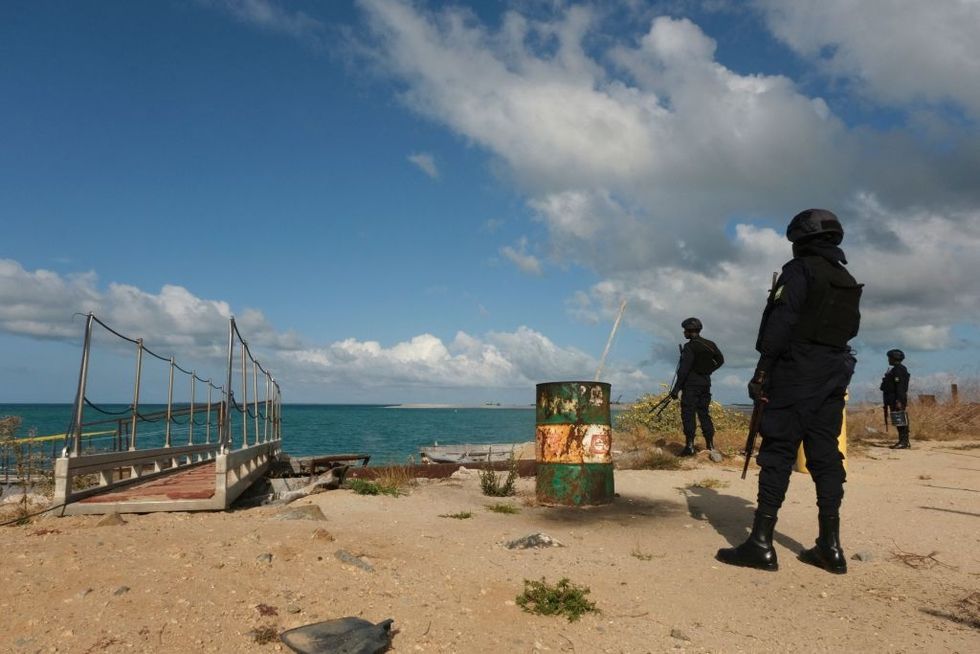
Exxon Mobil’s oil fields off the coast of Guyana are booming, generating nearly $5 billion in profit last year and only expanding. Chevron last summer spent $53 billion to buy Hess and gain a foothold in the once-poor nation on South America’s Caribbean shores. It’s no wonder The Economist declared South America “the world’s hottest oil patch” last summer.
Now America’s oil goliaths are looking across the Atlantic for their next windfall. On Monday, the Financial Times reported that Exxon had revived its plans to build a liquified natural gas plant in Mozambique’s restive Cabo Delgado, despite the threat of terrorism from an Islamist insurgency in the region. At the same time, Chevron confirmed to Reuters the discovery of new oil and gas deposits in one of its blocks off the coast of Angola, the second-largest producer in sub-Saharan Africa.
Sign up to receive Heatmap AM in your inbox every morning:
* indicates required
Email Address *Our Privacy Policy & Terms Apply.
4. Sunrun inks a landmark deal to power data centers via a virtual power plant
Sunrun built America’s biggest business selling and leasing residential batteries and solar panels on the promise of going off-grid and helping homeowners produce enough power to pare down their utility bills. Now the company is doing the same for data centers. On Monday, the San Francisco-based giant announced a deal with the virtual power plant provider Voltus to provide access to its thousands of residential solar-plus-storage systems in the PJM Interconnection and Midcontinent Independent System Operator electrical grids, covering much of the eastern half of the lower 48 states. “We are providing critical capacity from home batteries supported by funding from hyperscalers,” Sunrun CEO Mary Powell said in a statement. “This is just the beginning of what distributed energy assets can achieve.”
Good news for some of my friends over at the farmer’s market in my neck of Brooklyn: New Jersey is preparing to allow farmers to harvest sunlight for crops and electricity. On Monday, the New Jersey Board of Public Utilities voted to award 16 projects totaling more than 52 megawatts for the state’s first agrivoltaics program. Over the next three years, the program will scale up to more than 200 megawatts of projects. “This pilot can help agriculture and the solar energy industry learn if active agriculture use can be a renewable energy partner in shaping New Jersey’s future,” New Jersey Secretary of Agriculture Ed Wengryn said in a statement. “Getting these projects operating is the best real-life laboratory to learn the challenges the two industries face.”
5. The Philippines’ answer to soaring power demand and piling garbage? Burn trash for energy.
Manila is a striking metropolis with ancient-looking Chinese and Spanish colonial architecture, gleaming new towers, and vast new neighborhoods forming out of landfilled parts of its eponymous bay. When I visited for a reporting trip in 2024, I learned that the name of the Philippines’ capital comes from the Tagalog phrase meaning “where there is nilad,” a type of flowering mangrove shrub that historically blossomed along the city’s riverbanks. Today those channels that line that city’s streets and wind through the world’s oldest Chinatown are filled with trash. Plastic bottles and garbage are common sights in a fast-growing economy held back by its limited supply of mostly dirty electricity. President Ferdinand Marco Jr. now says there’s “only” one solution to the pollution crisis: Burn it. Last week, his administration told The Philippine Star that new waste-to-energy plants could come online in as little as a year. Environmentalists who say incinerators will only add to air pollution are already pushing back. The government has put out a tender for up to 400 megawatts of capacity, Renewables Now reported. Meanwhile, in a sign of just how much the energy market is heating up in the country, the Philippines’ biggest renewables installer, First Gen Corporation, just turned down a bid from the American investment giant KKR, saying the offer didn’t match the installer’s surging value.
Europe, on the other hand, is seeing its hydrogen ambitions stall out. New analysis by Hydrogen Insight found that project timelines across the continent are now being pushed past two years, “with the number of projects expected to begin commissioning by the end of 2029 falling by almost two thirds.”
THE KICKER
Something you don’t see every day: The Trump administration is defending a climate policy imposed by the Biden administration that environmental groups like against Republican states. Last week, E&E News reported that the Department of Justice had asked a federal judge in Louisiana to dismiss a lawsuit brought by 10 GOP state attorneys general in a challenge to a Biden-era policy that stopped subsidizing flood insurance for properties in places increasingly at risk due to new climate extremes.