GLOBALVARS
0
Over the past few years, I’ve become convinced that the United States will never decarbonize its economy — or renovate its aging electricity sector — without building new, large-scale power lines. There is some good news on that front this month: Two major new transmission projects opened or are about to open, each connecting major cities to abundant sources of zero-carbon electricity.
The first is the Champlain Hudson Power Express, known by its happy-go-lucky initials CHPE and pronounced chippy. It is a 339-mile underground and underwater transmission line, which will ferry 1,250 megawatts of zero-carbon electricity from Quebec’s hydroelectric dams straight into New York City. It officially became operational last week.
The project means that 20% of the city’s electricity demand can now be met by clean electricity. That power will go a long way toward replacing the 2 gigawatts of zero-carbon electricity lost when former Governor Andrew Cuomo shut down the Indian Point Energy Center, a nuclear power plant 24 miles north of the city, following a public campaign led by Robert F. Kennedy, Jr.
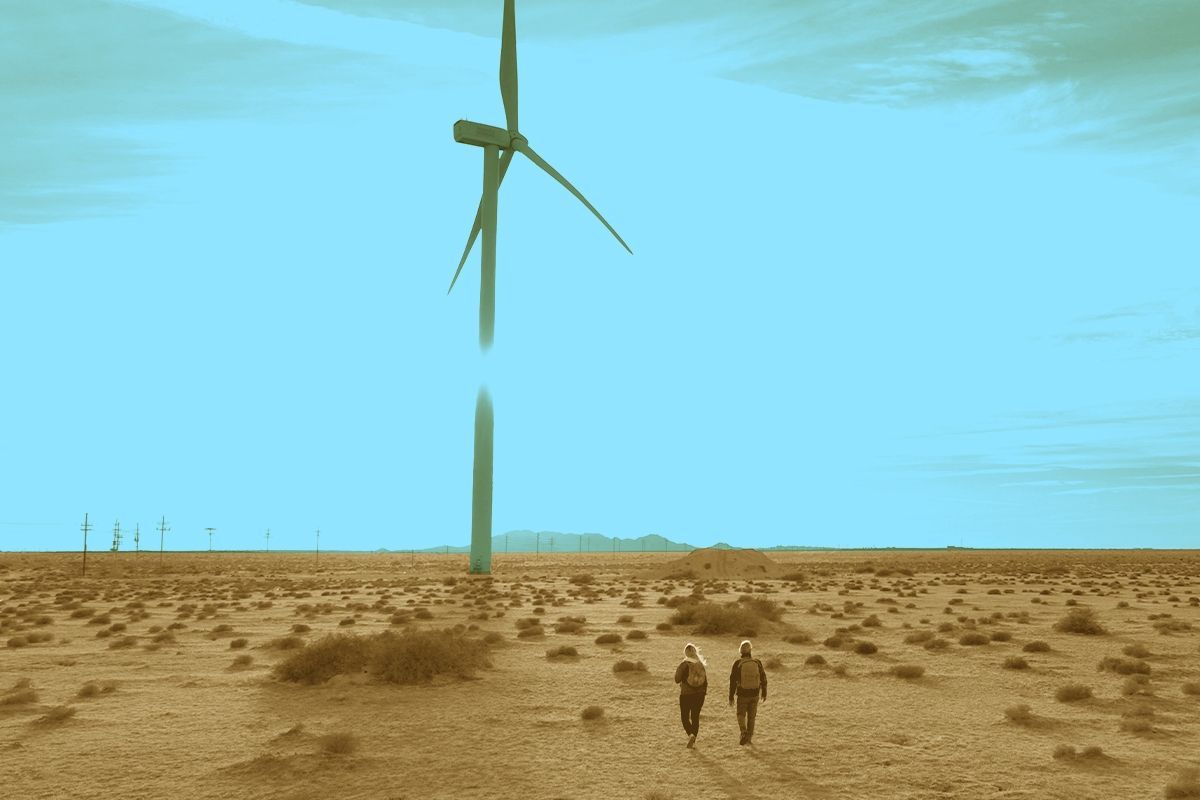
The second is the SunZia Wind and Transmission Project, a roughly 550-mile power line that links a gargantuan new 3.5-gigawatt wind farm in New Mexico to energy-hungry cities in Arizona and California. The project began generating power earlier this spring and is set to fully come online this month.
Now that these two new transmission lines are operating, the response from climate and clean energy advocates has been — I would say — solidly positive.
Mayor Zohran Mamdani’s chief climate officer called CHPE “a huge game changer.”Meanwhile, Nic Fulghum, a senior analyst at the climate data think tank Ember, said SunZia is “a truly astonishing project that will remove huge amounts of gas power from California's electricity generation” last month. “Don’t let this be one of the last remnants of US clean power leadership,” he added. (We had Nic on our podcast, Shift Key, to discuss some unrelated good news about the global energy system earlier this year.)
I recount all this not because I disagree with these descriptions — I don’t — but because it is striking to see them stated so forthrightly now. I remember when these projects were getting built and the yearslong permitting battles to secure their construction. I even covered the 20-year fight over SunZia for Heatmap.
The simple, uncomfortable fact is that neither of these power lines commanded such widespread respect from traditional environmental advocates before they became operational. In many cases, in fact, self-described environmentalists led the fights to block them.
The Sierra Club and its local New York chapters, for instance, fought CHPE for years. The club played up the physical impact on the land that, say, the converter station would have in Astoria, Queens. “It is certain that if [the project’s developers] succeed, several New York businesses and their employees will be harmed,” one missive warned.
Other green groups argued that building the line would outsource clean energy jobs to Canada or focused on the Canadian First Nations that opposed the power project. (Other Canadian indigenous groups supported it.)
Hudson Riverkeeper, an environmental group long associated with RFK Jr., first supported the new power line in 2013 as part of its quest to shut down the Indian Point nuclear plant. But in 2019 — two years after Indian Point’s closure was finalized — Riverkeeper revoked its support for the power line and began fighting it. Had Riverkeeper gotten its wish, it would have effectively locked in years of additional fossil fuel consumption in New York.
What’s most astonishing now is the yearslong scaremongering that accompanied the line’s connection to the Canadian government. CHPE draws its energy from dams owned by Hydro-Québec, a government-owned public utility and the provider of some of the cheapest electricity in North America. Today, left-wing advocates such as the Climate and Community Institute celebrate Hydro-Québec as a renewable-rich, government-owned success story.
But in 2018, the Sierra Club derided the proposed power line as a “private roadway” for Hydro-Québec, which it called “a private corporation heavily subsidized by the Canadian government.” Back then, too, the club questioned whether Quebec’s generating fleet — which some progressives now celebrate as abundant “renewable energy” — was truly low carbon.
This isn’t to say that dams can’t produce unexpected carbon or mercury emissions. They can. But the long-running effort to block this project — as compared to the praise for it now — should remind us how fluidly categories can change when a project is online.
If anything, though, SunZia had an even more frustrating story. Back in 2024, I covered the two-decade saga that saw the power line bounce from one permitting review to another.
In that story, I wrote about how the environmentalist Robin Silver, a founder of the Center for Biological Diversity, battled the project’s route through the San Pedro Valley in southeastern Arizona. When I asked Silver why he opposed the clean energy project — even though a natural gas pipeline already transited the valley — he was blunt:The power line was an eyesore. “There are no 200-foot large power lines going through the San Pedro Valley,” he said. “The gas pipeline doesn’t have 200 foot towers.”
Today, that SunZia line — now complete — will help reduce demand for natural gas. If we want to get serious about meeting America’s energy challenges, especially if we also want to reduce carbon emissions at the same time, then we will need many more projects like CHPE and SunZia. They won’t always be popular. But people will love them when they’re complete.