GLOBALVARS
0

Across the developed world, yields on government debt are rising, driving up the cost of borrowing with potentially particularly dire effects for renewable and clean energy.
“Nearly every issue of government bonds at every maturity for all G7 countries is trading at a higher rate today than it was in February, pushing up the amount that governments must pay to sell new debt,” the Financial Times reported on Sunday.
These government bonds — especially U.S. government bonds — serve as benchmarks for lending across the economy. The 10-year Treasury is currently trading at a yield of 4.8%, up from 4% in February before the war in Iran began.
The rising yields are due in part to the ongoing war being waged by the United States and Israel, which has driven up the prices of core commodities and touched off inflation across the globe. A number of wealthy countries, including the United States, are also running large budget deficits, which means there’s lots of government debt floating around. Inflation erodes the value of that debt, however, driving up the returns investors demand for government bonds and driving down what they’re willing to pay.
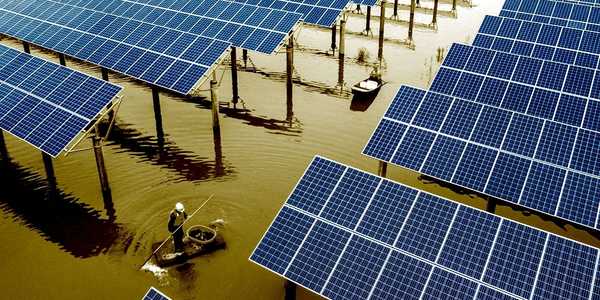
I have written extensively about how high borrowing costs exact an especially steep toll from renewable energy development. That’s because the bulk of spending on a renewable project — say a solar farm — comes up front as capital expenditure that often has to be financed through borrowing. For a gas-fired power plant, on the other hand, the spending is split more evenly between upfront costs and operational costs (namely fuel), which can be paid for out of cash flow from operating the plant. Where the cost of operating a gas plant is at the mercy of natural gas prices, for a renewables project, interest rates can dominate the economics.
Sure enough, that inflationary pressure showed up in the second-quarter results of America’s renewables companies. Solar installer Sunrun, for instance, has seen declining sales growth. In an August earnings call, Sunrun CEO Mary Powell said the company’s results were “reflecting a higher capital cost as interest rates have inched up.” Wind developer Orsted, meanwhile, told investors that it had incurred a nearly $200 million loss on its U.S. offshore wind business “as a result of an increase in the long-dated U.S. interest rates.”
But macroeconomic indicators like deficits, inflation, and interest rates show just one side of the picture. After all, it’s not just governments that borrow, and it’s not just money that’s necessary for any sort of big project, including renewable and clean energy.
At the same time governments are borrowing more, bond market investors are also being offered hundreds of billions of dollars of debt from hyperscalers and other technology companies looking to build out data centers to power artificial intelligence. Bond markets will have to ingest over $500 billion of AI-related debt issuance this year, according to Morgan Stanley, and they’ll be called upon again to help fund an estimated $1.2 trillion in capital expenditures in 2027. Across the economy as a whole, “more than half of the capex growth this year can likely be ascribed to the buildout related to AI,” Federal Reserve Chair Kevin Warsh said in a speech last week.
That boom is driving economic activity — and high prices — throughout a number of sectors, including materials and labor.
Cleveland Fed President Beth Hammack told CNBC in June that inflation was “too high,” citing “insatiable” demand from data center developers for inputs such as electric switchgears. (Hammack was a dissenting voice at the July meeting of the Federal Open Markets Committee, voting for a higher interest rate against the Fed majority who decided to keep rates unchanged.)
And it’s not just software engineers who are seeing high salaries as a result of the AI boom. The technology buildout has also raised the wages of laborers and tradespeople essential to both data center and energy projects, especially for specialized trades like electricians.
“Skilled workers were difficult to find in a range of fields, notably technicians and tradespeople,” the Federal Reserve reported in its July report on economic conditions.
While this is great news for electricians and their families, it’s also the type of thing that can make central bankers nervous.
The “AI investment surge could trigger nonlinear price increases,” Dallas Fed President Lorie Logan said in July. “The risk is that the pressures broaden as AI demand touches construction, power generation, and other sectors.”
That’s the silver lining for renewable energy — and all energy developers. While the costs of capital, materials, and labor are going up, electricity itself has never been in greater demand.
The energy developer and utility NextEra told investors on its July earnings call that it’s been able to sign new contracts on existing assets at a $20 per megawatt-hour premium over recent prices, a process known as “recontracting,” indicating solid demand for power.
Overall, NextEra chief executive John Ketchum said, “Hyperscalers and other large load customers are increasingly focused on speed, certainty, and scalability. That plays directly to our strengths.”
Chirag Lala, vice president of research at the Center for Public Enterprise, explained to me that it’s this demand that’s balancing out the higher financial and material costs renewable developers face. “That’s why we are still getting solar and battery builds. There’s demand on the system,” he told me.
The industry is in a kind of tug of war between financial and structural factors pulling it back, and demand factors pushing it forward. “That buildout could absolutely be faster and bigger if a variety of structural and financial variables were mitigated,” Lala said.