GLOBALVARS
TEST TEST TEST
0
Products
Current conditions: The Macy’s Thanksgiving Day Parade’s balloons are likely to be grounded for the first time since 1971 as a nor’easter batters the American Northeast with heavy rain and wind • Evacuations are underway along California’s northern coast as record king tides flood waterfront communities • Mashpee, Massachusetts, where descendants of the Wampanoag tribe who facilitated the first Thanksgiving with the Puritan settlers still live, is cold and set for heavy rain from the nor’easter.
THE TOP FIVE
1. A Wall Street rout follows Huang’s triumphant return
The stock market greeted Nvidia’s decision to reinstate Jensen Huang as chief executive Monday with elation, propelling tech stocks upward by more than 7% in early trading. But a hangover kicked in Tuesday, sending shares in heavily indebted data center developers CoreWeave and Nebius plunging by double digits, along with next-generation energy companies such as geothermal giant Fervo Energy and the nuclear startup X-energy. It’s the waning of the “Jensen effect,” Ben Emons, the founder and chief investment officer at FedWatch Advisors, told CNBC. But he cautioned that President Donald Trump’s admitted role in pressuring the chip designer to bring back its founder after he admitted to extramarital affairs with at least two employees and a Chinese spy came with downsides. The stock dip suggests “markets see government intervention as ‘moral suasion’ that carries credit and interest rate risks.”
If data centers get harder to build in the coming months and years, particularly as Democrats who ran on a crackdown take control of Congress, the prospect of putting computing racks in space is growing more appealing. Yesterday, my colleague Katie Brigham published a feature looking at the momentum behind companies promising to build data centers in space or at sea, far from anyone’s backyards. “When we first embarked, there was probably more skepticism than there was conviction,” Joseph Yaffe, chief operating officer of space-based data center startup Cowboy Space, told Katie. “Now I think the balance has changed, and there’s more conviction than there is skepticism.”
2. Yet another natural gas megadeal consolidates the Permian
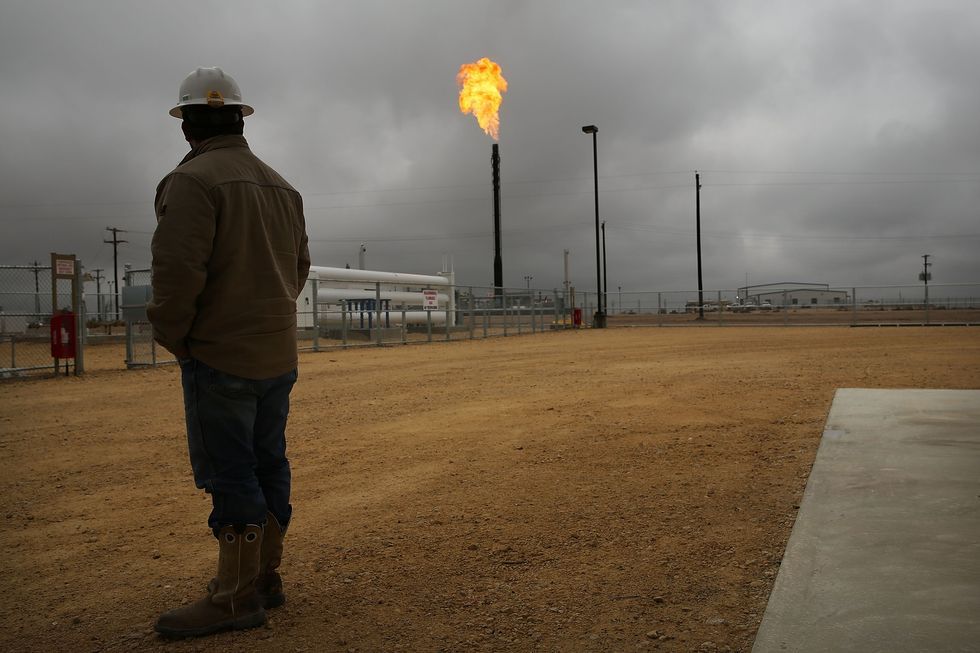
Hardly a week after shale giant Diamondback Energy struck a $5 billion deal to buy Double Eagle’s portfolio of drilling sites across the Permian Basin, yet another multibillion-dollar acquisition is consolidating resources in the nation’s most lucrative hydrocarbon patch. On Tuesday morning, Texas Pacific Land Corporation, one of the largest landowners in the Lone Star State, bought land and water manager EagleRock Land in a $3 billion all-stock transaction. TPL, as the company is known, makes money by collecting royalties from oil and gas drillers and earning fees on managing water. Combined with EagleRock, the company said it will own about a million fee surface acres — land that can be leased on the surface — plus about 37,600 future undrilled well locations. “This combination supports our strategy to build the premier land, water, and royalty platform in the Permian Basin by adding complementary assets that we believe will deliver increased intrinsic value per share,” Tyler Glover, TPL’s chief executive, said in a statement.
3. BYD announces plans for a new French factory
Maybe the French call them “freedom EVs.” Chinese auto giant BYD said Tuesday it had entered talks to buy Ineos Automotive’s factory in Hambach, France, giving the behemoth a new hub in Europe. “Our proposed investment in Hambach reflects our confidence in France and our ambition to keep growing in Europe,” BYD Executive Vice President Stella Li said in a statement to Reuters. In a post on X, French President Emmanuel Macron called the project “a direct result of our economic policy and our action on the automotive sector.”
In the United States, meanwhile, unions are pressing the incoming Democratic Congress to permanently ban imports of Chinese electric vehicles. But Global Times, the nationalist Chinese tabloid, wrote Tuesday that a ban “can’t ease EV ‘growing pains.’”
Sign up to receive Heatmap AM in your inbox every morning:
Email Address *Our Privacy Policy & Terms Apply.
4. Trump administration eyes data centers on military bases
The U.S. Army last week offered land at nine locations to commercial power projects and opened the door to data centers. The move came nine days after a veterans group led by a retired Army general called for a pause on data centers on federal lands. The efforts, Military.com reported, were “on separate tracks,” with Veterans for Public Lands addressing its request to the Department of the Interior and Congress while the Army pursued leases under its own legal authority. But the timing highlights the countermanding political pushes underway, particularly since the November midterm elections vaulted so many Democrats who campaigned on halting data center construction to victory.
In southeastern Iowa, meanwhile, the Army is set to detonate an aging munitions stockpile following a legal back-and-forth as locals raised concerns over the potential cloud of toxic dust that will come after the explosion. The plume, which could travel across Iowa and to part of Missouri, would contain lead azide. The explosion is set to take place at 9 a.m. local time.
5. The EU is proposing changes after COP31’s failures
For three decades, the United Nations’ climate summits have relied on a consensus-based decision-making model. But after COP31, the latest conference, ended this week in failure, the European Union is preparing to propose changes. In an interview with the Financial Times, EU climate commissioner Wopke Hoekstra said Brussels would make “suggestions” to the UN Framework Convention on Climate Change. “That is definitely one of the things the UNFCCC needs to look into ... We need to make COP fit for purpose, and that means looking at more effective decision-making,” he said. “The process is being hijacked by a small minority.”
THE KICKER
Yet another nuclear newcomer country has entered the race to build its first atomic power station. On Tuesday, World Nuclear News reported that Zambia is now “committed” to constructing a nuclear plant. “As we pursue our national ambition to expand electricity generation capacity by 10,000 megawatts, nuclear energy offers a potential source of reliable, low-carbon baseload power,” Zambian Minister of Electricity Peter Kapala said. “Zambia remains committed to developing its nuclear power program responsibly, in accordance with international safety, security and safeguards requirements and the standards established by the International Atomic Energy Agency.”