GLOBALVARS
TEST TEST TEST
0
Products
This is Heatmap Daily, a weekday digest written by our executive editor. Subscribe here.
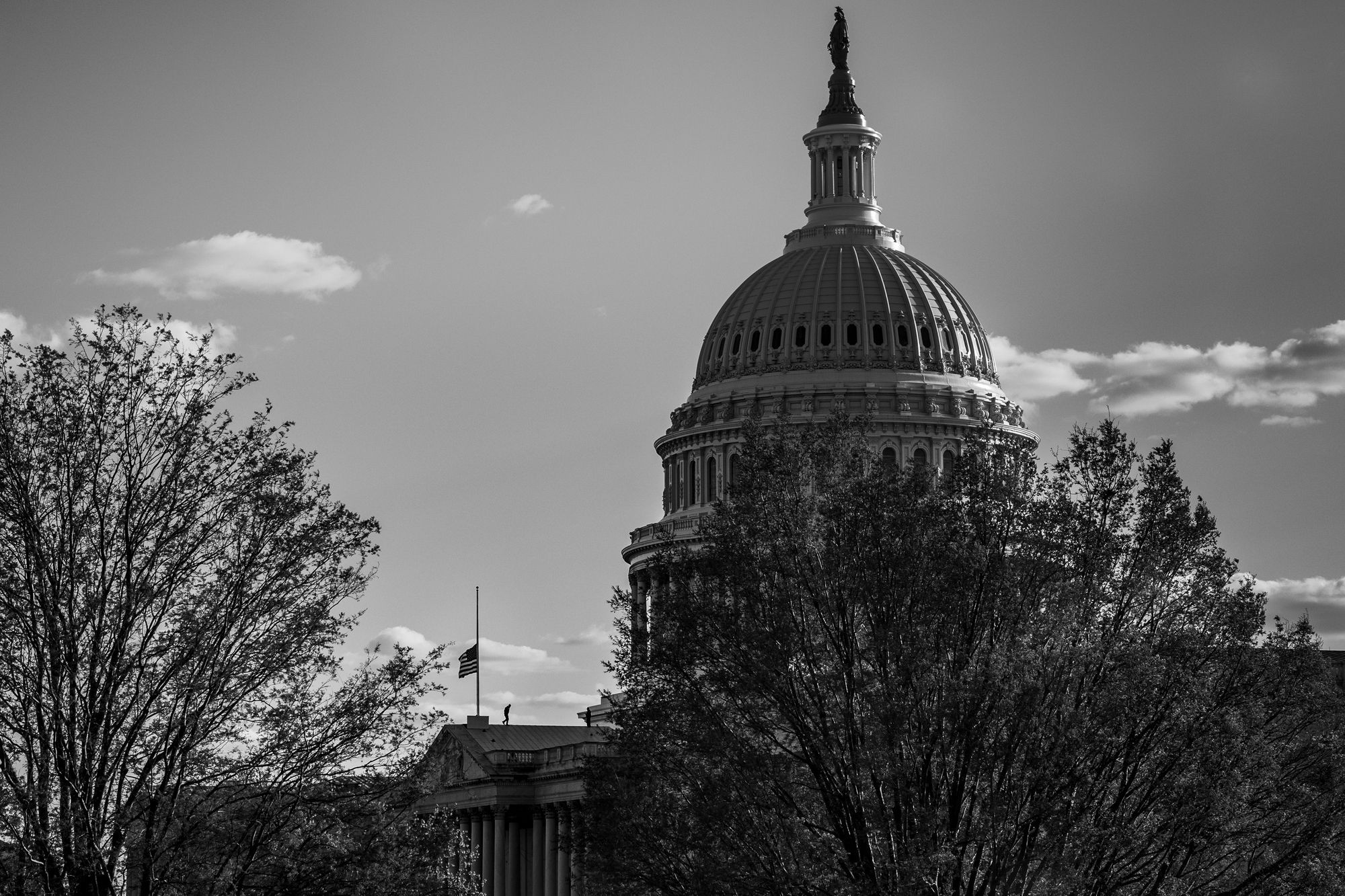
The Bipartisan American Affordability and Jobs Act will reportedly get a vote in the House of Representatives next week.
House Republicans will bring up the bill under a rule, a mechanism that only needs a majority vote to pass. As my colleague Emily Pontecorvo wrote last week: “The question will be how many Republicans show up” — since many just lost their seats in the Democratic tsunami — “and whether enough Democrats are willing to jump in to salvage the vote if the numbers are too thin.”
The other question will be whether some Democrats who support the legislation, but don’t want to vote for it, abstain from the vote in order to improve its margins.
Two Democrats who won’t be voting for the bill, apparently, are Representatives Sean Casten and Mike Levin, who had backed pro-transmission legislation in the House. Levin had previously told us he was undecided. He now says the bill risks “giving up protections we may never win back in exchange for gains that aren’t guaranteed either.”
Both legislators want to take up permitting reform next year.
Now, let’s note: If a Trump-backed permitting reform bill fails to win a bare-majority vote in a GOP-controlled House — after surviving the Senate filibuster — it will be really pathetic. There are plenty of reforms that Republicans want in this bill, and if they can’t get their own rapidly drooping caucus to Washington, D.C. to vote for them, then Republicans don’t deserve them in the first place. Letting BAAJA flop would be an altogether fitting end to Mike Johnson’s speakership.
At the same time, and with the stipulation that I’ll tackle this at greater length in tomorrow’s podcast, I will confess to enormous skepticism that if BAAJA dies, Democrats will want to take up permitting reform next Congress. I’m sure Representative Jared Huffman will hold hearings and even write text, and I’m sure Casten and Levin will introduce their own bills. But I am very skeptical that Democrats will actually get legislation passed, especially a bill that doesn’t just prune at the edges.
Why? Any bill, no matter what, will require 60 votes in the Senate and the president’s signature. That means Democrats will have to work with Senate Republicans and President Trump to get something done. And because of the laws that will inevitably be involved, supporters of the permitting status quo will tell people — correctly — that Chuck Schumer (or Chris Van Hollen) and Hakeem Jeffries are working with the Trump administration to rewrite some of our country’s oldest environmental laws. It will not matter that Democrats will want the changes this time, nor will it matter that legacy environmental groups will hold the pen on them. Many permitting reform opponents simply do not trust Democratic lawmakers nor the D.C.-based nonprofits that see themselves as the heart of the environmental movement. And they will not be bound to “play nice” with them in public arguments and especially on social media.
But the problems will not only emerge from bipartisanship. The past two months have made clear, I think, that permitting reform divides the Democratic caucus and even the environmental coalition itself. While lawmakers are understandably skittish about negotiating their positions in advance, their reluctance to state their views publicly has allowed big disagreements about this issue to fester. Should Congress limit the National Environmental Policy Act’s six-year statute of limitations to more closely resemble the time limit on lawsuits used in other countries? Should lawmakers write any carve-outs into the National Environmental Policy Act — even one-offs for public transit construction, a national transmission buildout, or a future president’s climate-friendly infrastructure plan? Should Democrats accept any changes to the Clean Water Act in order to strengthen transmission permitting? Should transmission lines ever get the same privileges as pipelines?
I believe that building more transmission lines is essential (but not sufficient) to decarbonization. Right now, a striking number of lawmakers — and environmental groups — seem to agree. But we have already seen progressives such as the law professor and perennial New York candidate Zephyr Teachout claim that the bill’s transmission and grid reforms — which, again, groups like Earthjustice “strongly support” — are actually a giveaway to the tech industry. Such accusations will only get worse if Democrats actually start to put a bill together. Does the party really have the force of will on this to push a bipartisan compromise through when there will be many other issues for the caucus to focus on, such as healthcare, Trump’s corruption, or ending the Iran war — all of which will be far more unifying? Will they really finish a bill under Trump when the alluring prospect of a new trifecta is just a few months away?
I’d love to be wrong about this, and perhaps I am too pessimistic. But I remember what it was like when the Inflation Reduction Act passed, which Democratic lawmakers now seem to universally regard as the apotheosis of climate lawmaking. The discourse around that bill, frankly, was miserable — the IRA was called a “forced compromise” and a “climate suicide pact” at the time. Let’s be realistic about the politics that will greet a permitting reform bill in 2027 — even one written by Democrats.