GLOBALVARS
TEST TEST TEST
0
Products

Current conditions: Tropical Cyclone Karim is gathering strength over the Indian Ocean en route to Australia’s remote Cocos Islands • Wildfires are raging across the Russian Far East republic of Sakha at a rate 50% more severe than last year, making the region — also known as Yakutia — the world’s current No. 2 source of fire-related CO2 emissions emissions • Storms at opposite ends of the continental United States, in the Northwest and the Southeast, threaten to test Americans’ gratitude ahead of this week’s Thanksgiving celebrations.
THE TOP FIVE
1. Global climate talks collapse amid a row over fossil fuels
Negotiations on a global plan to slash planet-heating pollution collapsed Sunday after a European-led coalition refused to sign onto a joint statement that omitted explicit mention of transitioning away from fossil fuels, putting the nations at odds with another faction headed by Saudi Arabia. The longest-ever United Nations climate summit, which kicked off nearly three weeks ago in the Turkish seaside enclave of Antalya, fell into disarray at the end. The European Union, Norway, Panama, and the Marshall Islands were among nearly 90 governments that rejected the draft cover decision for the COP31 summit. Other major oil producers including Iran, Qatar, and Russia, joined Saudi Arabia’s resistance. The U.S., of course, once again abstained from the process after withdrawing from its governing treaty, the UN Framework Convention on Climate Change, earlier this year. Fossil fuels were not the only area of tension in Turkey: As my colleague Emily Pontecorvo put it, adaptation finance was the “dark cloud” hanging over this year’s summit. The Natural Resources Defense Council blamed Turkey for the talks stalling out. “Negotiations were hampered by a COP Presidency that did not make their own climate finance pledges, so had little credibility to push other rich countries to come with commitments,” Joe Thwaites, NRDC’s international climate finance director, said in a statement. “While climate finance continues to rise, the refusal of most contributors to talk about their future efforts has increased uncertainty and distrust.”
Fiji and Tonga, meanwhile, declared national emergencies amid severe droughts inflamed by El Niño. Perusing the websites of the biggest English-language newspaper in each Pacific Island nation offered a glimpse into the rolling crises. On Sunday, the lead story in The Fiji Times featured testimony from fish farmers whose ponds containing prawn and tilapia had evaporated and a warning from the national utility that hydroelectric dams were drying up. Matangi Tonga highlighted photographs of parched brown fields.
2. PJM proposes overhauling its process for patching large loads onto the grid
PJM Interconnection has proposed a new 12-month annual process that would replace the 18- to 24-month study that previously evaluated how to patch new generation and large power users such as data centers onto the nation’s second-largest grid. If approved by the Federal Energy Regulatory Commission, PJM could begin accepting applications “towards the end of 2027,” the grid operator said on a call with reporters last week. The new 12-month process would start with a four-month screening window, followed by a seven-month system impact study, and finish with a month of hammering out contracts. PJM expects early-application engagement to help speed up the process.
3. Jury convicts Palisades fire arson inspired by Luigi Mangione to burn down mansions
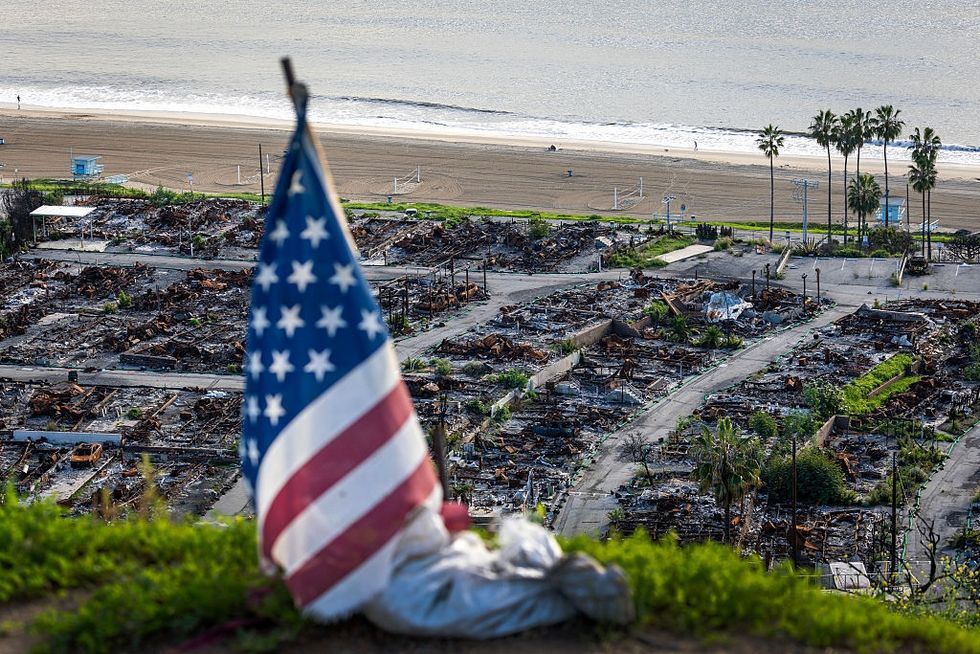
Inspired by Luigi Mangione, the alleged killer of the chief executive of United Healthcare, a 30-year-old man deliberately set fire to trees in a tony Los Angeles neighborhood on January 1, 2025, triggering a blaze that grew days later into one of the most destructive wildfires in California history. That’s the conviction a jury handed down Friday to Jonathan Rinderknecht, who was found guilty after his first federal trial earlier this year ended in mistrial, CNN reported. When police asked Rinderknecht why someone might commit arson in the Pacific Palisades, he said the fire made a similar statement to Mangione’s alleged shooting of an executive from an industry he saw as preying on the nation’s working and middle classes. Rinderknecht reportedly told investigators, “we’re basically being enslaved” by rich people, and expressed what the Los Angeles Times called his “dislike of capitalism.”
In a move seemingly destined to weaken Americans’ faith in the federal government’s commitment to protect public health, the Justice Department cleared the U.S. Army on Friday to blow up a large cache of explosive materials. The detonation could spew a plume of lead dust over southeast Iowa, a state where Rob Sand campaigned on fighting rising cancer rates to become the first Democrat to win the governor’s mansion in 20 years. The Army postponed plans to blow up 68 drums containing about 9,500 pounds of lead azide on Friday amid public outrage. On Saturday, The New York Times reported that the Army had rejected a cleaner, safer disposal option. But the explosion is still scheduled for Monday.
Sign up to receive Heatmap AM in your inbox every morning:
Email Address *Our Privacy Policy & Terms Apply.
4. Chairman of university backing Fermi America’s data center complex pressed ‘to be compensated’
The chairman of the university partnering with the troubled company promising to build the largest data center complex in Texas repeatedly pressed for lucrative deals. That’s the explosive finding of an investigation published Friday by The Texas Tribune. Last fall, Texas Tech University System chairman Cody Campbell sent a text message to Toby Neugebauer, CEO of the developer Fermi America, asking for a seat on the company’s board of directors. “I would even be willing to be executive chairman or something like this. Humbly, my taking this role will bring a ton of credibility, but it also brings a lot of risk to my personal reputation and to the Double Eagle brand, which is sterling,” he wrote, according to the nonprofit investigative news site, referring to the Fort Worth-based oil and gas company where he serves as chief executive in addition to his university role. “We need to be compensated for it.” Fermi America’s Project Matador promises to supply up to 17 gigawatts of artificial intelligence computing with power from a giant gas plant and as many as four Westinghouse AP1000 reactors. Fresh chaos had recently engulfed the company’s board of directors, as I told you earlier this month. But as you may recall from last Monday’s newsletter, Amazon threw the project a lifeline by agreeing to buy 600 megawatts of compute.
In perhaps a greener shoot for nuclear power, the British maritime advisory service Lloyd’s Register, which operates Britain’s classification society, approved rules for classifying nuclear-powered ships and offshore reactor projects, providing what World Nuclear News called “a common classification framework to support the assessment of nuclear technologies for maritime use.”
5. Pacific Fusion nabs a license for radioactive materials
Pacific Fusion has won a license from the New Mexico Environment Department to handle radioactive material, clearing the way for the fusion energy startup to operate its first reactor in Albuquerque. The license marks the first New Mexico has given to a private fusion company. Eschewing the laser and magnet technologies that undergird many startups in the U.S. fusion industry, the Fremont, California-based company aims to generate power through high-energy pulses. “Leaders across the state have demonstrated what’s possible when government and industry work hand in hand to deploy new energy technologies,” Carrie von Muench, Pacific Fusion’s co-founder and chief operating officer, said in a statement. “This license is an essential milestone on our path to putting clean fusion energy on the grid.”
THE KICKER
We know from my colleague Katie Brigham’s reporting that China is dominating manufacturing of the electrolyzers needed to make clean hydrogen. Here’s some proof that the country’s efforts to actually use said hydrogen are picking up: On Friday, Hydrogen Insight reported that China’s longest hydrogen pipeline, supplied entirely with the green version of the fuel, had started operations. But the Financial Times reported Saturday that high costs and dwindling subsidies are idling many hydrogen-powered cars meant to prove the fuel as an alternative to lithium-ion batteries in passenger vehicles.