0
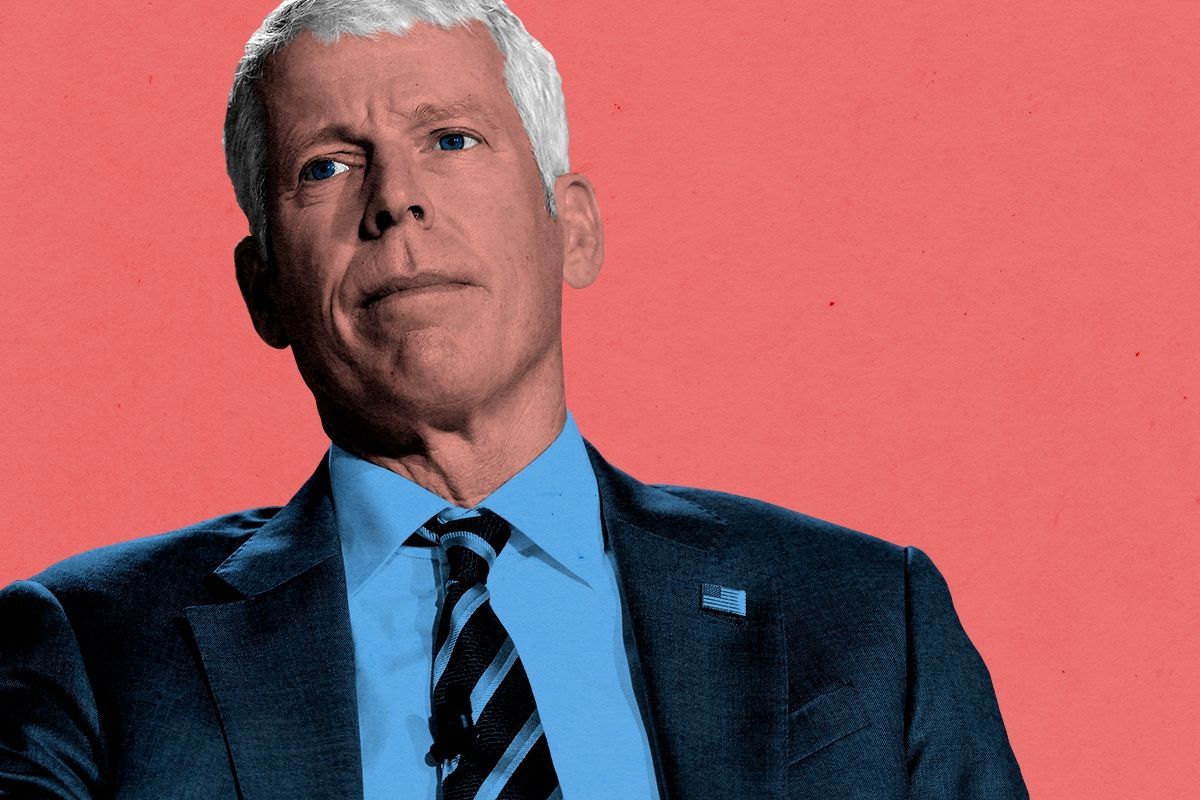
Secretary of Energy Chris Wright testified in front of the House Appropriations Committee on Wednesday to defend his agency’s proposed 2027 budget. Under questioning from Democrats, Wright told the committee that his department’s review of Biden-era funding, announced in May 2025, had “finally come to a completion.”
“Well over 80%” of the 2,270 awards reviewed were moving forward, he said. Some would proceed as originally conceived, while others would be modified. “We have finished that effort, and we are keen to move forward with the majority of the projects which did pass, either straight up or through restructuring,” he testified.
But that assertion obscures the level of uncertainty that remains about the funding.
To back up his statement, Wright sent Congress a list of grants titled “Retain/modify,” which named roughly 1,950 awards — a number consistent with his “well over 80%” of 2,270 number.
But there are big holes in the data. As one example, in January, a federal judge ruled that DOE had to reinstate seven awards the agency terminated last year, ruling that the agency’s targeting of awards in blue states violated Constitutional protections against discrimination. But just one of those seven awards — which should all theoretically be “retained” — is on the list sent to Congress this week. (The single retained award is a nearly $20 million grant for Colorado State University’s Methane Emissions Technology Evaluation Center.)
Meanwhile, 18 other awards that were terminated as part of that same targeting on blue states, but which were not named in the court case, are on the new list. In other words, 18 awards that had been publicly deemed “terminated” and were not reinstated by a judge have been cleared to progress.
Wright’s stats are also misleading in that the new list doesn’t include any of the funding the DOE is statutorily required to pay out to states based on pre-set formulas, such as funding for long-established Weatherization Assistance Programs or the home energy retrofit programs created by the Inflation Reduction Act, which also fell victim to the agency’s review. As I reported last summer, many states were stuck in a holding pattern waiting for the DOE to respond to their applications for the IRA rebate funding.
During the hearing, Representative Debbie Wasserman Schultz of Florida asserted that the agency was still withholding more than $345 million in funds for her state’s energy efficiency rebate programs. Representative Rosa DeLauro of Connecticut raised the same issue.
Wright told DeLauro that the timing for releasing the funds was “in the near future,” and could be as soon as a few weeks away. Later, when Wasserman Schultz pressed him again, Wright said he didn’t know when the funds would be released.
“I do not have a specific answer to that at the tip of my tongue,” Wright said. “I know a lot of these broad scale rebate programs, we’ve gone through to look at carefully, to make sure we get rid of fraud on these things …”
“$345 million is a lot of damn money,” Wasserman Schultz said, cutting him off. “And $8,000 to $14,000 grants are the kinds of things that help struggling homeowners dealing with high electric bills to try to reduce those costs. I would think that you would know at least something about what I’m talking about when you are withholding that much money.”
In response, Wright argued that there was “an incredible amount of fraud” in the programs and “DEI stuff put in,” referring to diversity, equity, and inclusion programs, against which the Trump administration has mounted a crusade. The rebate programs were specifically designed by Congress, in statute, to help lower- and moderate-income households afford home upgrades like heat pumps.
Wright did not provide any information to Congress about which projects were being “modified” versus approved as-is, or describe how the “modified” projects were changing course. He did, however, indicate that the agency was still open to reconsiderating grants that had been terminated. During the hearing, Representative Mike Levin of California brought up his state’s canceled ARCHES hydrogen hub, which had been eligible for up to $1.2 billion in DOE funding. He asked whether Wright would “commit to engage in good faith” with the hub’s leadership, who “want to work collaboratively with you.”
“Absolutely,” Wright replied. He said that the ARCHES hub failed to prove it had a viable pathway to meet its cost goals, but that he was “absolutely open for that dialogue.”