0
Current conditions: A broad swath of the United States stretching from South Texas to Chicago is being bombarded by the Central U.S. with severe storms and more than two dozen tornadoes so far • The thunderstorms pummeling Puerto Rico and the U.S. Virgin Islands are expected to stretch into the weekend • Kigali is also in the midst of a days-long stretch of heavy storms, testing the Rwandan capital’s recent wetland overhaul.
THE TOP FIVE
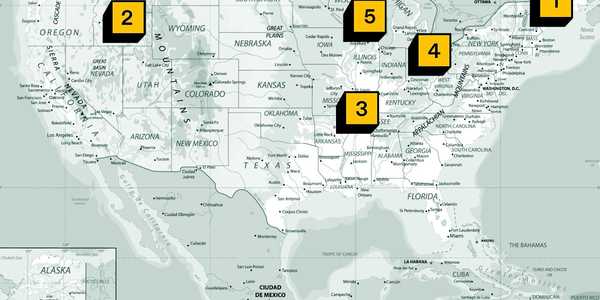
1. The U.S. just brought one of the Western Hemisphere’s biggest wind farms online
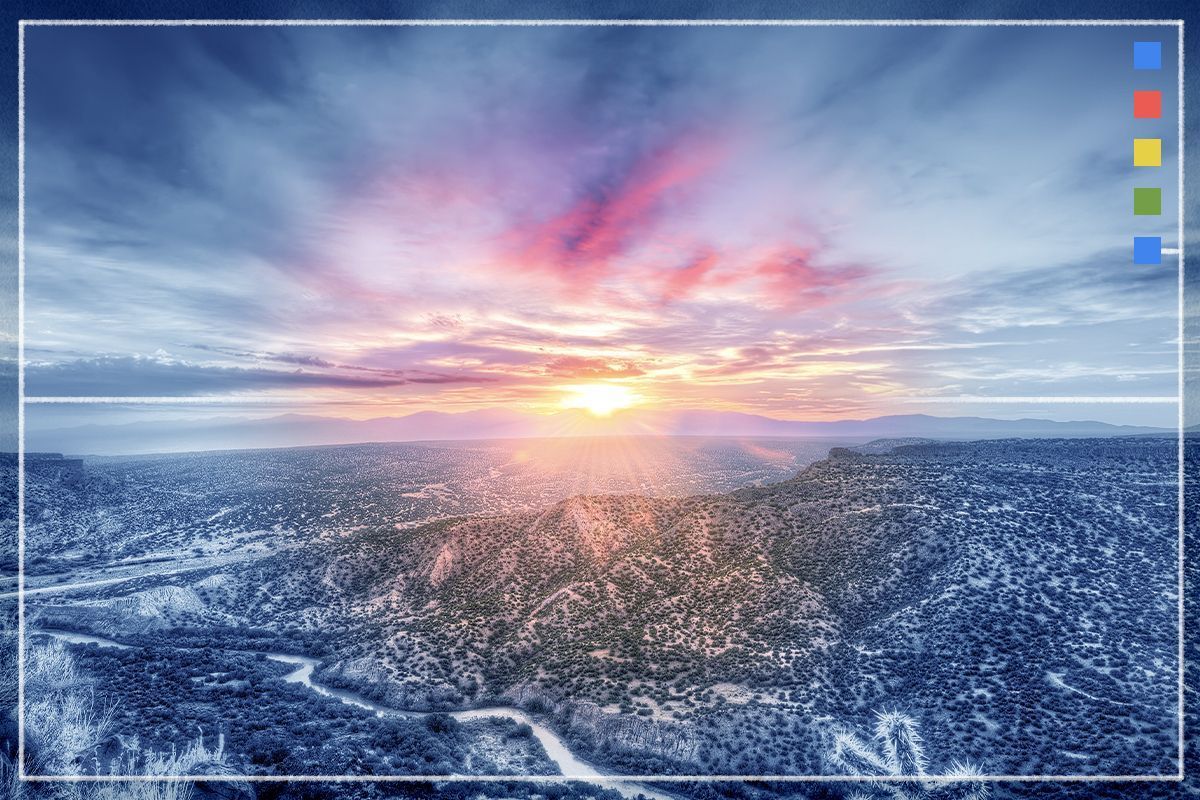
SunZia Wind, the largest renewable energy project of its kind ever built in the U.S., has started generating electricity, nearly capping off a two-decade effort to supply Californians with wind power generated in New Mexico. The developer has begun testing the project’s 916 turbines ahead of planned full-scale commercial operations later this quarter, unnamed sources told E&E News. The project includes 3.5 gigawatts of wind and 550 miles of transmission line to funnel the electricity west from the desert state to the coast. “The impact is already evident,” the newswire wrote. “California broke its record for wind generation eight times in the last four weeks.”
When Heatmap’s Robinson Meyer visited SunZia’s construction site in August 2024, he observed that, once it started running at full blast, the project would “generate roughly 1% of the country’s electricity needs.” Its success in the face of the Trump administration’s attacks on wind could “lay the model” for a new paradigm in which “clean energy buildings and environmental protectors work together to find the best solution for the environment and the climate,” Rob wrote. “We will need many more success stories like it if America is to meet its climate goals — 99 more, to be exact.”
2. Senate votes to open up Minnesota wilderness to mining
The U.S. Senate voted 50-49 on Thursday to repeal a mining ban on land near the Minnesota’s Boundary Waters Canoe Area Wilderness, declaring what Heatmap’s Jeva Lange called “open season” on public lands. In what the public lands news site Public Domain called “an unprecedented use of the Congressional Review Act,” the vote slashes protections for the iconic nature preserve. Inspiring even fiercer political pushback is the fact that Republicans championed the effort largely to benefit an overseas corporation: Twin Metals Minnesota, a subsidiary of the Chilean mining conglomerate Antofagasta, which has for years sought to establish a copper-nickel mine on national forest land near the wilderness area. “The Boundary Waters belong to everyone,” Julie Goodwin, a senior attorney at Earthjustice, said in a statement. “They should be protected and enjoyed by all, not jeopardized to benefit a wealthy foreign company.”
At the same time, global demand for both nickel and copper are surging — and a successful effort to decarbonize the world economy through greater electrification will require a lot more of both metals.
Get Heatmap AM directly in your inbox every morning:
* indicates required
Email Address *Our Privacy Policy & Terms Apply.
3. DAC is back, but still catching flak
The good news: The Department of Energy is allowing the Direct Air Capture hub program started under the Biden administration to move forward. In documents submitted to Congress this week, the agency listed as approved the up to $1.2 billion the program awarded to two projects: Occidental Petroleum’s South Texas DAC Hub, and Climeworks and Heirloom’s joint Project Cypress in Louisiana. As Heatmap’s Emily Pontecorvo noted: “This fate was far from certain.” After the Energy Department cut funding for 10 of the original 21 projects last fall, a leaked list of projects suggested the Louisiana and Texas hubs would be targeted in a second wave of rescissions. The bad news: Last week, Rob had a scoop that Microsoft — whose carbon removal buying made up roughly 80% of the industry — was pausing its purchases. And as he wrote yesterday, even if it’s just temporary, the pause will ripple through the nascent market.
Other technologies that once seemed like science fiction are, in fact, moving forward. In an exclusive for Heatmap, I reported that Clean Core Thorium Energy, a Chicago-based company designing thorium fuel bundles that works in existing reactors, inked a deal to manufacture its first four units. In addition to assembling the bundles, the Canadian National Laboratories will supply the small amount of a special kind of uranium fuel needed to be blended into Clean Core’s mix and that serves as a spark plug for the reaction.
Sign up to receive Heatmap AM in your inbox every morning:
* indicates required
Email Address *Our Privacy Policy & Terms Apply.
4. The federal government is about to change how it brings large loads onto the grid
Last October, the Energy Department asked the Federal Energy Regulatory Commission to set rules for patching data centers, advanced factories, and other large loads onto the grid. The move, as Utility Dive reported at the time, sparked controversy over whether it represented a Washington power grab given that the landmark Federal Power Act gives states jurisdiction over retail electricity interconnections. Now FERC has said it plans to respond. On Thursday, Robin Millican, a researcher at Columbia University’s Center on Global Energy Policy, posted on X that FERC announced a notice of intent to act on the Energy Department’s request, with a ruling expected in June. “Good,” she wrote. “Ensuring interconnection costs from data centers, advanced manufacturing, and big electrification projects aren’t passed to retail customers is overdue.”
5. Two geothermal companies raise a combined $140 million
Back in January, I told you that two geothermal startups raised a combined $212 million: Zanskar, which uses artificial intelligence to hunt down previously undetected conventional geothermal resources underground; and Sage Geosystems, a next-generation startup using fracking technology to drill for geothermal heat in places that conventional resources can’t tap. This week we saw two geothermal companies once again net a nine-digit number. Once again, Zankskar — considered by experts Heatmap surveyed to be one of the most promising climate-tech companies in the game right now for a reason, after all — announced the closing of another $40 million fundraise. Just Capital and Spring Lane Capital led the round, with an additional investment from Tierra Adentro Growth Capital. Zanskar said the round was a development capital facility, a type of deal that usually involves equity or debt to fund a company’s growth. It is “among the first ever structured for early-stage geothermal development, drawing on the best practices from the renewables and natural resource sectors,” the company said Thursday in a press release. The financing will help establish a revolving line of credit “designed to accelerate project development.”
On Wednesday, another competitor in the next-generation geothermal space, Mazama Energy, pulled in a fresh round of capital. The Frisco, Texas-based company, which last year boasted a system that reached hotter temperatures than any other geothermal company, just raised $100 million, according to Axios.
THE KICKER
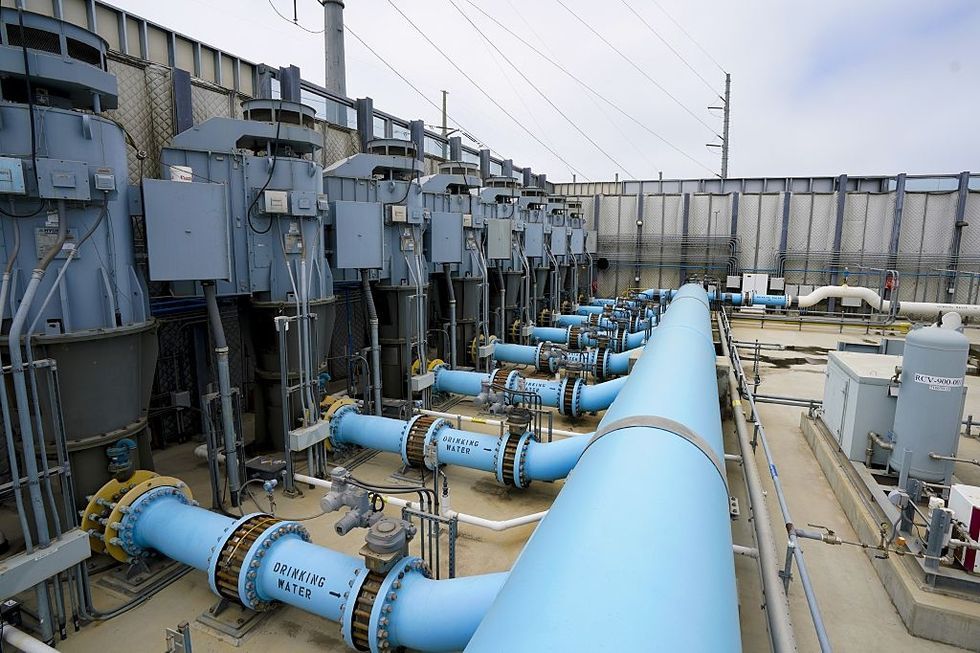
San Diego, once the poster child for a drought-parched Southern Californian city, is now looking to become a water exporter, The Wall Street Journal reported. North America’s largest desalination plant is producing so much freshwater for the San Diego County Water Authority that the city is working on a deal to sell millions of gallons to Arizona and Nevada. The Claude “Bud” Lewis Carlsbad Desalination Plant, which opened in 2015 and is owned by an infrastructure investment firm, may produce more expensive than average water, but “it is important to note that it is more reliable than other sources,” Keith R. Solar, a water attorney from the seaside neighborhood of Point Loma, wrote in the Voice of San Diego last year. “Its value as insurance against disruption of supplies from other sources makes it a critical part of our future.”