0
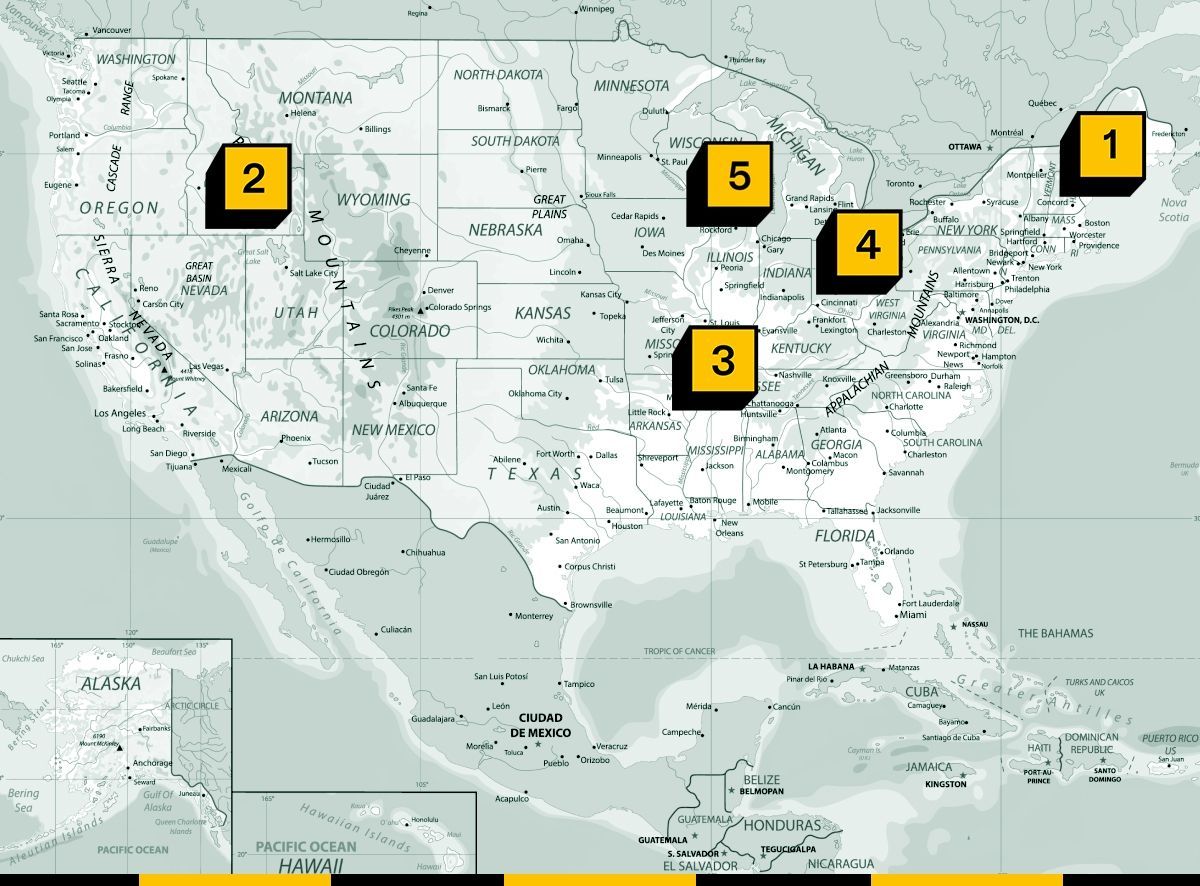
1. Franklin County, Maine – The fate of the first statewide data center ban hinges on whether a governor running for a Democratic Senate nomination is willing to veto over a single town’s project.
- On Wednesday, the Maine legislature passed a total ban on new data center projects through the end of 2027, making it the first legislative body to send such a bill to a governor’s desk. Governor Janet Mills, who is running for Democrats’ nomination to the Senate, opposed the bill prior to the vote on the grounds that it would halt a single data center project in a small town. Between $10 million and $12 million has already been sunk into renovating the site of a former paper mill in Jay, population 4,600, into a future data center. Mills implored lawmakers to put an exemption into the bill for that site specifically, stating it would otherwise cost too many jobs.
- It’s unclear whether Mills will sign or veto the bill. Her office has not said whether she would sign the bill without the Jay exemption and did not reply to a request for comment. Neither did the campaign for Graham Platner, an Iraq War veteran and political novice running competitively against Mills for the Senate nomination. Platner has said little about data centers so far on the campaign trail.
- It’s safe to say that the course of Democratic policy may shift if Mills – seen as the more moderate candidate of the two running for this nomination – signs the first state-wide data center ban. Should she do so and embrace that tack, it will send a signal to other Democratic politicians and likely accelerate a further shift into supporting wide-scale moratoria.
2. Jerome County, Idaho – The county home to the now-defunct Lava Ridge wind farm just restricted solar energy, too.
- Jerome County Commissioners this week adopted an ordinance banning solar on agricultural lands in addition to wind. The ordinance also bans large- and medium-scale battery storage from farmland too. These projects will only be allowed in areas designated for heavy industrial uses.
- I learned about this in an impromptu email from Dan Sakura, a consultant and descendant of detainees at Camp Minidoka, the WWII Japanese internment camp that is now a historic site. Sakura was the tip of the spear representing descendants who fought against Lava Ridge over sightline impacts. “Lava Ridge poisoned the well for renewable energy in southern Idaho,” he wrote.
- I’m not so sure Lava Ridge is solely to blame here, though. Heatmap Pro modeling clearly shows most people in this county are primed to hate anything labeled “clean energy.” On top of that, the sheer magnitude of protected lands in this area made it exceedingly likely that someone would raise concerns about development.
3. Shelby County, Tennessee - The NAACP has joined with environmentalists to sue one of Elon Musk’s data centers in Memphis, claiming it is illegally operating more than two dozen gas turbines.
- The NAACP lawsuit argues that xAI and a subsidiary operating the data center have been operating the turbines without federal air permits. The suit requests that operations cease until a permit is obtained and that the companies pay financial penalties for every day they were unlawfully operating. It was brought alongside Earthjustice and the Southern Environmental Law Center.
- It’s exceedingly likely that after this case, Musk becomes a new favorite villain of the environmental justice movement. This situation has it all: clear racial inequity, fossil fuel pollution, data centers, and allegations of negligence against an ally of the president.
4. Richland County, Ohio - This Ohio county is going to vote in a few weeks on a ballot initiative that would overturn its solar and wind ban. I am less optimistic about it than many other energy nerds I’ve seen chattering the past week.
- It’s a story fit to tug at any renewable developer’s heartstrings: A small group of rural residents banded together to put a measure on the state primary ballot, which will be voted on May 8, unbanning utility-scale solar and wind power. The intrepid volunteers were supported by Ohio Citizen Action, a statewide activist group that’s been canvassing door to door since the 1970s.
- This ballot initiative got a lot of attention this week thanks to a story in Canary Media. But it is also kind of confusing. Yes, it was a shock to see the ballot initiative win the signatures needed to be put up for a vote. But it presents a yes or no vote on the existence of the ban and not solar or wind energy itself, so I assume voters will require some sort of education to know how to vote. Opponents of the ballot initiative certainly have seized on that opportunity, embracing an affirmative message filled with big “YES!” illustrations.
- Richland County voted for Donald Trump over Kamala Harris in the 2024 election by a more than 45-point margin. If the Trump vote is any predictor of how this vote will go, I suspect this ballot question will be defeated. But who knows, crazier things have happened in the backlash to Trump 2.0.
5. Racine County, Wisconsin – I close this week’s Hotspots with a bonus request: Please listen to this data center noise.
- If you don’t want to watch, it’s a local news segment about Microsoft’s data center in Mount Pleasant, Wisconsin, in which you can hear incredibly loud humming and buzzing. It’s so loud you can hear a faint hum during the clip even under pouring rain. One nearby resident says she’s running box fans all over her home to avoid hearing the data center hum.
- Mount Pleasant is far from the only community to deal with this. You can hear it on this local news segment in Virginia and this local news social media post in Michigan. All of this in only the last month.
- Noise concerns are not an issue for renewable energy or battery storage. It’s safe to say data centers have them big time – and it’s a space I plan to investigate soon.