The Trump administration has started to weaken the rules requiring cars and trucks to get more fuel-efficient every year,
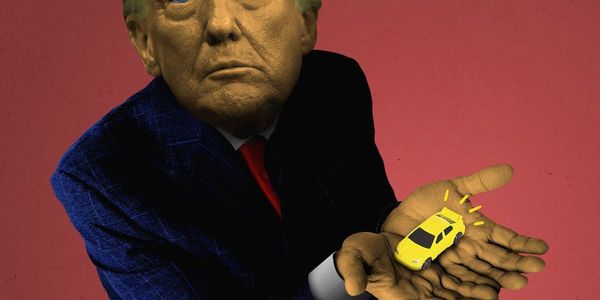
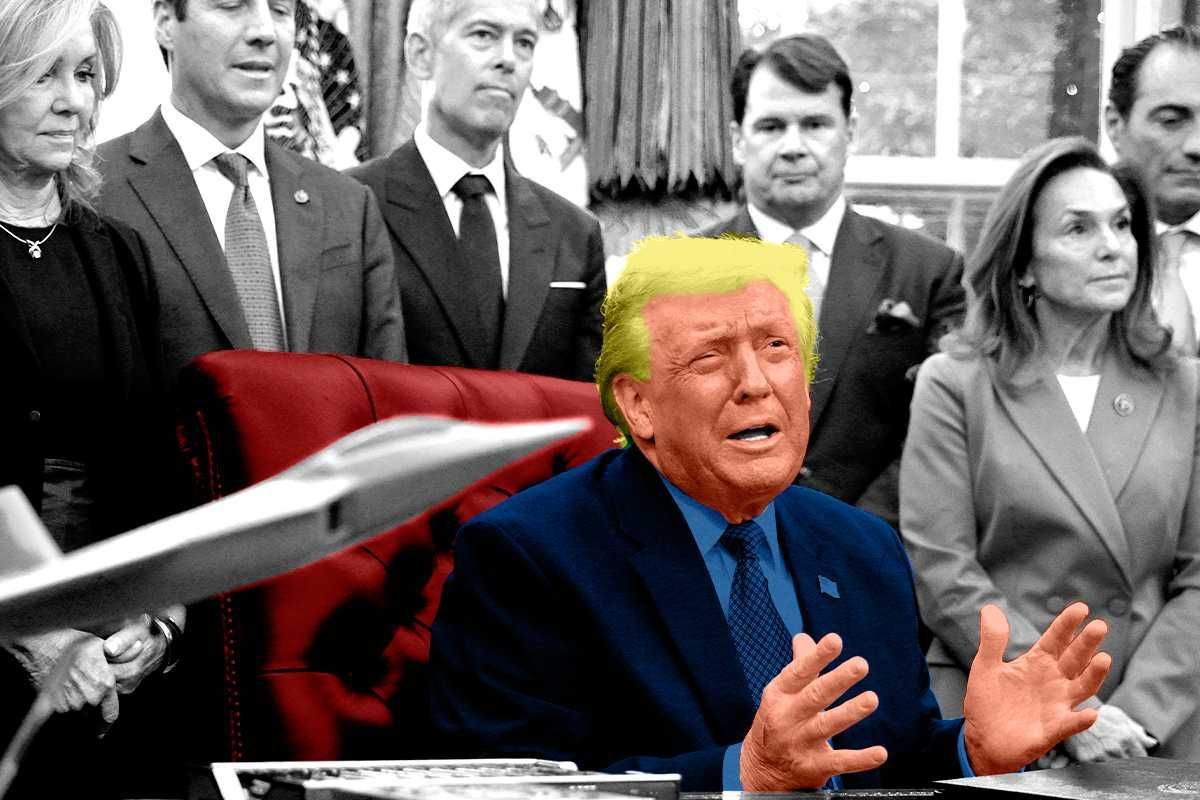
In a press event on Wednesday in the Oval Office, flanked by advisors and some of the country’s top auto executives, President Trump declared that the old rules “forced automakers to build cars using expensive technologies that drove up costs, drove up prices, and made the car much worse.”
He said that the rules were part of the “green new scam” and that ditching them would save consumers some $1,000 every year. That framed the rollback as part of the president’s seeming pivot to affordability, which has happened since Democrats trounced Republicans in the November off-cycle elections.
That pivot remains belated and at least a little half-hearted: On Wednesday, Trump made no mention of dropping the auto tariffs that are raising imported car prices by perhaps $5,000 per vehicle, according to Cox Automotive. Ditching the fuel economy rules, too, could increase demand for gasoline and thus raise prices at the pump — although they remain fairly low right now, with the national average below $3 a gallon.
What’s more interesting — and worrying — is that the rules fit into the administration’s broader war on innovation in the American car and light-duty truck sector. The United States essentially has two ways to regulate pollution from cars and light trucks: It can limit greenhouse gas emissions from new cars and trucks, and it can require the fuel economy from new vehicles to get a little better every year.
Trump is pulling screws and wires out of both of these systems. In the first category, he’s begun to unwind the Environmental Protection Agency’s limits on carbon pollution from cars and light duty trucks, which he termed an “EV mandate.” (The Biden-era rules sought to require about half of new car sales be electric by 2030, although hybrids could help meet that standard.) Trump is also trying to keep the EPA from ever regulating anything to do with carbon pollution again by going after the agency’s “Endangerment Finding” — a scientific assessment that greenhouse gases are dangerous to human wellbeing.
That’s only half of the president’s war on air pollution rules, though. Since the oil crises of the 1970s, the National Highway Traffic Safety Administration has regulated fuel economyfor new vehicles under the Corporate Average Fuel Economy, or CAFE, standards. When these rules are binding, the agency can require new cars and trucks sold in the U.S. to get a little more fuel-efficient every year. The idea is that these rules help limit the country’s gasoline consumption, thus keeping a lid on oil prices and letting the whole economy run more efficiently.
President Trump’s signature tax law, the One Big Beautiful Bill Act, already eliminated the fines that automakers have to pay when they failto meet the standard. That change, pushed by Senator Ted Cruz of Texas, effectively rendered the regulation toothless. But now Trump is weakening the rules just for good measure. (At the press conference on Wednesday, Cruz stood behind the president — and next to Jim Farley, the CEO of Ford.)
Under the new Trump proposal, automakers would need to achieve only an average of 34.5 miles per gallon in 2031. Under Biden’s proposal, they needed to hit 50 miles per gallon that year.
Those numbers, I should add, are somewhat deceptive — because of how CAFE standards are calculated, the headline number is 20% to 30% stricter than a real-world fuel economy number. In essence, that means the new Trump era rules will come out to a real-world mile-per-gallon number in the mid-to-high 20s. That will give automakers ample regulatory room to sell more inefficient and gas-guzzling sport utility vehicles and pickups, which remain more profitable than electric vehicles.
Which is not ideal for air pollution or the energy transition. But the real risk for the American automaking industry is not that Ford might churn out a few extra Escapes over the next several years. It’s that the Trump proposal would eliminate the ability for automakers to trade compliance credits to meet the rules. These credit markets — which allow manufacturers of gas guzzlers to redeem themselves by buying credits generated by cleaner cars — have been a valuable revenue source for new vehicle companies like Tesla, Lucid, and Rivian. The Trump proposal would cut off that revenue — and with it, one of the few remaining ways that automakers are cross-subsidizing EV innovation in the United States.
During his campaign, President Trump said that he wanted the “cleanest air.” That promise is looking as incorrect as his pledge to cut electricity costs in half within a year.