GLOBALVARS
0
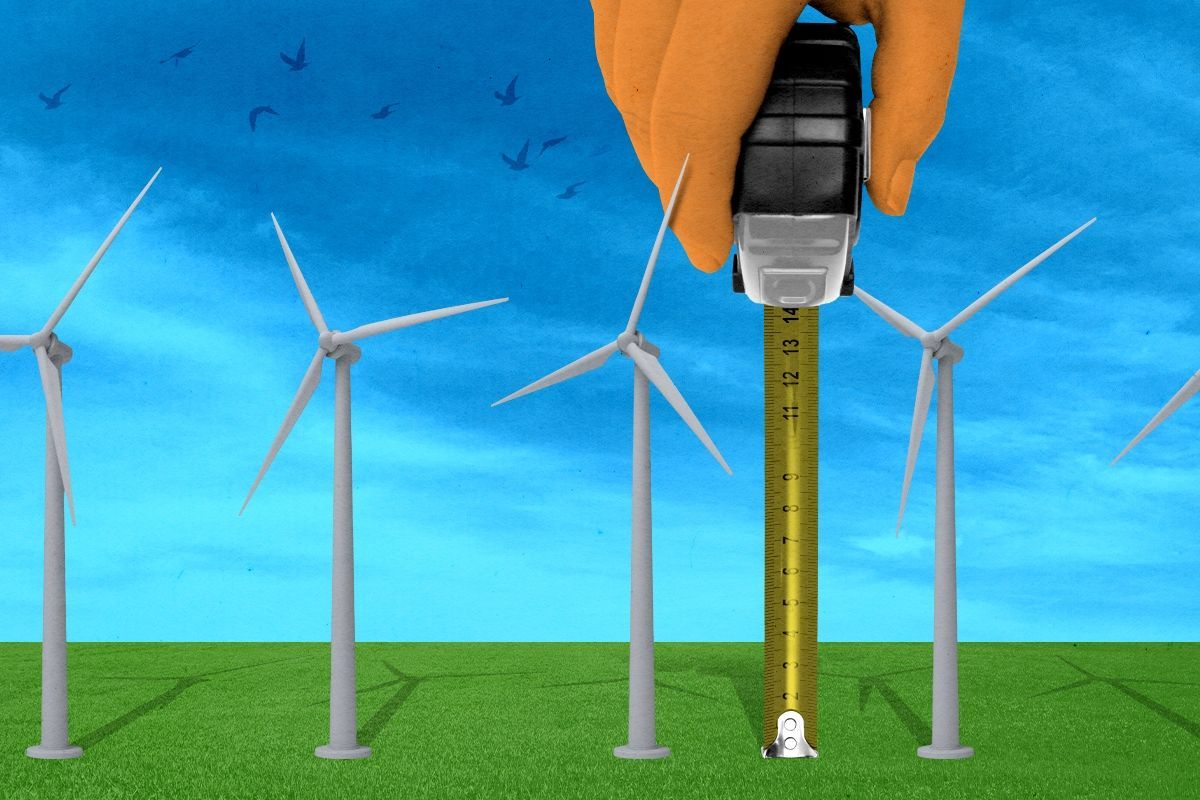
A federal judge ruled in early August that the Trump administration’s freeze on vertical height clearances for wind turbines was likely illegal. More than a month later nearly all of the wind energy projects remain on pause, as federal officials add new red tape that industry representatives say runs afoul of the court’s edict.
Let’s catch-up quickly on the American wind sector’s existential dilemma: the federal government has control over airspace higher than 200 feet from the ground and wind farm turbines essentially always enter that sphere of control. For at least a year and a half, the Trump administration through the Department of Defense and the Federal Aviation Administration has slowly gummed up what industry and former government officials have said was once a rote, benign bureaucratic process for ensuring turbine rotation didn’t interfere with flight patterns or radar at nearby airports.
So, Trump is delaying key approvals even for wind projects on private land, a worst-case scenario for the industry during his presidency. With support from their respective trade groups, many project developers sued and in August won a preliminary injunction against this de-facto national wind energy freeze. The court ruling said federal law laid out clear deadlines for completing these airspace reviews and the administration was willfully missing them.
“[In] light of DoD’s review freeze that started a year ago and still has no end in sight, the wind developers would naturally look to the same deadlines for relief,” U.S. District Judge Karin Immergut wrote, stating the administration’s pause violated the Administrative Procedures Act. Immergut also said the Trump administration potentially violated the law by reviewing projects under a new national security “methodology” that was defined by Congress.
But on Thursday, in its first update to the court since the ruling, the Justice Department laid out how essentially all projects remain at a standstill because they were adopting a new kind of comprehensive review process.
The administration claimed that “as a matter of policy” it had “resumed processing wind energy project applications,” but it only described a single instance where a company had heard from the military about moving forward. In addition, that company as well as all others affected by the freeze would still face a “new analytical methodology” for federal agencies reviewing height clearances for all projects, which appears to fly in the face of the ruling. The Justice Department did not provide any more detail about the methodology in its status update to the court.
Nicole Hughes, executive director of lead plaintiff Renewable Northwest, asserted in an interview Tuesday that the agency isn’t complying with the court order. “It appears to me they’re still stalling,” Hughes told me, adding the federal government’s reluctance to proceed is creating “a pretty high risk” for developers of any new wind projects in the United States. She said if nothing changes in the short term, they’re going to “have to go back to the judge and ask for further clarification as to what it means to comply with this order.”
“The lack of compliance by the administration does put into question the credibility [of the courts] and what pieces hold their feet to the fire? What remedies do we have? There’s never been a time an administration flaunts a judge’s orders the way the administration is.”
The Justice Department status update described a multitude of wind energy projects impacted by the freeze. At least 30 projects apparently already signed deals proposed by the military to mitigate radar impacts and were awaiting a counter-signature from the Department of Defense (which Trump calls the Department of War or DoW). Those previous legal agreements are now at risk of being thrown out, according to the Justice Department filing. The new pathway forward for them apparently is: “DoW will either (i) provide a notice that the project presents an unacceptable risk to national security, (ii) re-engage in negotiations with the developer to attempt to ameliorate any unacceptable risks, or (iii) circulate to the project proponent [a] new model mitigation agreement.”
At least 110 projects were in the middle of discussions with the federal government about mitigating airspace impacts when the injunction came down, according to the DOJ filing, which says none of them have heard from officials since the injunction. “As of this filing, developer re-engagements have yet to begin because such discussions need to be informed by the analytical results. Given the number of projects in this category, DoW has been assessing how to resume review and engagement with the developers.”
The DOJ said another 50 projects awaiting initial meetings with the federal government about airspace risk will begin once the administration “finishes with those” 110 projects that were in the middle of the process. That waiting list will also include another at least 40 projects the Justice Department said received “presumed risk” airspace notices from the federal government.
We’ve seen the Trump administration use extralegal means to delay wind energy before, but never to this extent or after a judge ruled against them. The Interior Department had been freezing wind and solar projects on federal lands under a policy requiring Secretary Doug Burgum sign off on routine approvals, but those typical government processes seem like they’ve resumed after a different federal court ruling enjoining that policy.
American Clean Power, the largest utility-scale solar and wind energy trade group, declined to comment. The Department of Defense did not respond to a request for comment.