GLOBALVARS
TEST TEST TEST
0
Products
Jason Fenske loved his Lucid. Or at least, the idea of it.
Fenske is the proprietor of the influential Engineering Explained channel on YouTube, which digs into the mechanical minutiae of both combustion and electric vehicles. While he regularly test-drives all sorts of cars, Fenske last year bought himself a Lucid Air, the big, beautiful sedan from the California EV startup.
The choice was no surprise. Fenske called the Air “one of the most impressive feats of engineering in the automotive world.” Technologically, it is indeed a car without compromise. Despite delivering 600-plus horsepower and a 0-60 mph time of barely more than 3 seconds, it was also the most efficient car in America, a fact that helped push its driving range above 400 miles per charge. But after a year of Fenske’s Air struggling with seemingly incurable software glitches, the company bought back his car and gave him a long-term loan of the Gravity, its new electric SUV. When that, too, suffered software bugs, he finally moved on to a Ford.
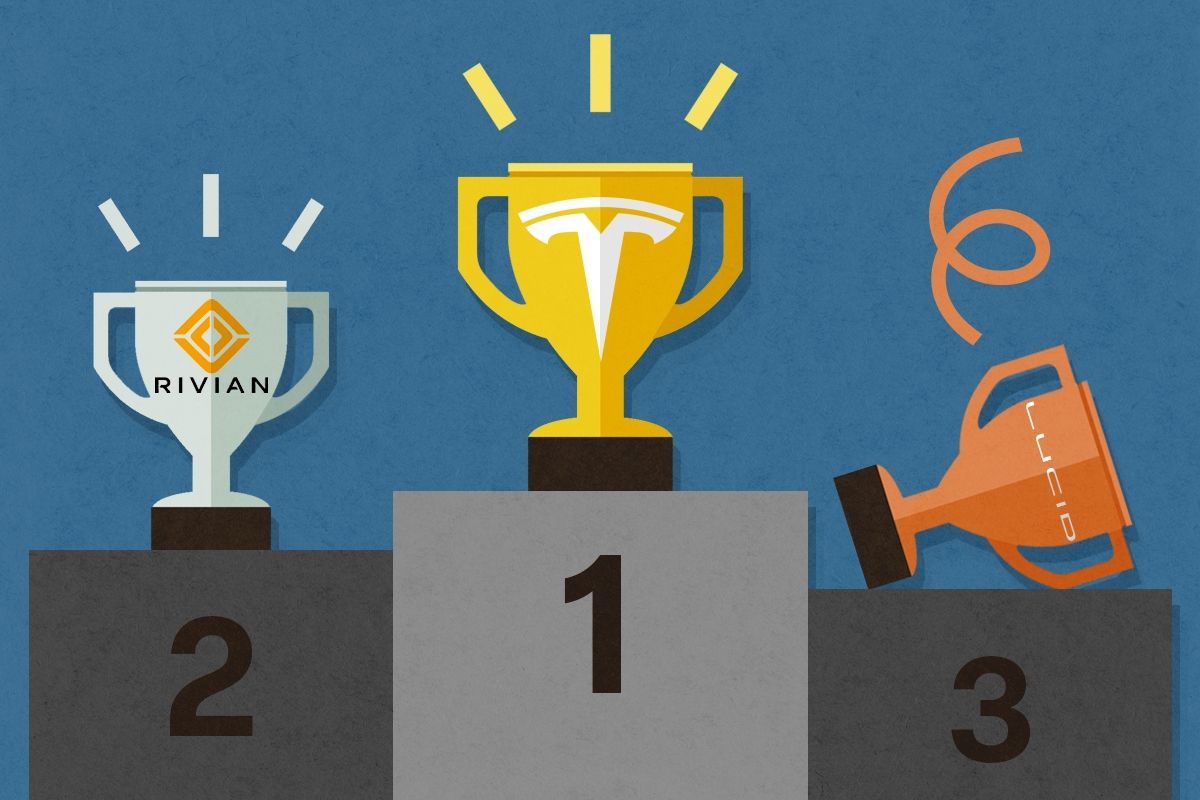
The episode encapsulates what has been a trying time for the automaker. Alongside Tesla and Rivian, Lucid looked to be the third successful EV startup to spring out of California. Tesla, once it overcame the trials of “manufacturing hell” to produce the Model 3 and Model Y, seized control of the American EV market and has yet to let go. Rivian, buoyed through the bad years by investments from the likes of Volkswagen and Amazon, appears poised to reach a sustainable future now that the more affordable R2 is out and thriving. Lucid, though, is stuck in an earlier stage in startup evolution — reportedly burning through cash as it struggles with both the software side of its vehicles and with the state of the U.S. EV market. The mood grew so grim this summer that the company announced a full operational reset to try to restore investor confidence, which included CEO Peter Rawlinson, formerly the man in charge of the Tesla Model S, stepping down.
Things started off much more promising in 2021, when the Air established Lucid as the efficiency nerd’s EV. Today, the rear-wheel-drive version gets the equivalent of 146 miles per gallon — tops in the U.S., and good enough for the Air to get 420 miles of range. The most expensive Air, with a supersized battery to match, delivers an eye-popping figure of 512 miles.
The obvious next step for the American market is to build an SUV, which Lucid has done with the Gravity. We tested it this past weekend in a seven-seat configuration, ferrying five people and three dogs up to Oak Glen, California, the mountain town of apple orchards and pumpkin patches where Angelenos come to cosplay autumn. (Bibi, one of the four-legged passengers who doesn’t care for cars, loved the Lucid). Despite its length, which gives it the proportions of a svelte minivan, the Gravity’s ample power makes it drive like a lighter vehicle. And despite its size, the Lucid’s efficiency obsession gives the car 400-plus miles of range, allowing us to drive a three-hour round trip and still have half the battery capacity left over. I can’t tell you how luxurious that feels compared to everyday life in a standard-range Tesla Model 3.
Inside, the Gravity is truly deluxe and inviting. Where Tesla embraced a fully minimalist interior and Rivian projects more of an REI, gentrified outdoorsy aesthetic, Lucid tilts more toward being the electric black car. The sprawling curved screen across the dashboard and secondary large touchscreen in the central console, combined with the elegant approach to its UI, is just so much more sophisticated than what you’d see in a legacy carmaker’s EV.
The setup offers a refined way to use all the car’s basic functions like climate, music, and navigation, as well as search for charging stations and view all of the car’s energy and efficiency stats. The array of settings and options allows an EV enthusiast to tweak a thousand things about their car. Take charge planning on road trips, a sore spot I often gripe about: In the Lucid, a bevy of options lets you select and deselect whichever charging networks you want, tell the computer whether to prioritize total time versus number of charging stops, and lots more. Then there are the premium extras meant to justify the Gravity’s price, which starts at $80,000 and rises from there. Wellness and relaxation programs can take over the digital displays and lighting, transforming the cabin into a little spa on wheels for as long as you’d like. The car simply feels like Silicon Valley affluence.
Within that user experience lies the problem, though. Lucid’s EVs are unquestionably mechanically excellent. But in the age of the software-defined car, all the software has to be excellent, too. Fenske’s Air wasn’t the only Lucid beset by bugs. This is an unavoidable fact of life in the 21st century — Tesla and Rivian have certainly had their share — but Lucid appears to have struggled more to cleanse them. Even my test unit would erroneously flash a momentary warning while I was rolling down the freeway (close latch before driving!) that disappeared just as quickly. It made no real difference to the driving experience, yet it’s one of those tiny glitches that saps one’s confidence in a car whose software is also responsible for keeping you safe.
Set aside software woes, and the timeline is troublesome for Lucid, too. Tesla established a pattern for EV startups: it built the very expensive Model S and X first, making just enough revenue from those pricey halo cars to survive until it could build the more affordable Model 3 and Y and generate a reliable revenue stream. Rivian took a similar path, selling R1 pickups and SUVs that cost $70,000, and sometimes much more, before introducing the R2 this year. Lucid’s smaller and cheaper EVs would be called the Cosmos and Earth, but we’ve yet to see those vehicles, and they won’t arrive until at least next year. When they do show up, they’ll have to compete with an improving set of luxury EVsfrom the likes of BMW and Mercedes-Benz.
Once those $50,000 Lucids exist, far more drivers will be exposed to all the things that the brand does right. And maybe — as long as there’s enough investment cash to get there — that will establish Lucid as a brand that is here to stay. Until then, the sticker price of these dream machines means that Lucid is competing in a small slice of an already small market, since not even a year of expensive gas has been enough to tip Americans toward EVs for good.