0
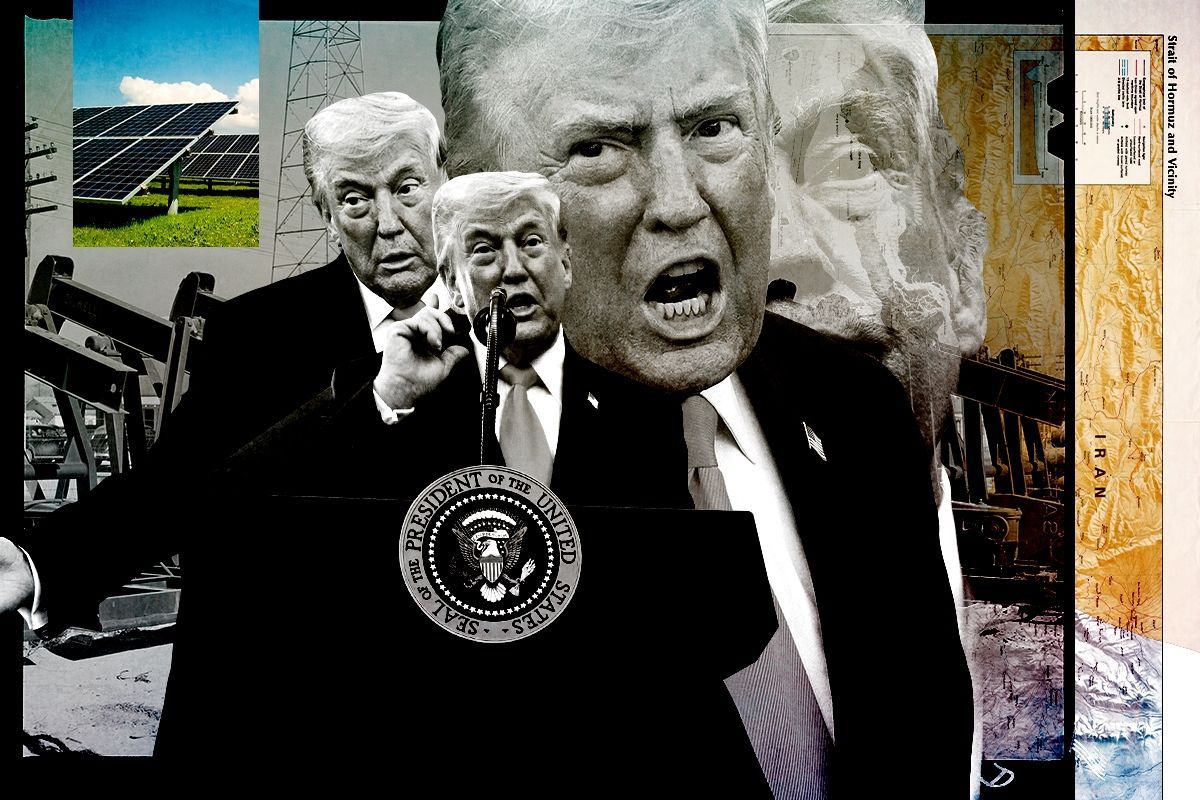
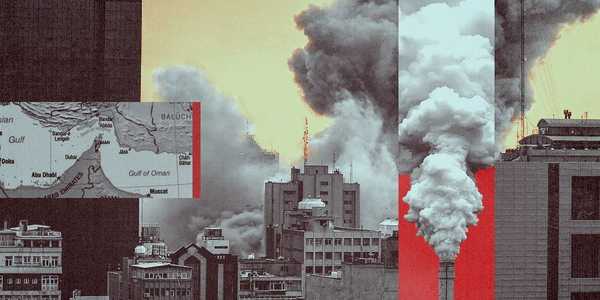
The energy crisis brought about by the Iran War has not changed the Trump administration’s priorities. Officials are still pushing the same litany of pro-fossil fuel policies now as they have since as far back as the 2024 campaign — but it has given them a new sense of verve. With 20% of the world’s oil production and 20% of the liquified natural gas market affected in some way or another by the effective closure of the Strait of Hormuz, one might think a change of course might be called for. But no — now more than ever, U.S. officials are saying, it’s time for the Trump energy agenda.
Here are a few examples from recent days of U.S. officials using the energy shock to advance Trump-favored policies:
“That policy is more important than ever”
Secretary of the Interior Doug Burgum has been acting as an energy project pitchman, promoting a long-discussed LNG project in Alaska that would bring gas from the state’s North Slope some 800 miles to a terminal on its Pacific Coast at Cook Inlet.
The project has been talked about for decades, but its high price (last estimated at around $44 billion — though that was in 2015) and uncertainty about LNG demand have prevented it from getting underway. While the project’s developer, Glenfarne Group, has won preliminary commitments from Asian buyers, it has yet to get final commitments or make a final investment decision.
Burgum has been a cheerleader for Alaska LNG since before the current war with Iran, saying in December that the project “strengthens U.S. energy security, creates jobs for Alaskans, and reinforces our commitment to a permitting system.” When he made a brief stop in Anchorage earlier this month on his way to an energy conference in Tokyo, he used the opportunity to sell Alaska LNG alongside the state’s governor, Mike Dunleavy.
“We have enough energy to be able to sell to our friends and allies so they don’t have to buy from our adversaries or be threatened by our adversaries in terms of their supply chains,” Burgum told reporters, according to the Anchorage Daily News. “So that policy is more important than ever.”
The conference itself had been planned before the war in Iran began. Upon landing there, Burgum told Bloomberg that the “urgency” around investing in and buying U.S. energy “had gone up,” due to the war.
Adam Prestidge, president of Glenfarne’s Alaska LNG project, echoed Burgum at a state legislative hearing on Monday, according to the Daily News.
“The direct impacts of the events in Iran have been a real acceleration and intensification,” Prestidge told legislators. Late last week, Dunleavy called for legislation creating a property tax exemption for the project to ease its path to completion, a sign that it’s gathering steam and may actually, finally come to fruition.
“It could be a very severe energy crisis if Europe doesn’t act”
For months, American officials have badgered Europe to revise rules on methane emissions set to go into effect next year, which will require energy importers to demonstrate that the “monitoring, reporting, and verification requirements” for preventing methane emissions in export countries are “equivalent to those applied domestically in the E.U.,” or else face penalties. Late last year, American diplomats told European Union officials that the U.S. should be exempt from the rules and from any penalties for noncompliance, The New York Times reported. Secretary of Energy Chris Wright has argued that the rules would be ineffective and would constitute “regulatory overreach.”
Earlier this week, the American ambassador to the European Union, Andrew Puzder, told Bloomberg that Europe is “going to need to reduce the regulatory requirements and restrictions that it has in place,” adding that “It could be a very severe energy crisis if Europe doesn’t act,” given the conflict in the Gulf.
The Trump administration has also leveraged the energy crisis to keep the E.U. in line on trade, with Puzder telling the Financial Times that the bloc should approve the trade deal negotiated by Trump and European Commission President Ursula von der Leyen last July lest the E.U. risk losing “favorable” access to liquified natural gas. A key component of the deal was a minimum tariff on European Union goods — part of the set of tariffs that was thrown out by the Supreme Court last month. Trump quickly implemented a temporary global tariff on all imports, however, and the European Parliament voted on Thursday to advance their side of the deal, eliminating many tariffs on U.S. goods.
“Please, produce more”
Wright has also been calling on American oil producers to drill more, a more or less constant mantra from throughout Trump’s political life.
“Prices went up to send signals to everyone that can produce more: ‘Please, produce more,’” Wright said during a speech Monday at the CERAWeek energy conference in Houston. At the same time, he said that “prices have not risen high enough yet to drive meaningful demand destruction,” and pointed to Trump administration efforts to keep prices contained, such as releasing 172 million barrels of oil from the Strategic Petroleum Reserve.
Burgum was similarly optimistic about oil prices, telling Politico earlier this week that high prices would last “weeks not months.”
So far, there’s little evidence that American oil drillers are substantially overhauling their investment plans. Oil investors still prefer to see “capital discipline,” meaning that the impetus for substantially increased drilling may have to be permanently higher prices — exactly what the Trump administration doesn’t want.
“Capital discipline in key U.S. operators — both oil and gas-focused — is still in place, despite recent uptick in oil prices,” Mizuho analyst Nitin Kumar wrote in a note to clients Wednesday. One executive told the Mizuho analysts that “resource depth, service costs, and cost of capital” are “key barriers to a short-term supply response” from shale drillers. Kumar wrote that “this, in our view, is positive for commodity prices over the longer term, even assuming a deescalation of hostilities in the Middle East.”
On March 10, the U.S. Energy Information Administration bumped up its forecast for American oil production in 2026 by 500,000 barrels per day, to 13.8 million barrels. That same forecast assumed that Brent crude prices would remain above $95 per barrel “over the next two months.”
By far the most effective price intervention since the war began has been Trump’s various indications that it will be over soon. Oil benchmarks fell substantially after Trump announced a five-day moratorium on hitting Iranian energy infrastructure on Monday and as reports of negotiations to possibly end the war emerged, with West Texas Intermediate Crude falling from almost $100 a barrel to around $87 before rising back up to $93. Trump extended his deadline to Iran Thursday for another ten days to April 6.
Nothing to say on clean energy
Trump’s hostility toward renewables is also largely unchanged — just days after the Department of Justice declined to appeal a ruling in favor of an offshore wind project, the administration struck a deal with French energy company TotalEnergies that, in effect, trades an offshore wind lease for investment in natural gas.
“The irony in all of this is it’s driving many, many more countries to look to China for all the different electricity technologies,” Josh Freed, senior vice president for the climate and energy program at Third Way, a center-left think tank, told me. “This is a real own goal by the United States by abandoning domestic development of electricity technology.”
Nor, in a more unstable and uncertain energy world, is the U.S. seeking to become a major exporter of green technology to countries that are looking to reduce their reliance on fossil fuels. The administration has yanked funding from dozens of green industrial projects and overseen a dramatic fall in electric vehicle sales, while battery capacity is being converted for use by data centers.