0
Current conditions: The first forecasts for the 2026 Atlantic hurricane season project up to four major storms and up to 16 named storms, roughly the same as last year • Florida is facing its driest stretch in years, with 72% of the state undergoing the two worst levels of drought possible right at the start of the growing season • Ajman, the United Arab Emirates’ fifth most-populous city, is enduring record rainfall as storms are expected to continue through the end of the week.
THE TOP FIVE
1. Petrochemical prices are soaring
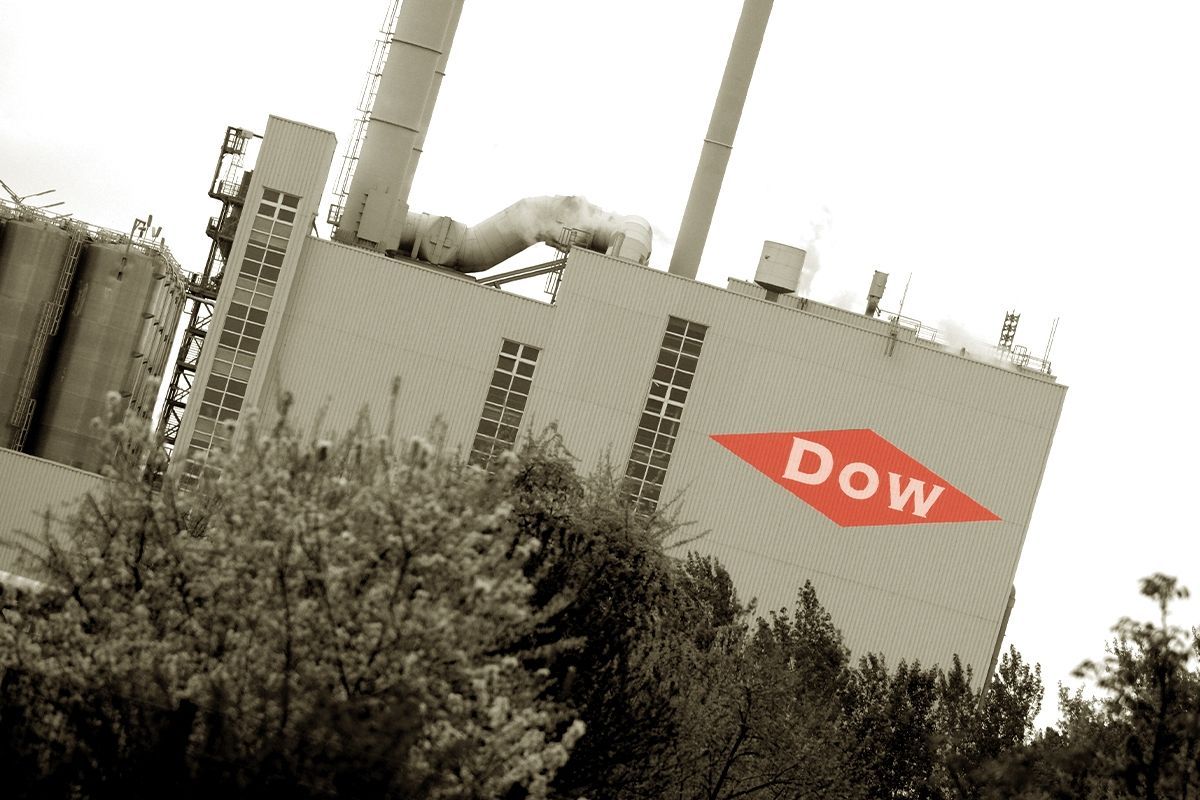
Anyone who watched television in America in the late 1990s should remember the Got Milk-esque slogan from the industry’s landmark advertising campaign: “Plastics make it possible.” Well, it turns out safe passage through the Strait of Hormuz makes plastics possible. On Tuesday, chemical maker Dow told customers that it plans to double a previously announced price hike on plastic resins as the war in Iran chokes off the supply of raw materials. The move, first reported in The Wall Street Journal, comes a week after Dow CEO James Fitterling told investors at a conference that the company planned to raise the price of polyethylene by $0.15 per pound in April, after hiking the price by $0.10 this month. Now Dow plans to increase the price by $0.30 per pound. Rival producers such as LyondellBasell and Exxon Mobil are imposing their own price hikes. Used to make shopping bags, plastic bottles, and other goods, polyethylene is typically made with natural gas in the U.S., where the fuel is abundant, and with naphtha, a hydrocarbon derived from crude oil, elsewhere in the world. The prices of both polyethylene and naphtha “have gone vertical since the start of the war,” Bloomberg broadcaster Joe Weisenthal noted in a post on X after covering the soaring costs on his latest “Odd Lots” podcast.
On a positive note, new analysis from the consultancy BloombergNEF found that “a large share” of the Persian Gulf’s oil production “could return relatively quickly, should the Strait of Hormuz reopen and midstream operations normalize.” Still, “a full recovery will be uneven and field-specific.” Fields could restart and ramp up production in at most seven weeks. Senate Minority Leader Chuck Schumer, meanwhile, outlined Democrats’ vision to take on higher prices with a general framework that calls for expanding renewables, cutting red tape on energy infrastructure, and upgrading the grid with more transmission capacity. Renewables are providing a boost elsewhere: The British renewables giant Octopus Energy told the BBC it’s seen a 50% rise in solar panel sales since the start of the Iran War.
2. EPA gives the ethanol industry a win
The Environmental Protection Agency handed an easy victory to the biofuels industry Wednesday, approving the sale of higher-ethanol blends of gasoline in a bid to bring down surging prices at the pump by augmenting petroleum with corn. The higher blend is typically banned in warm weather because it can worsen smog. But waivers for what’s called E15 fuel have “become commonplace in recent years, and both Republicans and Democrats have called for it to become year-round and permanent to lower prices at the pump,” the Associated Press reported. It’s already allowed in some states: Iowa (the epicenter of the ethanol industry), Illinois, Minnesota, Nebraska, Missouri, Wisconsin, and most of South Dakota. EPA Administrator Lee Zeldin announced the waiver at the CERAWeek energy conference in Houston, where he held a press conference on the issue but then took no questions from journalists, according to Heatmap’s Robinson Meyer, who is on the ground at the confab.
The U.S. Postal Service, meanwhile, plans to impose its first-ever surcharge on packages to cover the rising cost of fuel and transportation. The 8% fee is set to come into effect on April 26, though the current plan would phase out the surcharge on January 17, 2027, according to The Wall Street Journal. Private parcel carriers, including FedEx and United Parcel Service, have imposed fuel surcharges for years, but this is the first time the federal agency is doing so in a bid to stabilize its finances.
3. India just set new, rather weak clean-energy goals
India’s electricity demand is soaring as the world’s most populous nation inks trade deals left and right with the world’s major economies, which are looking to shift their supply chains away from China. Yet the heavily coal-dependent nation set what the Financial Timescalled just “modest goals for renewable energy and emissions cuts for the next decade.” On Wednesday, Prime Minister Narendra Modi unveiled the country’s latest clean energy targets, promising a “people-centric approach” to “accelerating clean energy and green growth.” But in the long-delayed document, which all countries were due to submit to the United Nations a year ago, the Modi government pledged to reduce emissions relative to its gross domestic project by 47% by 2035, compared to 2005 levels. The blueprint also promised renewables would make up 60% of India’s cumulative installed electricity capacity by 2035, well below the country’s Central Electricity Authority estimates that by 2036 nearly 70% of India’s power would come from non-fossil fuel sources.
Sign up to receive Heatmap AM in your inbox every morning:
* indicates required
Email Address *Our Privacy Policy & Terms Apply.
4. Rio Tinto aims to open a big copper mine in Arizona in the mid 2030s
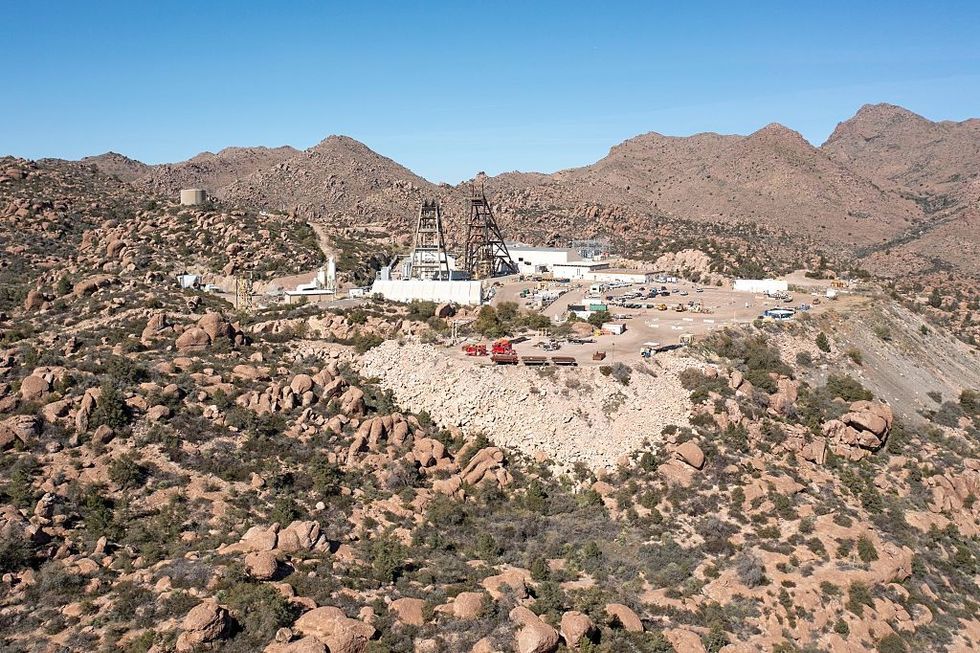
I have written repeatedly in this newsletter that the metals industry is more concerned about the West’s capacity to refine ore into useful materials than it is about the capacity to extract more minerals from mines. Here’s the umpteenth example: Speaking to a Reuters reporter at CERAWeek, the mining giant Rio Tinto said it plans to open its Resolution Copper facility in Arizona in the mid-2030s. But a senior executive told the newswire the company may need to export some of its copper concentrate due to the challenging economics of smelting in the U.S. When Heatmap’s Jeva Lange visited the town that would host the mine, experts told her “much if not all of the raw copper extracted at Oak Flat to China for processing.”
5. U.S. nuclear regulators test a new environmental review
Fermi America’s Project Matador, the sweeping data center campus in Texas designed to be powered by large nuclear reactors and gas plants, is officially the guinea pig for the Nuclear Regulatory Commission’s new pilot program to modernize how the agency conducts environmental reviews. Under the new approach, the NRC allows applicants to develop a draft Environmental Impact Statement. “By rethinking the traditional review process, the program is expected to reduce in-house NRC review time by approximately 50% and deliver resource savings of about 30%, all while maintaining compliance with environmental requirements,” the NRC said. Fermi America is the first private company to participate in the pilot, which World Nuclear News called “transformative.”
TerraPower, the Bill Gates-backed next-generation reactor development, announced a new engineering platform designed with the consultancy SoftServe and powered by Nvidia’s Omniverse artificial intelligence-based modeling platform. The software will “rapidly accelerate the siting and design” of TerraPower’s liquid sodium-cooled Natrium reactor “from years to months,” the company said in a press release. “To meet growing power demand, advanced nuclear plants must move to construction faster, with higher design precision and disciplined execution,” Eric Williams, TerraPower’s chief operating officer, said in a statement. “With our initial Natrium plant design complete, we are able to leverage our partnerships with Nvidia and SoftServe to deploy an AI-powered digital twin to enhance our engineering team’s efforts and greatly improve our speed to market capabilities.”
THE KICKER
If you thought a war that cuts off global fertilizer supplies right at the start of growing season was concerning, just wait until you find out about the plague of locusts descending on five of Russia’s farming regions. The Kremlin’s agricultural officials say data indicates that locust populations have survived the winter in significant numbers, threatening “widespread crop losses” in the Chechnya, Khakassia, Dagestan, as well as the Volgograd and Saratov regions, according to Fertilizer Daily.