0
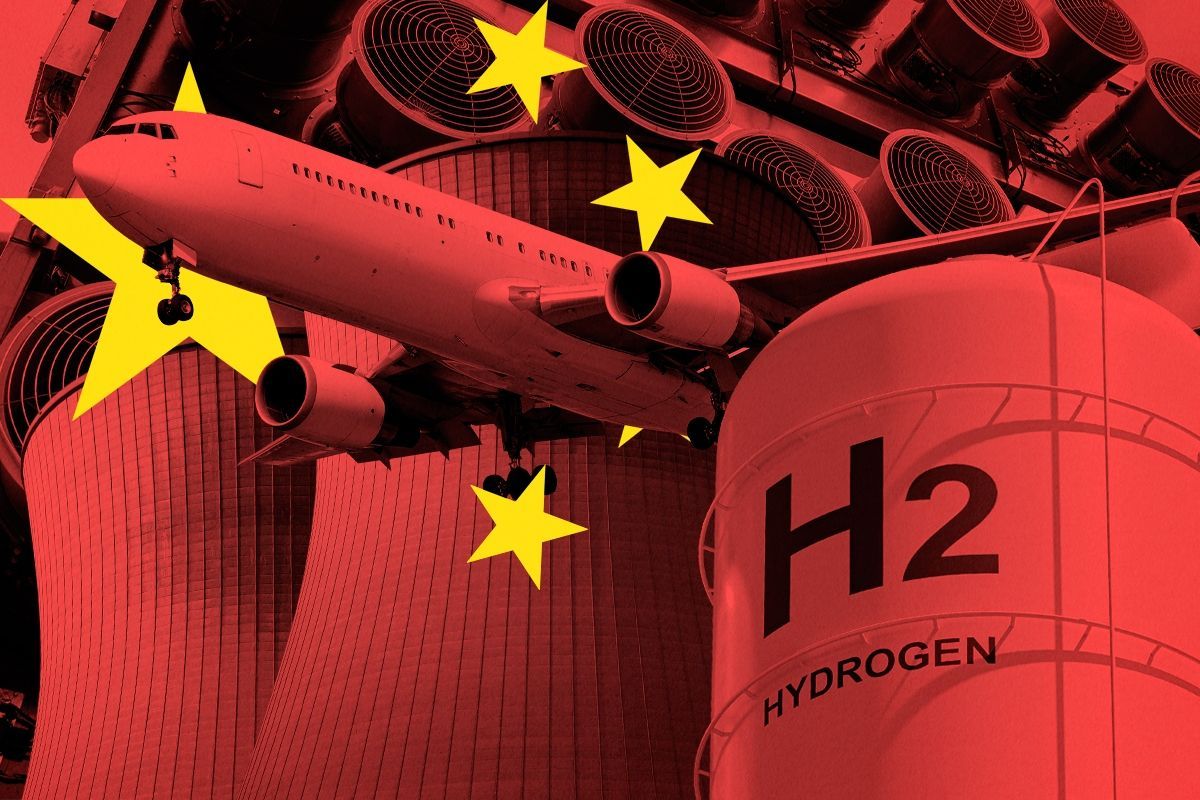
While some of our most promising decarbonization technologies were born in one of the Department of Energy’s National Labs or in Silicon Valley, China is where so many of them — from solar panels to electric vehicles and battery energy storage — have achieved critical commercial scale. That makes the country’s latest Five-Year Plan an essential document for understanding the future of climate tech.
With a U.S. administration that has eschewed its own climate commitments, many have hoped that China would take on a global leadership role. On that front, many experts have been left wanting. The document makes no promises on phasing out coal, which accounts for over half of China’s energy consumption, and doesn’t set a target for the expansion of solar.
“It’s a green tech addition plan as opposed to a decarbonization plan,” Jeremy Wallace, a Professor of China Studies at Johns Hopkins University, told me. Over the past five years, the country has deployed nearly a terawatt of new solar, far exceeding even its own ambitions. “So the buildout rapidly exceeded expectations, but has not seemingly led to a systematic rethinking about the system,” Wallace said.
The plan doeslean into climate tech, however, even if it stops short of positioning new forms of clean energy generation as direct coal replacements. And that interest extends far beyond already commercialized sectors like solar, wind, battery storage, and electric vehicles. The list of “future industries” that the party is prioritizing includes “hydrogen energy and nuclear fusion energy,” alongside quantum science, biological manufacturing, brain-computer interfaces, and 6G wireless networks.
“I don’t think China is creating these technologies as a niche climate experiment anymore. They’re being folded into a broader industrial strategy,” Qi Qin, a China analyst at the Centre for Research on Energy and Clean Air, told me of the emergent tech that the plan mentions. “I think that the more important question is which of them are moving into real deployment now, and which are still at the stage of strategic signaling.”
Much of that should come into sharper focus in the coming months. Now that the national direction has been set, local officials will begin translating the state’s broad agenda into concrete targets and on-the-ground projects. It is not too much to say that how they choose to do so will largely determine how quickly the world decarbonizes.
Scaling hydrogen and clean fuels
The plan’s repeated mention of green hydrogen and hydrogen-derived fuels is particularly notable given these industries' struggles in the U.S. to reach economic viability and secure offtakers, as the Trump administration has dialed back the clean hydrogen tax credits and canceled grants for planned green hydrogen hubs.
And while China also can’t ignore the underlying economics of green hydrogen — which is useful for decarbonizing heavy industry and transport by truck, ship, or air, but still expensive to produce and not so helpful outside those specific use cases — the party appears much more open to bringing it down the cost curve. As Qin put it, “hydrogen has clearly moved up in political visibility.” The plan promises to “expand applications of hydrogen energy in transportation, electricity, industrial, and other domains,” according to an unofficial translation, while improving “renewable energy hydrogen production equipment” such as electrolyzers, advancing “the hydrogen energy industry chain toward green ammonia, methanol, and sustainable aviation fuels,” and accelerating technological breakthroughs in hydrogen storage and transportation. (China has not released an official translation of the plan.)
The Five-Year Plan also comes amidst a slew of recently announced policies supporting the industry’s development, Yuki Yu, an independent researcher with a deep knowledge of China’s hydrogen economy, told me.
The week before the plan was finalized, Premier Li Qiang delivered China’s annual policy statement to the National People’s Congress, which included a pledge to “establish the National Low‑Carbon Transition Fund, and cultivate hydrogen energy, green fuels and other new growth points.” By rhetorically linking the fund — which Yu described to me as functioning “a little bit like a national private equity company to invest directly into frontier technology” — specifically to hydrogen and clean fuels, it signals that the country views these technologies as core pillars of its energy transition, Yu said.
Then just days after the plan was adopted, the country launched a green hydrogen pilot program, offering performance-based government funding to five regions for projects spanning sectors such as fuel cell vehicles, green ammonia and methanol production, low-carbon steelmaking, and industrial heating. The four-year program aims to cut the end-use price of hydrogen to below 25 Chinese yuan (approximately $3.50) per kilogram, and double the national fleet of hydrogen fuel-cell vehicles nationwide to 100,000.
Taken together, all of this sends a “very, very clear financial signal” to the industry, Yu told me. While government funding for hydrogen had previously focused primarily on fuel-cell vehicles like trucks and buses, Yu said China now appears to be placing a far greater emphasis on commercializing other hydrogen use-cases.
Yet as Qin sees it, producing hydrogen with renewable energy — which powers the process of splitting water into hydrogen and oxygen — is, in some sense, simply a diversion from leveraging renewables to replace coal on the grid.
“I think that part of the reason that green fuels has become a hot topic, has become a new focus in China is because nobody wants to touch that 55% of coal power,” Qin told me, referencing coal’s approximate share of primary energy. Hydrogen, she said, offers an attractive way to decarbonize certain hard-to-abate sectors without having to overturn the coal economy.
Wallace also noted that electrolyzers — the devices used to split hydrogen from water — made in China are generally viewed as “second rate” compared with Western systems, which are typically more powerful and better able to ramp up and down in tandem with solar and wind resources. Perhaps, he suggested, the country is betting that its lower-cost electrolyzers will go the way of lithium iron phosphate batteries, a cheaper alternative to the traditional lithium-ion chemistry involving nickel and cobalt, which are much more expensive and supply constrained than iron. LFP batteries “approximate the first rate tech, but at a much cheaper price point,” Wallace told me, which could be the arc its electrolyzer industry attempts to follow.
Fusion remains a research project
None of the other frontier tech gets quite as enthusiastic a shoutout in the Five-Year Plan as green hydrogen. Fusion, however, seems to be an area of keen interest, at least on the research front.
In a section on key technological breakthroughs the country aims to achieve, the document lists “key fusion technologies such as tritium fuel preparation and circulation, material radiation testing, high-performance lasers, and superconducting magnet manufacturing,” with the ultimate goal being to “advance fusion research and development.”
And yet the plan does not set a timeline or explicit goal related to fusion commercialization, even as well-capitalized American startups such as Commonwealth Fusion Systems, Thea Energy, and Pacific Fusion aim to put electrons on the grid in the 2030s. “I think the government sees, okay, this is a very strategic and very interesting direction that we should also pursue,” Yu told me. And yet, it “seems to have a conservative look, or a cautious look on how commercialized these technologies truly are.”
Similarly, while Qin sees the inclusion of fusion in the plan as “politically meaningful” in and of itself, she said it “should be read as a signal about ambition” and not as a “near-term climate solution.”
Last year, China launched a state-owned fusion company, the aptly named China Fusion Energy Co., with $2.1 billion in capital, as well as a 10-nation alliance to promote collaborative fusion energy research and knowledge sharing. Yet the government has largely steered clear of talking about fusion as a commercial possibility, and when it has, the timeline is far longer than what the U.S. upstarts are promising. As Zhang Libo, the General Manager of China Fusion Energy Co. has stated, the company wants to build a demonstration reactor by 2045, while the China National Nuclear Corporation said it expects to produce commercial power around 2050.
This type of circumspection is par for the course with the Chinese Communist Party, which tends to underpromise and overdeliver when it comes to its clean energy targets. “In general, a lot of this seemingly moderate change can really kick off ripple effects and have long term impacts,” Yu told me. For instance, while China previously set a target to deploy 1,200 gigawatts of combined wind and solar capacity by 2030, it ended up achieving that goal a full six years early. “So even though sometimes the policy could come across as mild or more conservative, the effect does not necessarily mean the same.”
That may provide little comfort to those longing to see a disavowal of coal in writing. But if the past has taught us anything, it could also mean that five years from now China will have changed the game for hydrogen, clean fuels, fusion, and a host of other emerging industries.