GLOBALVARS
TEST TEST TEST
0
Products
Current conditions: The polar vortex that keeps air circulating around the North Pole collapsed months ahead of schedule, threatening to send frigid temperatures southward • India’s east coast Andhra Pradesh state is facing down yet another major storm as Severe Cyclone Murasu makes landfall • The catastrophic atmospheric river over the American Southwest has dumped more than 20 trillion gallons of water across Arizona, Colorado, New Mexico, and Utah.
THE TOP FIVE
1. Gas prices hit a record high on the eve of America’s midterm elections
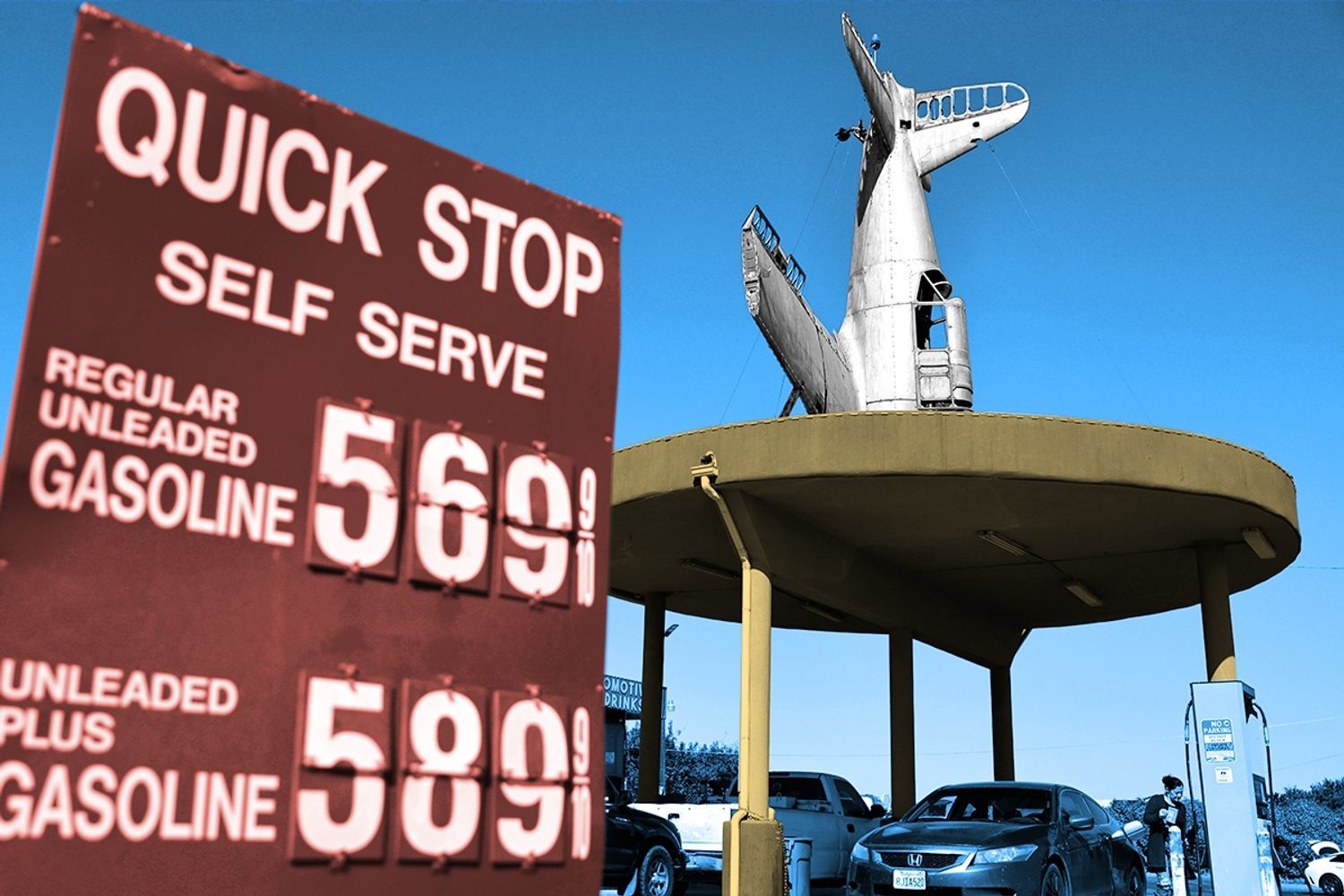
The average price of a gallon of gasoline during President Donald Trump’s second term topped $3.46 as of Monday, a record that exceeds the previous high set under the Biden administration. That’s according to a new analysis by the Financial Times. And that’s just the average across the past 22 months. The average price nationwide on November 2 clocked in at just under $4.17 per gallon. “If modern living boiled down to a price, it’s the price at the pump,” Bob McNally, a former energy advisor to the George W Bush administration and president of consultancy Rapidan Energy, told the newspaper. “Whether a voter is filling up that day or not, it’s likely that they see a pump price.”
Oil prices, meanwhile, plunged Monday on hopeful signals from Iran about potential progress in peace talks to end the war with the United States. West Texas Intermediate, the U.S. benchmark, fell nearly 8% to $96 per barrel. Brent crude, the global measure, dropped over 8% to $104 per barrel. Murban crude, the stuff that flows out of the United Arab Emirates and therefore faces the worst impacts from Tehran’s attacks on tankers exiting the Persian Gulf through the Strait of Hormuz, dove over 11%.
2. OpenAI vows to design its data centers for grid flexibility
When energy researcher (and now Google wonk) Tyler Norris came out with his landmark paper last year arguing for data centers that can flexibly respond to conditions on the grid, my colleague Matthew Zeitlin quipped that the policy amounted to “one weird trick to get more data centers” online. ChatGPT-maker OpenAI is now making that trick routine. On Monday, the company announced its “grid protectors program,” under which it plans to make all the data centers serving its artificial intelligence software responsive to the grid wherever they’re located. That way, rather than drumming up neighbors’ concerns over power prices and blackouts, data centers are welcomed as assets that keep the lights on. “Power lines, substations and other grid infrastructure builds are a fixed cost whether demand is low or high,” the company said in a post on its website. “By using more electricity when the grid has room and reducing our use when it is under strain, we can help pay for that infrastructure while limiting the need for costly upgrades to meet peak demand. That can help keep costs down for other customers.”
3. Exclusive: Green groups challenge Trump’s argument against carbon restrictions on power plants
When the Environmental Protection Agency rescinded its plans to restrict how much carbon dioxide U.S. power plants can emit, the Trump administration argued that shutting down the coal- and gas-fired stations that supply most of America’s electricity “would have no more than a trivial effect” on health outcomes due to climate change. But a lengthy new formal comment co-signed by eight of the largest mainstream green groups in the country said the EPA “misinterprets the Clean Air Act, ignores scientific evidence, and entirely misunderstands its own duty as the agency responsible for protecting public health and the environment,” and accused the agency of using its flawed approach as the basis for a “tectonic and unreasoned policy shift.” The remarks, which the Natural Resources Defense Council shared exclusively with me for this newsletter, was endorsed by a range of groups that includes the Clean Air Task Force, the Center for Biological Diversity, Earthjustice, Environmental Defense Fund, Sierra Club, and the Union of Concerned Scientists.
As part of the 271-page comment, the groups submitted a new analysis that projected emissions from U.S. power plants to cause $20.4 trillion in health-related damages by 2100. That’s nearly equal to the entire U.S. gross domestic product in 2024. “We present our own modeled scenarios, which illustrate the gravity of EPA’s technical errors and the sensitivity of the agency’s findings to inputs and assumptions,” the group wrote. “Under our alternate illustrative scenarios, U.S. power-plant emissions’ impacts on global temperature and sea level rise easily exceed EPA’s alleged de minimis thresholds, showing such impacts are in fact meaningful even under EPA’s flawed futility methodology.”
Sign up to receive Heatmap AM in your inbox every morning:
Email Address *Our Privacy Policy & Terms Apply.
4. Trump-linked mining project in Kazakhstan plans to IPO

A mining company with ties with two of Trump’s sons is preparing to go public. On Monday, The Wall Street Journal broke news that Kaz Resources plans to start selling shares next year through a direct U.S. listing after giving Donald Trump Jr. and Eric Trump a stake in a major tungsten project in Kazakhstan. The venture, a partnership with the Kazakh government, is part of a broader effort through Cove Capital, a mining prospector led by Australian-American executive Pini Althaus, to expand U.S. mineral deals in Central Asia. Originally, Althaus planned to bring Kaz Resources public through a special purpose acquisition company, or SPAC. But Althaus abandoned the SPAC deal Monday in favor of a direct listing. The move is likely to draw scrutiny after today’s election. “I would be surprised if we weren’t,” Althaus told the Journal. “There’s no smoking gun here.”
Meanwhile, Graphite One, a startup that has won over $2 billion in funding from the Export-Import Bank of the U.S., took a big step forward. On Monday, the company said the Ohio Environmental Protection Agency had issued the final air permit for its debut anode factory in the state. “Receiving the final Ohio air permit is an important step toward establishing a domestic synthetic anode material supply chain,” Graphite One CEO Anthony Huston said in a press release. “This approval advances Phase 1 plant toward first revenue and supports our goal of becoming the first U.S. company commercially producing synthetic graphite anode material.”
5. U.S. automakers press Congress for a permanent ban on Chinese cars
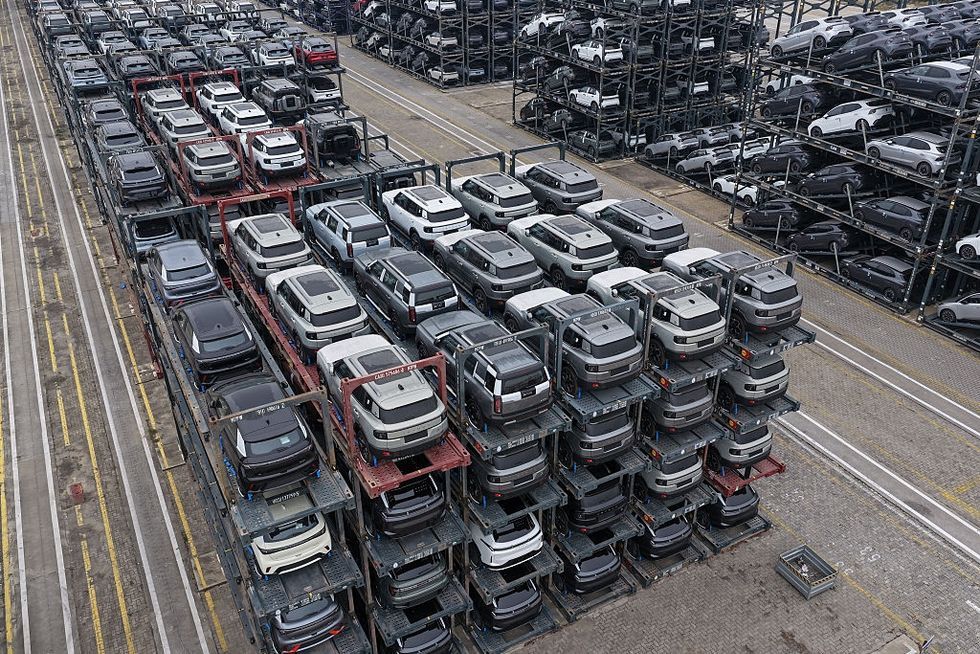
Nearly all major U.S. automakers are urging Congress to enact a permanent ban on Chinese vehicles when lawmakers reconvene next week for a short session following the midterm elections. On Monday, Reuters reported that a bipartisan group of Senators met in September to discuss fast-tracking a bill, but decided to hold off until after the November election. “We need to protect the U.S. market from a flood of Chinese imports that carry surveillance risk and disadvantage current manufacturers that have made generational investments in American communities,” John Bozzella, who heads the trade group Alliance for Automotive Innovation, told the newswire.
Detroit automakers may have been slow to take electric vehicles seriously. But the narrative around one of America’s biggest homegrown success stories, Rivian, may be focused on the wrong vehicle. While the California-based manufacturer’s R2 electric sports utility vehicle attracts attention, its humble commercial van — the one popularized by Amazon — “is turning into a secret weapon,” according to InsideEVs. The company’s latest earnings suggest the van is becoming a significant revenue driver.
THE KICKER
The country’s largest utility will spend up to $7 billion on a battery buildout. Exelon, the largest U.S. regulated electric and gas company in the country, with six utilities serving 11 million Americans, plans to spend up to $7 billion to build as much as 3.5 gigawatts of battery storage. In an earnings call last week, the utility giant said that it is spending a minimum of $3 billion for at least 1.5 gigawatts of storage. “With regulated storage, we have certainty that projects get built, and control over when and how they’re deployed,” Robert Kleczynski, Exelon’s CFO, said during the call, according to Utility Dive. “We view utility-owned storage as one option alongside competitive development, not a replacement for it.”