GLOBALVARS
TEST TEST TEST
0
Products
This is Heatmap Daily, a weekday digest written by our executive editor. Subscribe here.
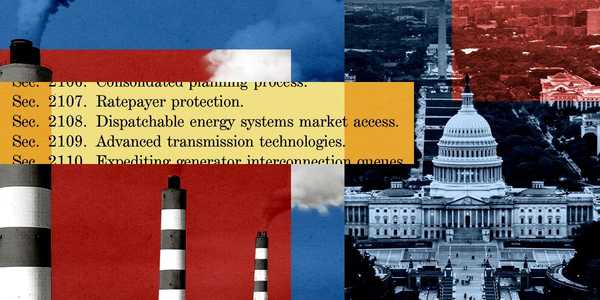
As you may have seen, my colleague Emily Pontecorvo and I got the first look at the Rhodium Group’s analysis of what the bipartisan permitting bill will do to emissions.
You can read our story at Heatmap. The upshot is that the bill’s most significant provisions are likely neutral for climate change in a worst-case scenario — and could, in more optimistic scenarios, help reduce emissions. (Those scenarios aren’t about how the bill will be interpreted, to be clear, but about what might happen in the broader energy economy — with economic growth, for instance, or oil prices — that will feed back into the emissions math.)
I won’t give away much more about our story, but there is one irony I want to note about the Rhodium study and the broader morass of American electricity policy. One of the Rhodium study’s big findings is that BAAJA will help expand the transmission system. Power lines are essential for decarbonization because they move electricity from the country’s sunniest and windiest places to its cities, towns, and suburbs.
BAAJA will help transmission both because the law affirmatively expands the power grid and because the bill’s changes to environmental review law could help power lines. Today, for instance, it takes twice as long on average to conduct a federal environmental impact study for transmission lines as it does for pipelines, according to Rhodium data. All in all, the Rhodium analysis estimates BAAJA could increase the amount of new transmission capacity added per year by 167% to 262% nationwide, compared to the average rate over the past decade.
Which is very interesting. But it’s worth noting that the Rhodium analysis may— emphasis on may — undercount the bill’s transmission benefits. This is because the Rhodium authors did not have time to conduct a full network study of the U.S. transmission system, which would take into effect the grid’s physical footprint, power flows, and existing bottlenecks. Instead, they looked at power supply and demand within the context of the broader U.S. energy system.
That’s a reasonable decision; indeed, it was probably the only decision they could make. Because of how energy system models work, a more fulsome analysis might have taken weeks to complete, not to mention a very large amount of money and computational power. When the National Renewable Energy Lab studied how quickly Los Angeles could switch to 100% renewable energy earlier this decade, for instance, it ran such a study, modeling every transmission line and substation in LA. Its supercomputer wound up churning through more than 100 million simulations; the research effort took three years. If the Rhodium analysts had done even a fraction as much work to examine what BAAJA would mean for the country’s power grid, then they would have of course finished their analysis well after the window to vote on BAAJA would have closed.
One of the ironies here is that while the LA 100 study was particularly exhaustive, we actually require clean energy projects to conduct similar studies all the time. Right now, one of the primary reasons it takes so long to hook up a new power plant to the grid is that it has to undergo an interconnection study in many parts of the country. In those regions, a new solar farm or battery project can’t connect to the grid until operators study its effect on grid congestion everywhere else.
As it happens, BAAJA aims to fix this process, allowing power plants to join the grid in batches.
I want to note the irony that a process we mandate for the power sector is actually too slow to deliver speedy policy analysis to legislators. If Rhodium had tried to study BAAJA the way we make power plants study the grid, then it never would have delivered its verdict in time. If you think Congress is slow, in other words, you should meet the electricity sector.