0
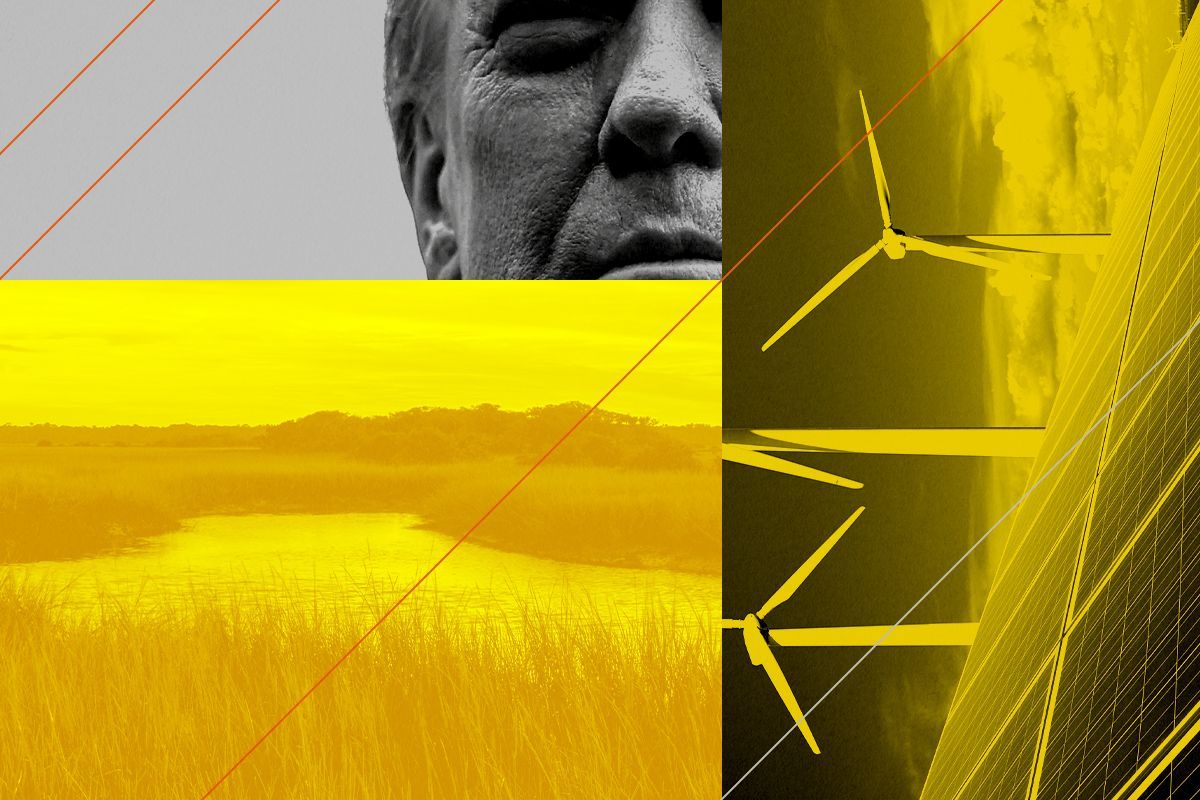
A new Trump administration policy is indefinitely delaying necessary water permits for solar and wind projects across the country, including those located entirely on private land.
The Army Corps of Engineers published a brief notice to its website in September stating that Adam Telle, the Assistant Secretary of the Army for Civil Works, had directed the agency to consider whether it should weigh a project’s “energy density” – as in the ratio of acres used for a project compared to its power generation capacity – when issuing permits and approvals. The notice ended on a vague note, stating that the Corps would also consider whether the projects “denigrate the aesthetics of America’s natural landscape.”
Prioritizing the amount of energy generation per acre will naturally benefit fossil fuel projects and diminish renewable energy, which requires larger amounts of land to provide the same level of power. The Department of the Interior used this same tactic earlier in the year to delay permits.
Now we know the full extent of the delays wrought by that notice thanks to a copy of the Army Corps’ formal guidance on issuing permits under the Clean Water Act or approvals related to the Rivers and Harbors Act, a 1899 law governing discharges into navigable waters. That guidance was made public for the first time in a lawsuit filed in December by renewable trade associations against Trump’s actions to delay, pause, or deny renewables permits.
The guidance submitted in court by the trade groups states that the Corps will scrutinize the potential energy generation per acre of any permit request from an energy project developer, as well as whether an “alternative energy generation source can deliver the same amount of generation” while making less of an impact on the “aquatic environment.” The Corps is now also prioritizingpermit applications for projects “that would generate the most annual potential energy generation per acre over projects with low potential generation per acre.”
Lastly, the Corps will also scrutinize “whether activities related to the projects denigrate the beauty of the Nation’s natural landscape” when deciding whether to issue these permits. That last factor – aesthetics – is in fact a part of the Army Corps’ permitting regulations, but I have not seen any previous administration halt renewable energy permits because officials think solar farms and wind turbines are an eyesore.
Jennifer Neumann, a former career Justice Department attorney who oversaw the agency’s water-related casework with the Army Corps for a decade, told me she had never seen the Corps cite aesthetics in this way. The issue has “never really been litigated,” she said. “I have never seen a situation where the Corps has applied [this].”
The renewable energy industry’s amended complaint in the lawsuit, which is slowly proceeding in federal court, claims the Corps’ guidance will lead to “many costly project redesigns” and delays, “resulting in contract penalties, cost hikes, and deferred revenue.” Other projects “may never get their Corps individual permits and thus will need to be canceled altogether.”
In addition, executives for the trade associations submitted a sworn declaration laying out how they’re being harmed by the Corps guidance, as well as a host of other federal actions against the renewable energy sector. To illustrate those harms they laid out an example: French energy developer ENGIE, they said, was required to “re-engineer” its Empire Prairie wind and solar farm in Missouri because the guidance “effectively precludes” it from getting a permit from the Army Corps. This cost ENGIE millions of dollars, per the declaration, and extended the construction timeline while ultimately also making the project less efficient.
Notably, Empire Prairie is located entirely on private land. It isn’t entirely clear from the declaration why the project had to be redesigned, and there is scant publicly available information about it aside from a basic website. The area where Empire Prairie is being built, however, is tricky for development; segments of the project are located in counties – DeKalb and Andrew – that have 88 and 99 opposition risk scores, respectively, per Heatmap Pro.
Renewable energy developers require these water permits from the Army Corps when their construction zone includes more than half an acre of federally designated wetlands or bodies of water protected under the Rivers and Harbors Act. Neumann told me that developers with impacts of half an acre or less may skirt the need for a permit application if their project qualifies for what’s known as a “nationwide permit,” which only requires verification from the Corps that a company complies with the requirements.
Even the simple verification process for Corps permits has been short-circuited by other actions from the administration. Developers are currently unable to access a crucial database overseen by the Fish and Wildlife Service to determine whether their projects impacts species protected under the Endangered Species Act, which in turn effectively “prevents wind and solar developers from (among other things) obtaining Corps nationwide permits for their projects,” according to the declaration from trade group executives.
But hey, look on the bright side. At least the Trump administration is in the initial phases of trying to pare back federal wetlands protections. So there’s a chance that eliminating federal environmental protections might benefit some solar and wind companies out there. How many? It’s quite unclear given the ever-changing nature of wetlands designations and opaque data available on how many projects are being built within those areas.