0
Crucial transmission for future offshore wind energy in New Jersey is scrapped for now.
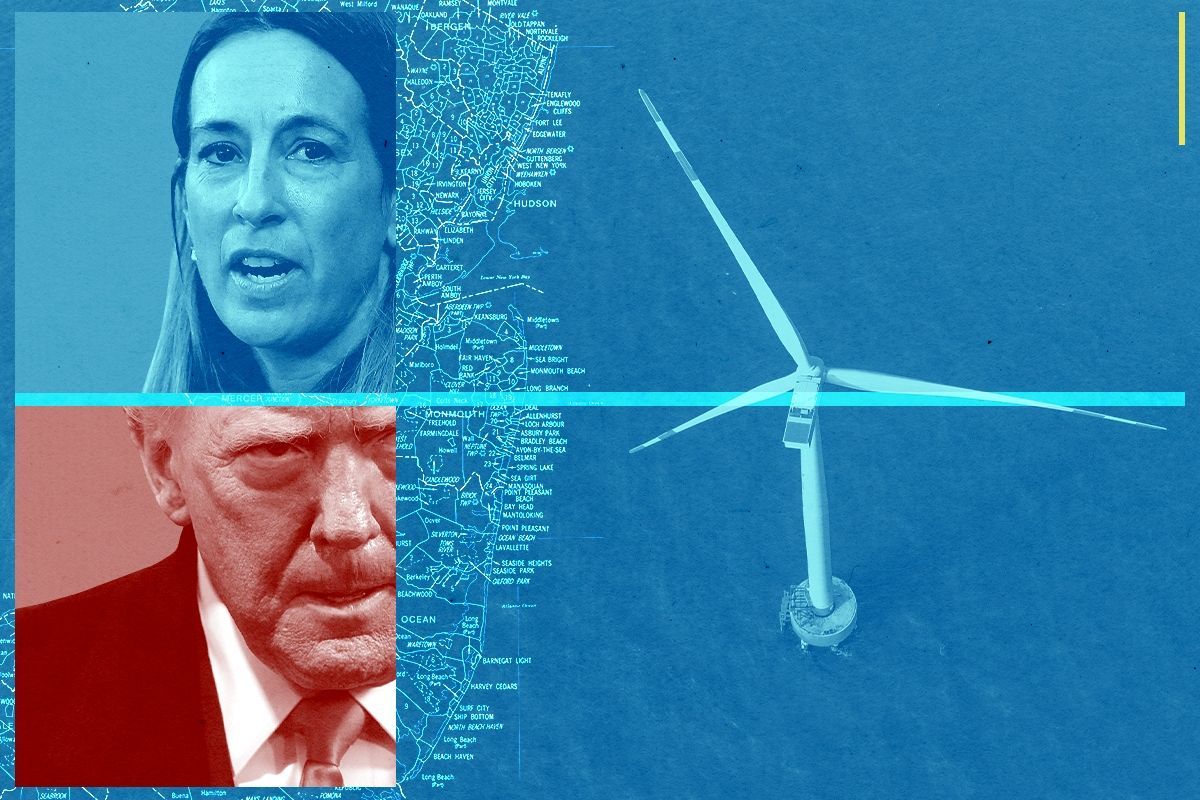
The New Jersey Board of Public Utilities on Wednesday canceled the agreement it reached with PJM Interconnection in 2021 to develop wires and substations necessary to send electricity generated by offshore wind across the state. The board terminated this agreement because much of New Jersey’s expected offshore wind capacity has either been canceled by developers or indefinitely stalled by President Donald Trump, including the now-scrapped TotalEnergies projects scrubbed in a settlement with his administration.
“New Jersey is now facing a situation in which there will be no identified, large-scale in-state generation projects under active development that can make use of [the agreement] on the timeline the state and PJM initially envisioned,” the board wrote in a letter to PJM requesting termination of the agreement.
Wind energy backers are not taking this lying down. “We cannot fault the Sherrill Administration for making this decision today, but this must only be a temporary setback,” Robert Freudenberg of the New Jersey and New York-focused environmental advocacy group Regional Plan Association, said in a statement released after the agreement was canceled.
I chronicled the fight over this specific transmission infrastructure before Trump 2.0 entered office and the White House went nuclear on offshore wind. Known as the Larrabee Pre-Built Infrastructure, the proposed BPU-backed network of lines and electrical equipment resulted from years of environmental and sociological study. It was intended to connect wind projects in the Atlantic Ocean to key points on the overall grid onshore.
Activists opposed to putting turbines in the ocean saw stopping the wires as a strategy for delaying the overall construction timelines for offshore wind, intensifying both the costs and permitting headaches for all state and development stakeholders involved. Some of those fighting the wires did so based on fears that electromagnetic radiation from the transmission lines would make them sick.
The only question mark remaining is whether this means the state will try to still proceed with building any of the transmission given rising electricity demand and if these plans may be revisited at a later date. The board’s letter to PJM nods to the future, asserting that new “alternative pathways to coordinated transmission” exist because of new guidance from the Federal Energy Regulatory Commission. These pathways “may serve” future offshore wind projects should they be pursued, stated the letter.
Of course, anything related to offshore wind will still be conditional on the White House.