0
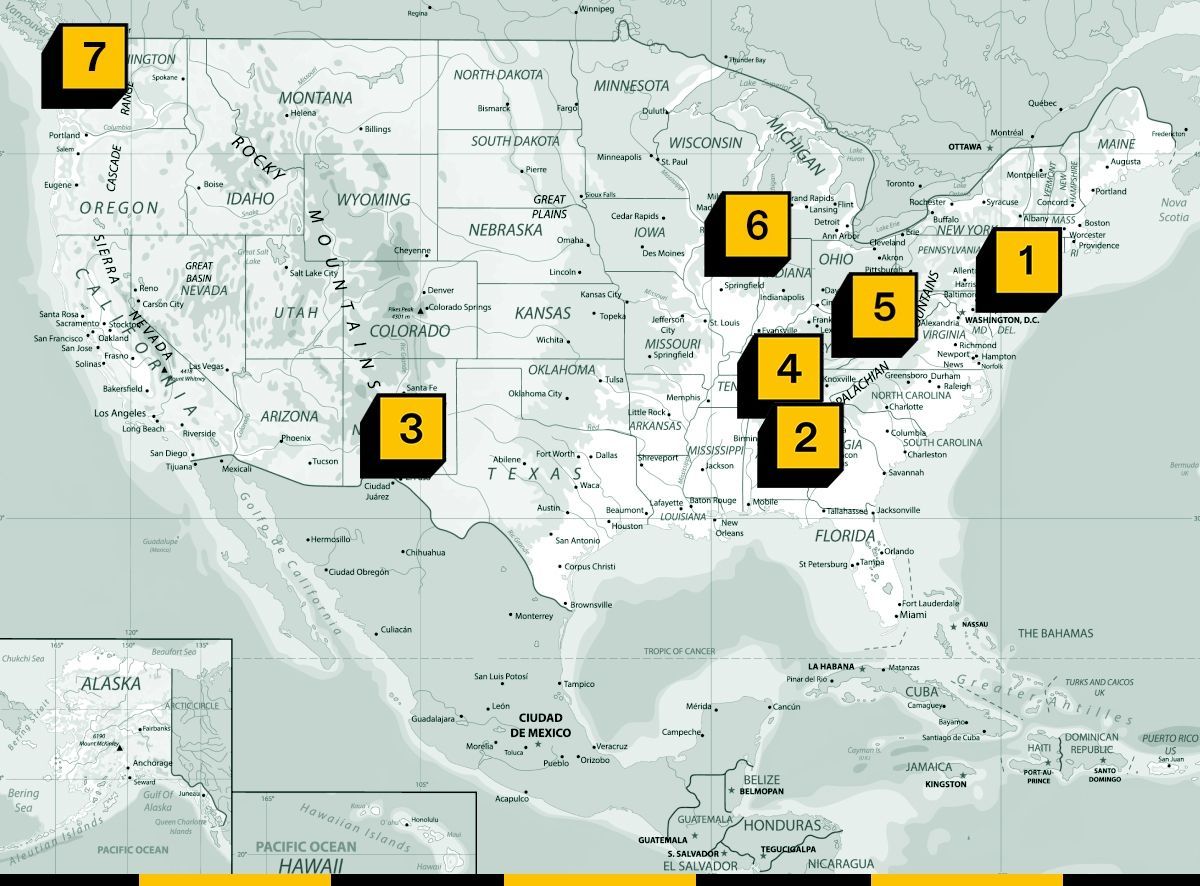
New Jersey – Crucial transmission for future offshore wind energy in New Jersey is scrapped for now.
- The New Jersey Board of Public Utilities on Wednesday canceled the agreement it reached with PJM Interconnection in 2021 to develop wires and a substation necessary to send electricity generated by offshore wind across the state.
- The state terminated this agreement because much of New Jersey’s expected offshore wind capacity has either been canceled by developers or indefinitely stalled by President Donald Trump, including the now-scrapped TotalEnergies project scrubbed in a settlement with his administration.
- “New Jersey is now facing a situation in which there will be no identified, large-scale in-state generation projects under active development that can make use of [the agreement] on the timeline the state and PJM initially envisioned,” the board wrote in a letter to PJM requesting termination of the agreement.
- Wind energy backers are not taking this lying down. “We cannot fault the Sherrill Administration for making this decision today, but this must only be a temporary setback,” Robert Freudenberg of the New Jersey and New York-focused environmental advocacy group Regional Plan Association, said in a statement released after the agreement was canceled.
- The only question mark remaining is whether this means the state will try to still proceed with building any of the transmission given rising electricity demand and if these plans may be revisited at a later date. Of course, anything related to offshore wind will be conditional on the White House.
Montgomery County, Alabama – A statewide solar farm ban is dead for now after being blocked by lawmakers who had already reduced its scope.
- As I’ve previously covered, the Alabama State Senate began considering a solar ban earlier this year amidst concerns over a Meta-backed facility in the rural enclave of Stockton, south of Montgomery.
- The Senate passed the bill in late March, but not before an amendment was adopted limiting the ban to two counties: Mobile and Baldwin, where the Meta facility would be located. In addition, after the 26th day of the Alabama legislative session, senators need to get unanimous consent to transmit a bill to the Alabama House. When senators objected, local media pronounced the ban dead.
Doña Ana County, New Mexico – The Federal Energy Regulatory Commission wants to move faster on data center power infrastructure, but at least one energy project for a major hyperscaler is trapped in internal conflicts.
- FERC staff are opposing Transwestern’s 17-mile “Green Chile” natural gas pipeline project on the grounds that it lacks proper documentation proving it will have no impact on state historic properties. Obtaining this proof is necessary to get approval under the National Historic Preservation Act.
- Green Chile would power Project Jupiter, a contested data center hotly anticipated for use by OpenAI and Oracle. Environmentalists opposed to the facility have been pressuring FERC, as well as the county, and previously tried – and failed – to stop it through litigation.
Hawkins County, Tennessee – A local free-market nonprofit is suing this county in federal court to argue data center bans are unconstitutional.
- The Beacon Center of Tennessee filed the lawsuit in federal court on behalf of a crypto mining company whose facility was affected by the ban, and argued that the restriction violates the Equal Protection clause of the Constitution.
- Specifically, the case argues that by allowing and not regulating other industries that use comparable amounts of electricity, the county was being discriminatory. “[C]ategorically banning data centers and cryptocurrency mining is an arbitrary distinction and does not have a reasonable relationship with a legitimate state interest,” the complaint reads.
- On its face, this argument is a bit silly in that it is anathema to core rights counties typically have to create their own regulations on any business.
- And yet the Beacon Center has historical ties to the Koch-financed State Policy Network, making the litigation noteworthy.
Mingo County, West Virginia – Speaking of federal data center cases, West Virginia regulators will now be forced to testify in the legal challenge against a large hyperscaler in the heart of coal country.
- In December, 10 Mingo County residents sued federal regulators seeking to block construction of a large data center, as well as two natural gas power plants and an ammonia plant that would all be located on-site. The lawsuit argues that the U.S. Fish and Wildlife Service, Army Corps of Engineers and FERC failed to properly scrutinize the environmental impacts of the industrial development and resulting pollution.
- On April 14, the U.S. Southern District of West Virginia approved a subpoena for officials at the West Virginia Department of Environmental Protection to testify on all federal consultations related to the complaint as early as April 28. The regulator is also ordered to provide as many documents as possible related to the environmental review of the entire project under litigation.
Will County, Illinois – This county reversed several solar project rejections, but it didn’t do so happily.
- The county’s Circuit Court ruled on April 8 that commissioners erroneously rejected six solar farms in contravention of a state law mandating they get approved as long as they meet certain siting criteria.
- This led the County’s Board Speaker Joe Van Duyne, a Democrat, to issue a statement explaining that the projects would now be greenlit under the threat of significant fines, sanctions, or even “contempt charges.”
- Will County sits southwest of Chicago and is the fourth most populous county in Illinois. According to Heatmap Pro, it’s one of those high-support, high-opposition risk areas where income levels, population density, and employment mix drive a lot of the problems for developers.
King County, Washington – Seattle might be the next major city to ban data centers.
- Newly-elected mayor Katie Wilson said in a statement issued last week her office is “exploring a moratorium on siting new data centers” as it seeks to identify “long-term policy approaches” to the nascent sector: “It is important to know that the City of Seattle has not authorized nor permitted any new data centers.”
- Local reports indicate there has not been much data center development in Seattle until recently. So this is more a case of a hyperliberal city trying to get ahead of an already unpopular form of development.
- It’s worth noting that Seattle historically has struggled with development fights over new housing.