GLOBALVARS
TEST TEST TEST
0
Products
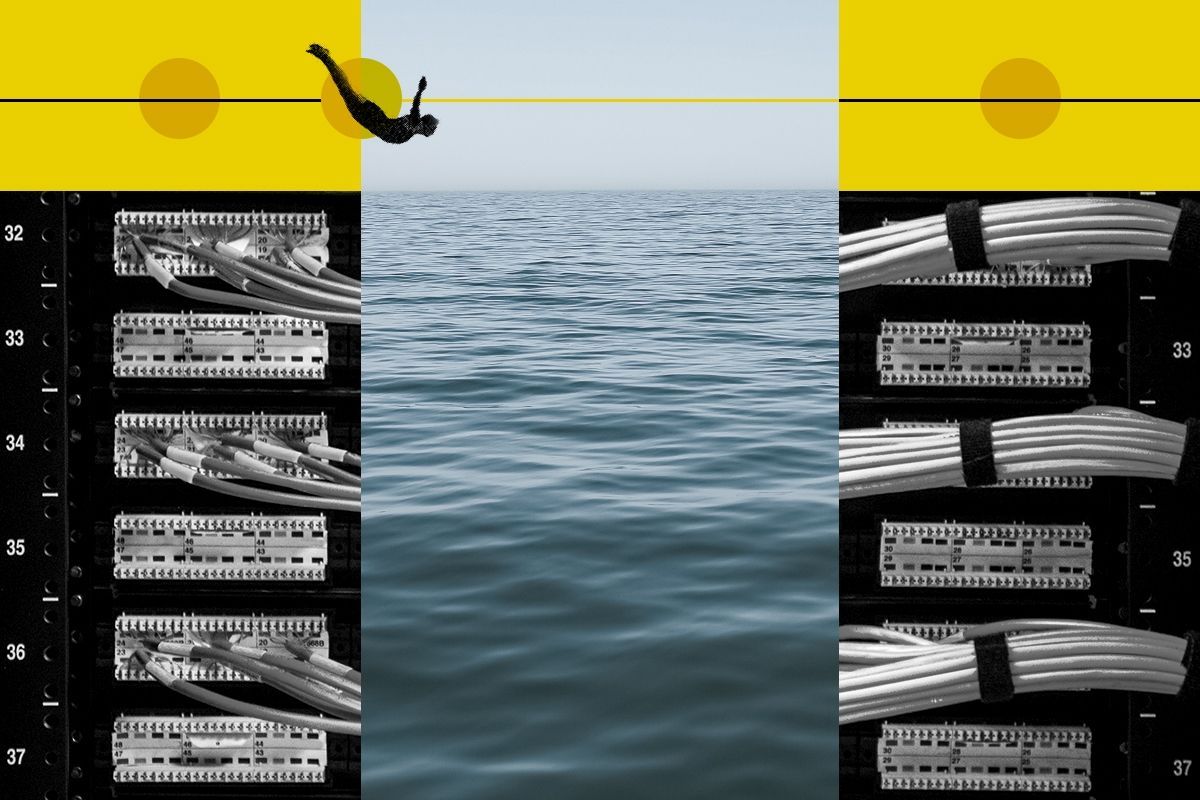
A legal brawl is brewing over what could be the nation’s first underwater data centers.
Two subsidiaries of a new LLC named DeepGreen have applied for “preliminary” permits from the Federal Energy Regulatory Commission that would give four years of permission for studies and analysis towards constructing underwater data centers off remote coastlines in Maine and Alaska. The data centers as proposed would be powered entirely by tidal energy, as in, the power of waves themselves – a technological innovation from hydropower still being piloted around the world. Project descriptions submitted to FERC lay out what these data centers would look like in broad strokes: hundreds of hydrokinetic turbines, dozens of underwater “data center pods,” and miles of subsea cable. The permits would not authorize construction, which would need its own lengthy review process. But these early green lights would tee both areas up for years of potential conflict over hypotheticals that feel real to those on the ground.
There are upsides from purely a carbon emissions perspective. Relying on tidal energy suggests they’d be greenhouse gas-free, powered by the energy of the ocean. It would also eliminate the land use problem that upends so many AI data center projects. There are also clear environmental risks, as they’re also being suggested in ocean areas often coveted for protection, off coastlines where it’s unclear if the neighboring communities will accept them.
DeepGreen’s Alaska project is proposed within a more than 1,000-acre channel of the Cook Inlet, an estuary coveted by fishermen and wildlife conservation advocates, where fights over resource development already occur often. The upstart company’s Maine project is planned for the northernmost tip of the state, in the Bay of Fundy, which shares a transnational border with Canada. Canadian tidal power generation for the general populace marginally exists today in the Bay of Fundy – with major stipulations for marine life protection because it affects the general nature of water currents.
It’s crucial to note neither project has much information available online, sans brief text file project descriptions available through FERC’s online filing database. There is no public-facing website to date for the project, or for DeepGreen itself. When I contacted Louis Wolfson, a vice president at the company who is listed on company filings, he declined to talk about the developments over the phone and suggested I contact him at an email address listed in FERC application documents. That email address uses a website – “DeepGreenCoastal.com” – that does not seem to exist.
Still, we already know enough to say both development areas are likely to require substantial federal review. Not only does their presence in these waters almost necessitate it but both development areas receive considerable whale traffic. DeepGreen has already acknowledged a need to coordinate passive acoustic monitoring and “non-invasive study methodologies” with the National Marine Fisheries Service, the federal marine protection agency run out of NOAA. The Bay of Fundy is a prominent summer home for the endangered North Atlantic Right Whale and the National Marine Fisheries Service has already intervened in the FERC case for the Maine project, signalling in its filing that Endangered Species Act and fish habitat consultations “may be necessary for the project.”
The Center for Biological Diversity has also filed motions to intervene in both FERC cases, which they tell me is a prelude to potential litigation. “Putting one of these in the ocean just seems like a dystopian nightmare but it was especially alarming because of the areas they want to put these in,” Kristen Monsell, CBD Oceans Program Litigation Director, told me in an interview. “[The motions] are a step required in order for us to participate in the permitting process at FERC and then preserve our ability to challenge the decision in court if we think that’s necessary.”
In Maine, the coastline neighbors are the city of Eastport, which is vociferously opposed to this data center being built. The city passed a moratorium on data center development in response to the project and filed a request to intervene in its FERC case this week. “The City's concerns include potential effects on fisheries, marine habitat, water quality, currents, sediment, underwater noise, electromagnetic fields, equipment heat, existing uses of the waterway, and access to marine resources,” the city stated. “Questions also remain about equipment failure, storm damage, emergency response, equipment recovery, site restoration, and eventual decommissioning. These concerns are specific to the proposed placement and extended operation of computing and energy infrastructure on and beneath the seabed.”
In Alaska, DeepGreen doesn’t face a situation like Eastport with a bustling tourist destination-turned-nemesis, but there’s still quite a bit of local confusion and consternation.
The Kenai Peninsula Borough, which is the equivalent of a county-level government, is currently neutral on the development. But the Alaska Commercial Fisheries Conservation Alliance, a newly-formed nonprofit that includes fishing permit holders in the Cook Inlet, submitted a filing to FERC claiming the project site doesn’t properly take into account existing fishing permit holders and that “a preliminary permit proceeding that advances a project of this scale without any commercial fishing impact assessment” would fail the agency’s public interest obligations.
I asked DeepGreen if it had any comment on the litigation risk around their projects. This is what Louis Wolfson provided: “Preliminary permits under the Federal Power Act do not authorize construction or physical disturbance. Their sole purpose is to establish priority while environmental, bathymetric, and technical feasibility studies are conducted. Stakeholder participation is an expected and healthy part of the FERC regulatory process. DeepGreen welcomes the engagement of conservation organizations, local communities, and regulatory resource agencies as we evaluate whether these sites can deliver low impact, zero carbon infrastructure in full compliance with federal environmental laws."