GLOBALVARS
TEST TEST TEST
0
Products
The AI data center backlash is getting louder in D.C. ahead of the midterms – and it’s poised to collide head-on with the new permitting reform deal being negotiated in Congress.
This week, major environmental advocacy organizations are taking large public steps to lean in on the data center fight. The League of Conservation Voters and Sierra Club, I’ve been told, are imminently announcing a $250,000 ad buy in the Washington, D.C. market focused entirely on decrying fossil fuel-powered data centers and Trump administration policies to speed up their construction. The Wilderness Society, a prominent land conservation organization, announced it now supports a moratorium against data centers on “public lands” focused on the roughly half billion acres under the Interior Department’s stewardship. And Earthjustice on Thursday did a detailed report claiming that 80% of the data centers under development “bringing their own power” are going to rely on gas generation.
“We are trying to reach a D.C. audience and add to the conversation on data centers,” Sara Chieffo, LCV’s head of government affairs, told me of the ad buy. “We’re at a time when there have been no regulations passed at the federal level on Big Tech, or data centers, and we have communities from very many different backgrounds, across the political spectrum, really shouting for enforceable safeguards to be put in place for data center development. For their pocket book, for air and water, and for having a say in what their actual communities look like.”
In a vacuum, all of this action would feel normal – what environmental organization isn’t focused on data centers right now? And if this much fossil fuel is going to be burned in the name of computing, why wouldn’t these groups be focused so intently on the problem?
But there’s another wrinkle: It’s impossible to ignore the elephantesque permitting debate in the room, given any progress on a bill would undoubtedly help data centers with any kind of federal nexus, as well as some of the large fossil power infrastructure they’re demanding.
Last week, we all learned of the Bipartisan American Affordability and Jobs Act, or BAAJA, which would radically change federal permitting for essentially all large infrastructure projects with a federal nexus. The bill, negotiated by top Republicans and Democrats in the U.S. Senate, aims to expedite bureaucratic review processes for industrial projects with any presence on federal lands, water pollution risk covered under the Clean Water Act, and/or potential impacts to federally-protected species habitat and historic sites. Many of these changes, like significantly narrowing claims under the National Environmental Policy Act, could mean quicker permitting decisions from the federal government; other policies in the bill, like a truncated statute of limitations for lawsuits, could mean developers avoid significant and costly litigation risk as they apply for federal permits.
There’s a lot to potentially love in this bill for decarb hawks – transmission reforms and permitting certainty, among other things. But the bill is incredibly divisive, especially amongst those interested in seeing renewable energy boosted without undue compromise for fossil fuel development and preserving the existing legal framework for protecting the environment through litigation. So controversial is this bill that all of the organizations I’ve mentioned – LCV, Sierra Club, NRDC, Wilderness Society, Earthjustice – have so far eschewed explicit formal statements opposing the bill, instead expressing caution about air and water impacts while saying they need more time to review it and speak with lawmakers.
It’s clear though the environmentalist community wants people to think about data centers as debate on the bill approaches. Those who publicly oppose the bill at this moment say its enactment under the current administration would fully unlock federal acreage for the worst incarnation of an unfettered fossil-powered data center boom. “In any permutation, this bill is a good thing for data centers,” said Brett Hartl, director of government affairs for Center for Biological Diversity. After the bill was introduced, an organizing call between environmentalists leaked revealing discussions on how to stop it from gaining traction. One idea raised, per a transcript of the call published by Punchbowl News, was leaning heavily into talking about AI data center permitting.
I asked Chieffo if the LCV ad buy was related to the permitting debate in D.C. She told me it was in the works before senators introduced the bipartisan permitting deal last week. “This is a longstanding focus of ours, to make sure the buildout of data centers do not perpetuate dirty energy or exacerbate the climate crisis,” she told me. Then I asked, if this isn’t about the permitting bill, but it is about federal policy about approving data centers, then how do AI data centers play into the conversation around permitting reform? Do you see the AI data center conversation playing a role in the permitting reform debate?
“The way I would answer that is, well, there are equities and impacts that permitting reform has on the ability to build data centers in this country. And there’s a much larger conversation that should be happening – and isn’t yet happening – around fully holding data centers and Big Tech accountable for their environmental and consumer impacts, safety, and broader regulation. It’s a much bigger conversation than just permitting conversations,” Chieffo told me.
Then she added something else: “The provisions in conversation right now in the Senate do not cover the full suite of what we believe we need to see to hold data centers accountable and address the environmental impacts, let alone the other impacts folks are concerned about with jobs, safety and the rest.”
There’s absolutely a hypothetical risk that enacting such sweeping permitting legislation could enable a faster fossil-powered AI data center buildout, particularly in two ways: federal land development and easier pipeline permits.
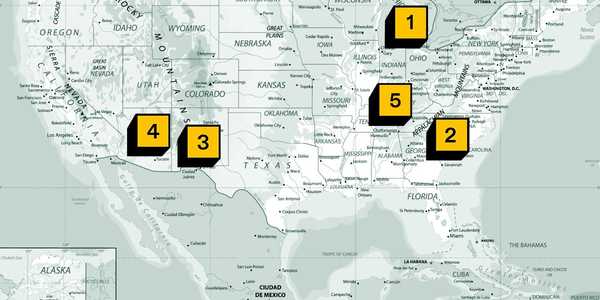
We know that President Trump’s executive order encouraging data centers on federal land has led to interest in developing large projects on Interior Department acreage in Arizona, Idaho, Nevada, Oregon, and Utah. How many of these projects are serious is unclear, partially because the federal land permitting process is opaque, and also due to some permitting applications gleaning more early-stage speculation than a commitment (see: Clearway’s reversal on this project). At least some of this development would be powered by gas, as we’ve previously covered.
There’s also the pipelines. We’ve previously covered how the bill’s changes to the Clean Water Act would take away a provision under the law previously cited by Democratic governors to block pipeline expansions, while limiting state and tribe authority under the law to cite impacts other than direct water discharges when rejecting or blocking permits. In the name of project certainty, the bill would also enshrine protections against approval revocation for all kinds of energy facilities, including pipelines. Many of the pipelines under development today are capacity expansions and not explicitly for data centers, and many of them may be approved regardless of whether BAAJA becomes law. But it’s almost impossible to divorce new gas projects from the data center industry’s fortunes, given climbing demand.
Advocates for decarbonizing the U.S. economy who support the bill say the legislation offers a safer trade-off than critics suggest. They put forward that most data center development is not on federal lands, rendering much of the actual AI infrastructure outside the scope of the bill’s impacts. In addition, they argue there are potential upsides, like the bill’s provisions unlocking new transmission development, expediting interconnection queue processing, and making data center developers pay for new energy grid upgrades, all of which could be good for renewable energy development.
Grayson Flood, a senior fellow at Groundwork Collaborative, told me he believes the bill will actually incentivize more data center developers to hook up to the grid and may result in fewer projects relying on off-grid gas plants constructed purely for operating GPUs. Studies have shown building off-grid can be almost twice as expensive. By reducing barriers to connection, and encouraging new transmission that unlocks renewable energy, Flood said one can easily see a pathway to a cleaner data center sector in the future under the bill.
“At the end of the day, if you want these data centers to be powered by clean, firm capacity, anything from solar and storage to wind and storage to nuclear, geothermal, and hydropower, you’re going to need to have a grid that can bring those sources to the data centers, and right now we really don’t have that,” said Flood, who previously worked as legislative director for Rep. Alexandria Ocasio-Cortez. “At a macro level, we need the bulk power system built out to see the power we want to see, and this bill makes data centers pay more than any other piece of proposed federal legislation to make that happen.”
Where does this leave us? Over the next month, we’ll live through a midterms election cycle chock full of ads activating anti-data center sentiments on both sides of the aisle. Then, right afterwards, the energy sector will pivot its attention span back to Congress and fight to pass a permitting bill that will not primarily benefit data centers, but clearly has upsides its opponents will want to call attention to.