GLOBALVARS
TEST TEST TEST
0
Products

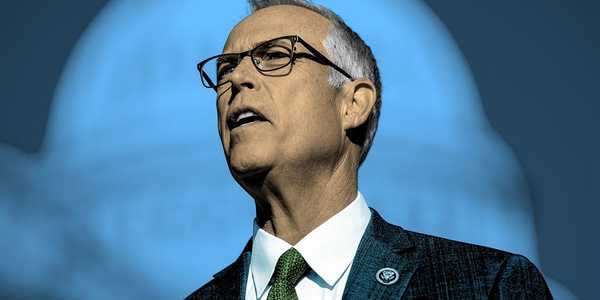
This week’s Q&A is with Dan Hartinger, senior policy director for The Wilderness Society, a prominent land conservation organization in D.C. that this week called for a moratorium on data center development on public land. The public statement was relatively scant on details about the group’s stance, and a decade of reporting on policy in Washington has taught me that its positions are quite influential, especially in more traditional outdoor recreation and conservationist circles that are also often bipartisan. So I reached out and asked if someone could further explain the society’s position, and Dan obliged.
The following chat was lightly edited for clarity.
Let’s start at the beginning. What brought The Wilderness Society to make a call for a moratorium against data centers on public lands?
Like many others, we were concerned about news reporting on industrial-scale data centers being proposed on public lands. When we saw the scale of what was proposed – covering tens of thousands of acres of public lands, being pushed through without public input about whether this was an acceptable use of this land – it became clear we needed to hit the brakes and give the public a chance to evaluate this.
Our mission and vision for The Wilderness Society is not on the broader debate about AI data centers. It’s on public lands. Those are a shared resource we need to manage for the benefit of all Americans. We need to be careful not to sacrifice those for poorly understood impacts from the data center boom.
You called for Congress to do this during the lame duck session. Why call for this now?
We think this is urgently needed now. If we allow public lands to be sacrificed for a data center boom, we could very well never get them back, so we think it’s urgently necessary a moratorium is enacted. We’d love to see the administration institute a moratorium, and we’re rightly skeptical given what boosters they’ve been. It really just kind of leaves it in the hands of Congress.
There’s legislation introduced by Rep. Rashida Tlaib to institute a moratorium on data centers on federal lands, including Interior, Department of Defense, and Energy property. Do you support that bill?
We don’t have any expertise on Department of Energy or Department of Defense lands. I know Sen. Ron Wyden introduced a bill recently to ban data centers on public land managed by the Agriculture and Interior Departments. Our focus right now is on calling for a moratorium. When you’re contemplating a novel industrial use, the public needs time to understand.
Your call doesn’t include the Department of Energy or Defense lands?
We’re not national security experts. We haven’t waded in on whether there are some limited use cases where maybe there’s national security reasons, I guess.
So you want this to happen in a lame duck, when right now the likeliest thing Congress debates is instead building things faster through permitting reform. Does your organization have any stance on the impacts that the permitting reform effort underway in Congress could have regarding data centers on public lands?
We’re still wading through our stance on the [Senate] bill. I don’t know I have much to share on that. We’re concerned about some of the impacts that bill could have on public lands, but there’s also a whole lot of other factors from that bill to weigh.
Talking to folks who are more public about their stances on the bill, and looking at the set of projects even preliminarily underway on federal lands, it’s hard to imagine that changing NEPA and other environmental laws makes things on public lands go slower. I understand you’re still figuring out where you as an organization stand on the bill, but can you speak to the current state of infrastructure development on federal land and changes the administration has made to permitting?
I think through the lens of data centers, narrowly, all of the project reviews and approvals – which is a limited number – have been attempted without additional NEPA analysis. We saw with the Townsite project in Nevada, they tried to claim a solar farm was essentially the same as a data center. There have been authorizations for data centers’ geotechnical surveys approved through categorical exclusions under NEPA.
Certainly, we’re seeing the administration in every single possible opportunity eliminate or shortcut public input and review, and the permitting bill certainly seems to be pointing further in that direction.
The whole rush for speed-to-power over the next few years makes the rest of the Trump administration, should the permitting reform bill become law, feel more important. How does that timing weigh on your organization as you approach the lame duck session? You’re calling for a moratorium on data centers on public lands as we approach a conversation about whether to make it easier to build on federal lands.
That’s why we’re calling for a moratorium eyes open. It’s an uphill push. But if you look at the backlash happening, a lot of it is because the public is concerned these are being pushed forward with very little transparency, or regardless of whether the public supports them, and often done through mechanisms that hide the scale and scope of their impacts. That’s one of the big motivators behind seeking a moratorium. Because this is proceeding so fast, it’s even more essential we pump the brakes and give the public a chance for input.
What do you want to see come after a moratorium? What are the appropriate safeguards? Or do you just not want to see these projects on Interior land?
There are fundamental questions we need answered, including whether the BLM has clear authority to permit and authorize these large projects on public lands. They haven’t answered sufficient questions about that. There’s also the question of the public’s view on this. We don’t want to pre-suppose what the future post moratorium will look like.
There’s just this huge, novel use case, and the public needs to weigh in. If they’re ever given a chance to actually say something, all the polling we’ve seen says the public doesn’t want these on public lands at all. And so, we hope this is also a conversation about what we want for our public lands generally.