GLOBALVARS
TEST TEST TEST
0
Products
Current conditions: Singapore’s air is the worst in the world as wildfire smoke from Indonesia chokes the city state and neighboring Malaysia • Following a summer-like heat wave, temperatures in the American West are set to drop by as much as 50 degrees Fahrenheit as a cold snap moves in • In the Gulf of Mexico, Tropical Storm Isaias officially strengthened into the first Atlantic hurricane of the season this morning.
THE TOP FIVE
1. Exxon Mobil eyes its next offshore oil patch after Guyana: Trinidad and Tobago
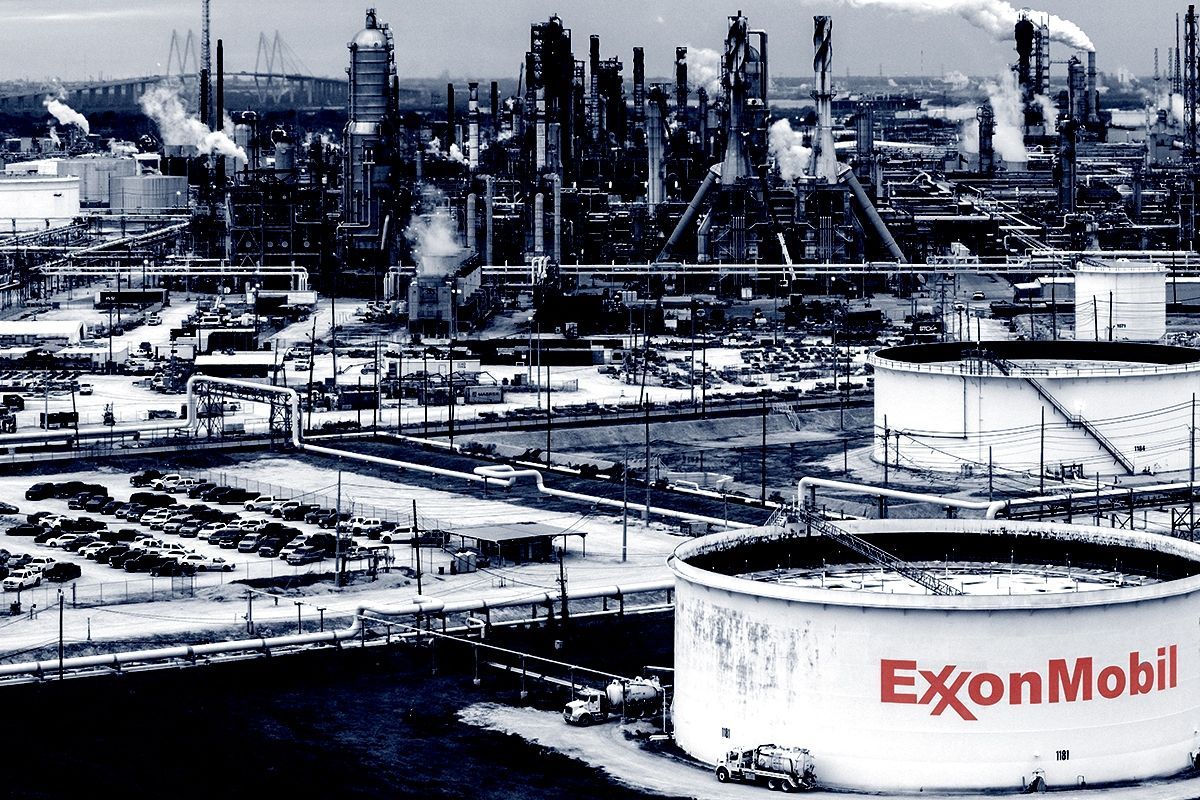
With its offshore oil fields booming in Guyana and its opportunities opening in Venezuela, Exxon Mobil is eyeing the next location for the Americas’ oil and gas: Trinidad and Tobago. In an interview with the Financial Times this week, the company’s exploration chief said the island nation’s existing oil and gas industry could expand to tap the same basin east of Venezuela that has transformed Guyana from one of the hemisphere’s poorest nations to one of its richest in terms of per capita gross domestic product. “A lot of people ask, ‘well, where’s the next Guyana?’” John Ardill, Exxon Mobil’s vice-president and head of global exploration, told the newspaper. “In Trinidad, we moved in as a play extension to Guyana.” The agreement between Exxon Mobil and the Trinidadian government took “about half as long as it usually takes on a good day,” delivering a pact in “record time.”
America’s oil majors are also looking outside the hemisphere. As you may recall from August, I told you that Exxon Mobil was also considering a big investment in Africa, with Mozambique drawing particular attention. Brazil’s state-owned Petrobras, meanwhile, is expanding its own grasp on the Americas’ oil boom. On Wednesday, Upstream reported, the company bid $590 million for control of an ultra-deepwater concession.
2. The EPA is ‘days’ away from proposing methane rule rollbacks
The European Union is pausing implementation of its new rules requiring oil and gas exporters to more scrupulously track data on methane emissions. The U.S., on the other hand, is planning a straight-up rollback. At an oil industry conference in Santa Fe on Wednesday, Environmental Protection Agency Administrator Lee Zeldin teased out plans to gut core parts of the methane regulations finalized in 2024. “This proposal takes on many of the problems American producers and operators have raised with us,” Zeldin said, according to Argus Media. “That includes the burden on marginal wells and oil and gas operators in general, the super emitter program, associated gas and control device requirements.”
3. Record wind generation still couldn’t slash Britain’s high gas prices
Record wind power generation may have slashed how much natural gas Britain needed to burn last month for electricity, but it “wasn’t enough to shield the country from surging prices triggered by the war in Iran,” Bloomberg reported. Wind turbines pumped out 6.6 terawatt-hours of electricity in September, a record for the month and 4% more than a year earlier. As a result, gas-fired generation plunged to its lowest level on record for that month. But day-ahead power rates still doubled from a year earlier.
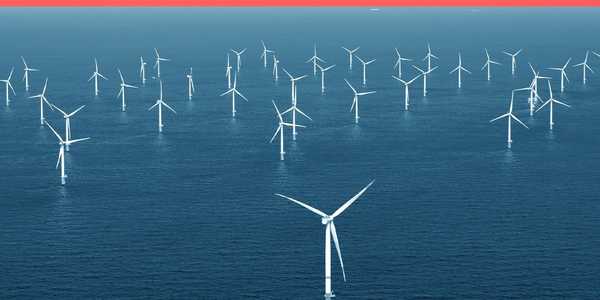
The world’s capacity of floating offshore wind, the subset of the sector that could vastly expand the areas of shoreline dotted with turbines, has reached 382 megawatts, a 38% surge over the past 12 months, according to a Renewables Now writeup of the latest report from the trade group RenewableUK. Meanwhile, Poland has now constructed all 76 of the standard turbines built into the seabed of the Baltic Sea for its first offshore wind farm. One-third of the turbines are now generating power, according to offshoreWIND.biz.
Sign up to receive Heatmap AM in your inbox every morning:
Email Address *Our Privacy Policy & Terms Apply.
4. South Korea unveils a $747 billion energy transition plan
South Korea plans to speed up its shift away from fossil fuels with a new goal of 100 gigawatts of low-carbon energy additions by 2030 and roughly $747 billion in government-led investment over the next decade. The plan, part of the Korean Green Transformation program, “seeks to make Korea one of the world’s top three green manufacturing powers by developing industries such as hydrogen-reduction steelmaking, next-generation solar cells, and all-solid-state batteries,” according to The Korea Times, an English-language daily. New nuclear reactors are also part of the strategy.
The move comes as Seoul advances construction of as many as eight nuclear reactors in the U.S., including six of America’s Westinghouse AP1000 and two of its own APR1400s, as I told you last week.
5. Virginia’s lieutenant governor comes out against the NextEra-Dominion merger
The utility megamerger of the century so far is “not in the best interest of Virginians.” That’s the judgment the state’s lieutenant governor, Ghazala Hasmi, rendered this week following a five-city public listening tour. The statement came ahead of the State Corporation Commission’s first local hearing on the deal, and marks what Utility Dive called “the most formal expression of opposition from Virginia’s executive branch so far.” Governor Abigail Spanberger, a fellow Democrat, has not yet taken a definitive position on the merger.
But the deal follows some clear market logic. Among the benefits: It would create, as my colleague Matthew Zeitlin wrote in May, “a storage juggernaut.”
THE KICKER
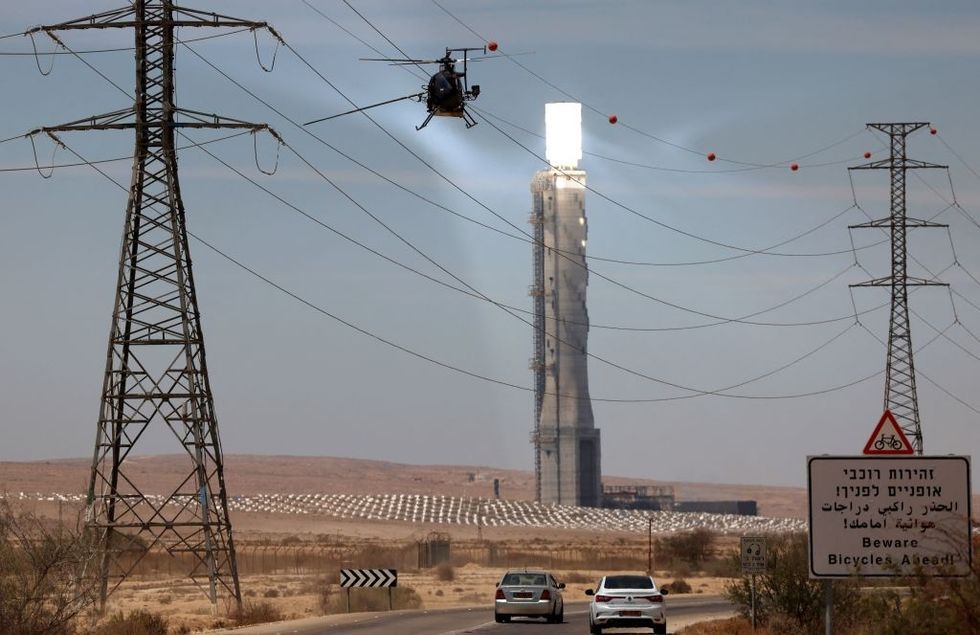
Israel’s booming tech sector and soaring stock market are just two ways its economy has dramatically changed from the socialism that defined the early decades after the country’s founding in 1948. Now that shift also includes the electricity market. Since market reforms allowed private actors into the grid at the start of last year, more than 2 million citizens, representing more than 500,244 private and business customers, have switched from the Israel Electric Corporation to private providers, according to The Jerusalem Post. Ratepayers buying electricity from private suppliers enjoy discounted rates ranging from 7% to 20%, “thanks to the lower generation costs in the private market.” Another 23,286 households and businesses submitted requests to switch suppliers just last month. OPC Energy, an independent power provider based in Tel Aviv, raised $200 million in bond issuances in August.