GLOBALVARS
0
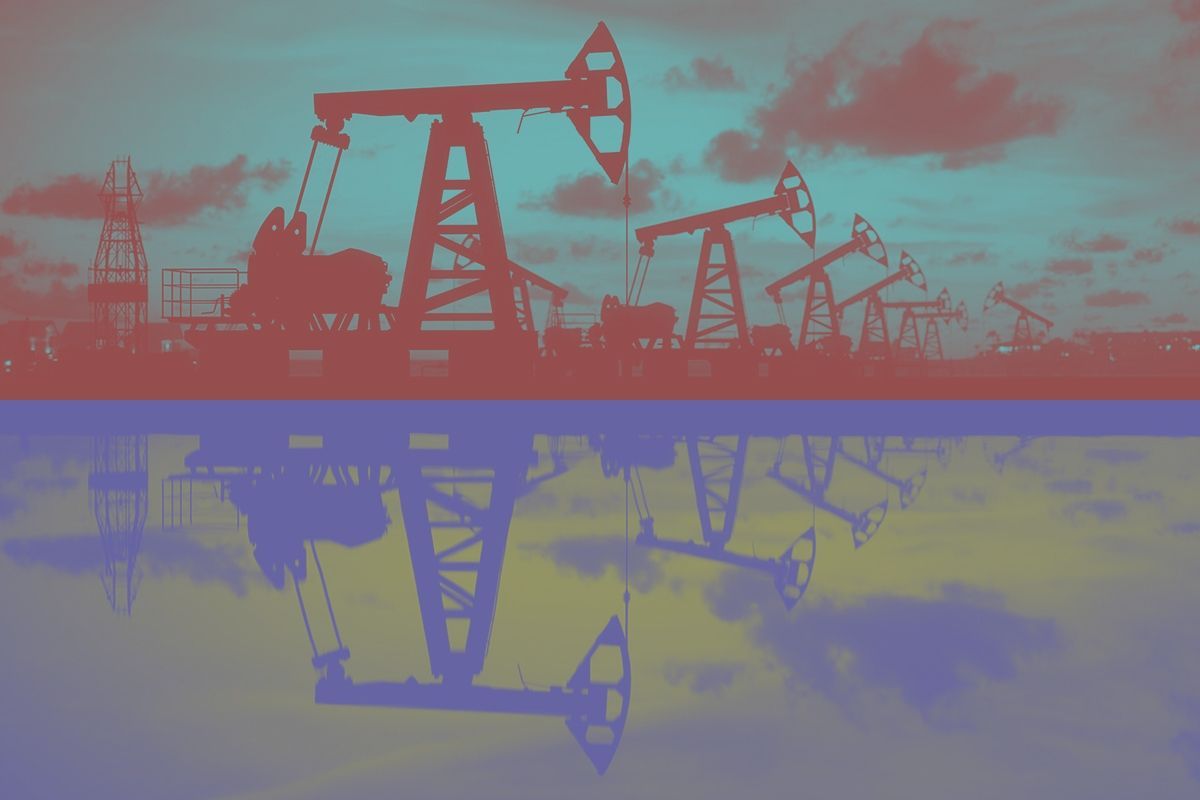
Turn your mind back to early March, soon after Iran announced that it was closing the Strait of Hormuz. Energy experts told us to expect calamity.
Roughly 20% of the world’s oil and liquified natural gas supply moved through the narrow waterway, they said, and we would not soon be able to replace it. Oil prices would rocket to $150 or $200 a barrel. The world faced the worst energy supply shock in history.
We braced ourselves. We waited. And then … it didn’t happen.
Sure, the global oil benchmark rose to about $115 a barrel. Energy prices increased everywhere, and Southeast Asia faced a real crunch. But the worst consequences never hit. Europe didn’t run out of jet fuel, we didn’t get $8 gas across the United States, and the global economy did not shut down. Why?
We can now say with confidence: China bailed us out (and itself out, too). Without fanfare, the country slashed its energy imports and conducted a massive release from its strategic stockpiles of crude oil and liquid fuels. It eliminated something like 5 million daily barrels of oil demand, or about 5% of global oil demand.
Although it might seem technical, the implications of that silent intervention are huge for geopolitics, climate policy, and the future of the oil market. That’s why it’s the topic of today’s episode of Shift Key, Heatmap’s podcast. I encourage you to listen to my conversation with oil analyst Rory Johnston as he walks me through the wonky details — how we know China did this (math and satellite imagery), whether it has a modern precedent (it doesn’t), and what it all means (potentially a lot). He calls this public discovery of China’s latent power “the most important thing” we learned from the Iran war.
Anyway, I won’t ruin the conversation. (You can listen to Shift Key for free on any podcast platform, by the way.) But I do want to mull some of the implications here. The most important, to my mind, has to do with market power.
Get Heatmap in your inbox daily.
* indicates required
Email Address *Our Privacy Policy & Terms Apply.
In oil markets, we often talk about “swing producers.” Saudi Arabia and other OPEC+ countries can shift the global oil price not just because they oversee a large share of the world’s oil production, but also because they can flex domestic production at will. They can increase or decrease their own output to affect the global marginal barrel’s price, stabilizing prices (or hiking them) as needed. (This originates partly from geological luck; Saudi Arabia’s reserves seem particularly well suited to rapid ramp-ups or ramp-downs in drilling and pumping.)
That suggests a mirrored role: a “swing consumer.” What if a country had such large oil stockpiles that it could ramp up or ramp down its imports at will, such that it could move global demand for oil at the margin? Such a thing has never existed in the history of the global oil market, at least to my knowledge. America has experimented with mini-versions of this idea in the past; the Biden administration released oil from the Strategic Petroleum Reserve in 2022 to depress prices after Russia invaded Ukraine. Outside of oil, China already plays a similar role in many global mineral markets, single-handedly shifting global prices for iron, lithium, copper, and other commodities.
But China's actions over the past few months suggest that its domestic oil stockpiles might now be so big that the country can play a swing role in global liquid fuels markets. After President Trump announced that he had reached a deal with Iran, I reflected in this newsletter on the fact that the world now had two energy systems, at least in the transport sector: a legacy liquid fuels system and a rival electricity system. These systems’ supply is divided among the world’s powers. The U.S. is the largest oil and gas producer in the world, but China is the largest manufacturer of solar panels, EVs, and batteries.
Yet if China is also now the world's swing consumer of oil, it suggests the country now has much more influence over the world’s most critical energy inputs in any form — fossil, electric, or mineral — than we had once thought. That isn’t my only Heatmap-relevant takeaway from the Iran war. But it is one I suspect we will remember for years to come.