
A fossil fuel superpower cannot sustain deep emissions reductions if doing so drives up costs for vulnerable consumers, undercuts strategic domestic industries, or threatens the survival of communities that depend on fossil fuel production. That makes America’s climate problem an economic problem.
Or at least that was the theory behind Biden-era climate policy. The agenda embedded in major legislation — including the Infrastructure Investment and Jobs Act and the Inflation Reduction Act — combined direct emissions-reduction tools like clean energy tax credits with a broader set of policies aimed at reshaping the U.S. economy to support long-term decarbonization. At a minimum, this mix of emissions-reducing and transformation-inducing policies promised a valuable test of political economy: whether sustained investments in both clean energy industries and in the most vulnerable households and communities could help build the economic and institutional foundations for a faster and less disruptive energy transition.
Sweeping policy reversals have cut these efforts short. Abandoning the strategy makes the U.S. economy less resilient to the decline of fossil fuels. It also risks sowing distrust among communities and firms that were poised to benefit, complicating future efforts to recommit to the economic policies needed to sustain an energy transition.
This agenda rested on the idea that sustaining decarbonization would require structural changes across the economy, not just cleaner sources of energy. First, in a country that derives substantial economic and geopolitical power from carbon-intensive industries, a durable energy transition would require the United States to become a clean energy superpower in its own right. Only then could the domestic economy plausibly gain, rather than lose, from a shift away from fossil fuels.
Second, with millions of households struggling to afford basic energy services and fossil fuels often providing relatively cheap energy, climate policy would need to ensure that clean energy deployment reduces household energy burdens rather than exacerbates them.
Third, policies would need to strengthen the economic resilience of communities that rely heavily on fossil fuel industries so the energy transition does not translate into shrinking tax bases, school closures, and lost economic opportunity in places that have powered the country for generations.
This strategy to reshape the economy for the energy transition has largely been dismantled under President Trump.
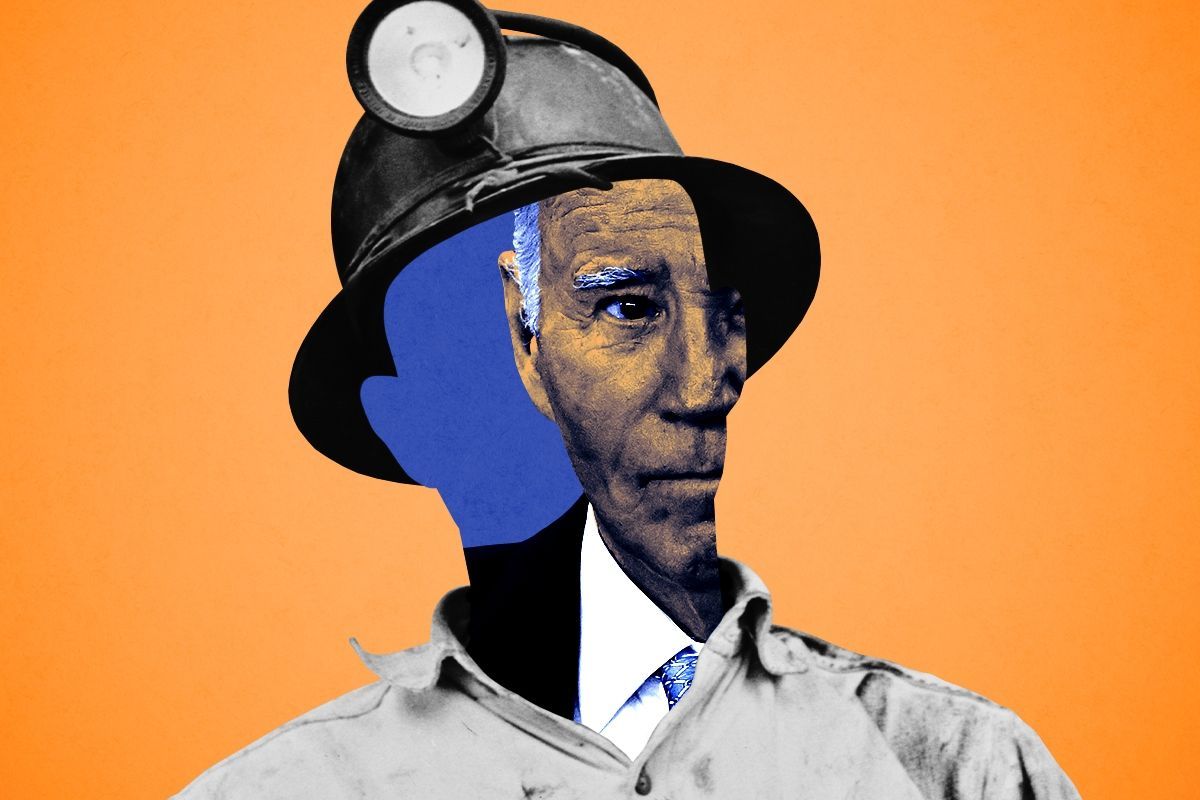
My recent research examines federal support for fossil fuel-reliant communities, assessing President Biden’s stated goal of “revitalizing the economies of coal, oil, gas, and power plant communities.” Federal spending data provides little evidence that these at-risk communities have been effectively targeted. One reason is timing: While legislation authorized unprecedented support, actual disbursements lagged far behind those commitments.
Many of the key policies — including $4 billion in manufacturing tax credits reserved for communities affected by coal closures — took years to move from statutory language to implementation guidance and final project selection. As a result, aside from certain pandemic-era programs, fossil fuel-reliant communities had received limited support by the time Trump took office last year.
Since then, the Trump administration and Congress have canceled projects intended to benefit fossil fuel-reliant regions, including carbon capture and clean hydrogen demonstrations, and discontinued programs designed to help communities access and implement federal funding.
Other elements of the strategy to reduce the country’s vulnerability to fossil fuel decline have fared even worse under the Trump administration. Programs intended to help households access and afford clean energy — most notably the $27 billion Greenhouse Gas Reduction Fund — were effectively canceled last year, including attempts to claw back previously awarded funds. More broadly, the rollback of IRA programs with an explicit equity or justice focus leaves lower-income households more exposed to the economic disruptions that can accompany an energy transition.
By contrast, subsidies and grant programs aimed at strengthening the country’s energy manufacturing base have largely survived, including tax credits supporting domestic production of batteries, solar components, and other key technologies. Even so, the investment environment has weakened. Automakers have scaled back planned U.S. battery manufacturing expansions. Clean Investment Monitor data shows annual clean energy manufacturing investments on pace to decline in 2025, after rising sharply from 2022 to 2024. Whatever one believed about the potential to build globally competitive domestic supply chains for the technologies that will power clean energy systems, those prospects have dimmed amid slowing investment and the Trump administration’s prioritization of fossil fuels.
Perhaps these outcomes were unavoidable. Building a strong domestic solar industry was always uncertain, and place-based economic development programs have a mixed track record even under favorable conditions. Still, the Biden-era approach reflected a coherent theory of climate politics that warranted a real-world test.
Over the past year, debates in climate policy circles have centered on whether clean energy progress can continue under less supportive federal policies, with plausible cases made on both sides. The fate of Biden’s broader economic strategy to sustain the energy transition, however, is less ambiguous. The underlying dependence of the United States on fossil fuels across industries, households, and many local communities remains largely unchanged.