GLOBALVARS
0
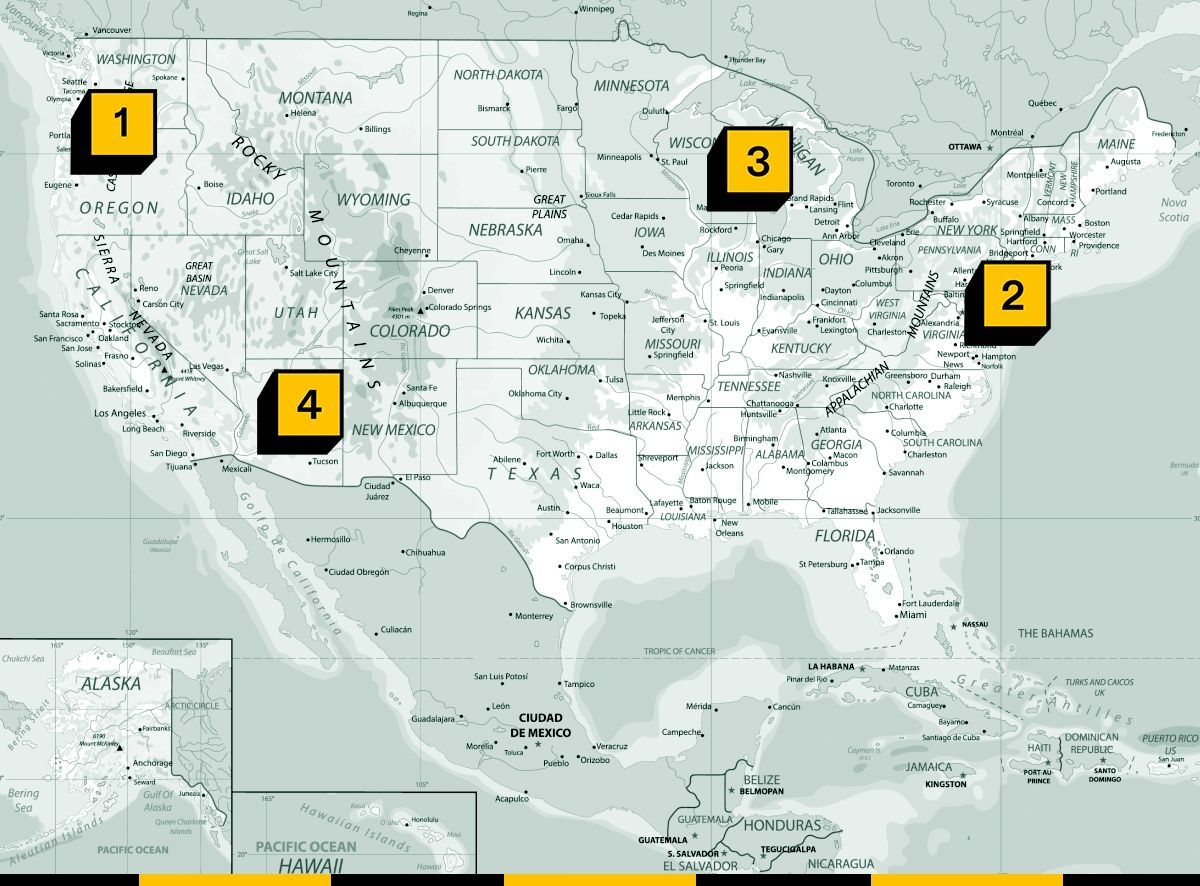
1. Wasco County, Oregon – They used to fight the Rajneeshees, and now they’re fighting a solar farm.
- BrightNight Solar is trying to build a giant solar farm in the rural farming town of Deschutes, Oregon. Except there’s just one problem: Rated as a 82 out of 100 for risk by Heatmap Pro, the county is a vociferously conservative agricultural area known best as the site of the Netflix documentary Wild, Wild Country. Despite the fact the project is located miles away from the town, the large landowners surrounding the facility’s proposed location are vehemently opposed to construction, claiming it would be built “right on top of them.” (At least a cult isn’t poisoning the food this time.)
- An activist group called Save Juniper Flat published an open letter to Donald Trump’s Agriculture Department stating that it’s located on land designated as “exclusive” for farming, and that the agency should conduct “awareness, oversight, and any assistance” to ensure the property “remains truly protected from industrialization – not just on paper, more importantly in reality.” It’s worth stating that BrightNight claims the project is intentionally sited on less suitable farmland.
- The group did not respond to a request for comment about whether the letter was also provided directly to the agency, but one must reasonably assume they are seeking its attention.
2. Worcester County, Maryland – The legal fight over the primary Maryland offshore wind project just turned in an incredibly ugly direction for offshore projects generally.
- This week a federal judge ruled against all of U.S. Wind’s counter-claims in a lawsuit filed by Ocean City, Maryland against construction of a large wind project off the city’s shoreline. This means federal judges are looking harshly at efforts to challenge the financial harms visited upon energy projects halted by lawsuits like this one.
- “This ruling reinforces what we have maintained from the beginning: Ocean City has raised legitimate concerns regarding the offshore wind project and its impacts on our community, economy, tourism industry, and coastal environment,” the Ocean City government said in a statement. “Attempts to shift responsibility or complicate these proceedings through additional claims have now been dismissed by the Court.”
- In tandem with that decision, the Trump administration this week filed a notice to appeal the ruling that struck down Trump’s Day 1 anti-wind executive order. The notice does not itself lay out the basis for the appeal.
3. Manitowoc County, Wisconsin – Towns are starting to pressure counties to ban data centers, galvanizing support for wider moratoria in a fashion similar to what we’ve seen with solar and wind power.
- Three towns in Manitowoc County passed a resolution this week to enact a sweeping ban on data centers. It happened after one of the towns was contacted by Cloverleaf Infrastructure, a data center developer. Cloverleaf is also behind a controversial data center project in progress in Port Washington, Wisconsin, that has become a national flashpoint over water use. There’s currently an effort to recall the town mayor over that project.
- This county was already predisposed to disdain industrial tech development, with a 95 clean energy opposition score and an 80 data center opposition index in Heatmap Pro’s database. A lot of this seems driven by natural environment concerns, water worries, and overall ratepayer fears.
4. Pinal County, Arizona – This county’s commission rejected a 8,122-acre solar farm unanimously this week, only months after the same officials approved multiple data centers.
- The commission made the move saying that the Arena Power solar project would take up too much land. But the data centers would take up roughly 4,000 acres across the county – so one must wonder whether there’s a difference only by degrees here.
- Heatmap Pro data indicates there remains a risk for both kinds of projects in the county.
.