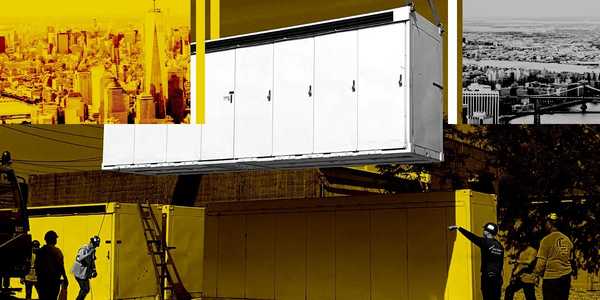
Long-duration energy storage startup Form Energy on Tuesday announced plans to deploy what would be the largest battery in the world by energy capacity: an iron-air system capable of delivering 300 megawatts of power at once while storing 30 gigawatt-hours of energy, enabling continuous discharge for 100 hours straight. The project, developed in partnership with the utility Xcel Energy, will help power a new Google data center in Minnesota that will also be supplied by 1,400 megawatts of wind generation and 200 megawatts of solar power.
Form expects to begin delivering batteries to the data center in 2028. The systems will be manufactured at the company’s West Virginia factory, which is expected to reach an annual production capacity of 500 megawatts by the end of that year.
The Google deal represents a significant play for scale from the startup, which has raised about $1.2 billion to date. By comparison, Form’s first commercial deployment with Great River Energy — slated to become fully operational this year — is designed to store just 150 megawatt-hours of energy.
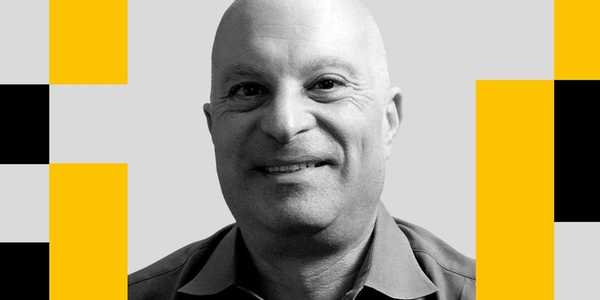
Google will cover all the costs of the clean energy generation, battery storage, and related grid infrastructure for the new data center through a contract structure it developed called a Clean Energy Accelerator Charge, which ensures that regional ratepayers aren’t left footing the bill. While Form isn’t disclosing the expected cost of this battery deployment, CEO Mateo Jaramillo told me that the company remains committed to achieving a fully installed system cost below $20 per kilowatt-hour by the end of the decade.
I spoke with Jaramillo about Form’s latest announcement, what it’s been up to over the past several years, and the operational and technical improvements that have allowed it to pursue a project of this scale despite the fact that it’s yet to deploy commercial projects anywhere near this size. This interview has been lightly edited and condensed for clarity.
Tell me about your history with Xcel Energy?
They know us extremely well. They’ve been inside our operation for, I think, five years now. So they’ve tracked us every single step of the way. They’re very familiar with the technology, with the team, with the progress, so they were ready to sign a deal that is the next scale larger even though we’ve yet to deliver on the very first [smaller scale] ones. Those are coming shortly, but they wanted to get going on hitting the scale-up as soon as possible.
What have you been working on over the past year that’s allowed you to move to this larger scale so quickly?
We’ve been fairly quiet about it, but we did deploy a first generation of the product last year with Great River Energy, albeit in relatively limited volumes. To get there we had to produce 100,000 electrodes, roughly. So it’s like 60 miles worth of material going through the factory, to prove to ourselves — and obviously to our customers — that we had process control. One of the major trap doors for any battery company is manufacturing at scale — until you do that, you can’t really say you understand your chemistry, frankly. And so that’s what we did over the last 18 months. It was arduous and challenging sometimes, but there aren’t any shortcuts. Pilots are easy, and scale is hard.
So that was the work that we had to get through, which then informed a second generation design that we kicked off last summer and we’re now building today in the factory, doing the first phase of testing — design validation testing, production validation testing — before we start to really ramp up later this summer.
How are your second-generation battery cells an improvement over the first?
They both come in a 40-foot shipping container. So from the outside, it looks the same. You do get more power out of the second generation than the first generation — maybe 20% more. The electrodes do not change. In fact, the only way they have changed is to make them easier to manufacture. Electrochemically, material-wise, they’re exactly the same.
Google plans to cover all electricity costs for this data center. Could this accelerate its grid interconnection?
Yeah. I think that’s true of the whole portfolio that [Google] put together, to enable the project to be interconnected as quickly as possible. And obviously the consideration from the utility and the regulatory commission is going to be, what is the reliability profile of the resource? And so that’s the function that we provide. The 100 hours allows you to say we have clean, firm capacity on-site or provided to the site that’s going to help with the reliability concerns that one may have by bringing on this much new load this quickly.
This 30-gigawatt-hour battery is the largest ever announced. Can you put this number into perspective for me?
For all of 2025, I believe the installed capacity [added to the grid] in the entire U.S. was 57 gigawatt-hours. And in one project, we’re going to install 30 gigawatt-hours.
What it highlights is, once you get to the 100-hour duration, you can really stop thinking about energy to some extent. It sounds a little counterintuitive, but it’s like saying, how much energy do you get with a gas plant? To some extent you just care about the power, because you know you have the energy. And the same thing starts to become true once you’re in this multi-day duration regime. It’s a reliability asset. It’s a capacity asset. The 100 hours we know covers the key durations that really matter for those things. And so it’s sort of a 300-megawatt system that gives you all the energy you need.
What changes to the current electricity market structure are needed to fully capture the value of Form Energy’s 100-plus-hour grid battery?
The capacity markets certainly are evolving, and they’re evolving in a way that is beneficial for us. Generally gas gets the highest accreditation for capacity value in the system, and the shorter duration resources or the intermittent resources get much lower accreditation. What we have found is that our 100-hour system gets fully accredited at the same level as gas everywhere that we have gone through that process, and we expect that to be true in every other jurisdiction.
Ultimately, there needs to be a price for reliability. Right now there is no price for reliability, per se — it’s all proxies through capacities and the [levelized capacity contributes] and durations associated with that.
Given the numbers you’ve cited, it’s pretty clear that grid-scale battery storage is poised for exponential growth. When do you expect this expansion to really accelerate?
We feel pretty sure just based on demand that we already have — and that we see coming very quickly — that the market is as big as we can manufacture it. So 1,000 gigawatts would be a terawatt-hour, which is a lot of energy. I think we’ll get there early next decade.