GLOBALVARS
TEST TEST TEST
0
Products

Current conditions: The City of London has issued a pollution warning after fireworks launched in celebration of Guy Fawkes Day and Diwali created a dangerous haze over the British capital • The first snow of the season is coming to the northern parts of the Great Lakes and Northeast • The Southeast, too, is bracing for frost and chilly temperatures by the end of the week.
THE TOP FIVE
1. BAAJA passed its first vote
The Senate has permitted permitting reform to progress — or, as my colleague Jael Holzman put it, the bill “survived its first test.” On Monday evening, the chamber voted 73 to 25 to advance the Bipartisan American Affordability and Jobs Act, or BAAJA. The cloture vote — an initial procedural step to end debate on a bill and move to a final vote — split the Democrats who won new terms in last week’s election. Senators Jon Ossoff and Raphael Warnock of Georgia, Elissa Slotkin of Michigan, and Ruben Gallego of Arizona all voted yes; Senators Mark Kelly of Arizona, Chris Van Hollen of Maryland, and Cory Booker of New Jersey voted no.
The vote drew swift condemnation from the conservation groups that overwhelmingly opposed the legislation from the start. “Sadly, the Senate has failed to learn a striking lesson from last week’s midterm elections — that Americans are fed up with unchecked aggression from Big Tech and the out-of-control construction of AI data centers,” Jim Walsh, the policy director at Food & Water Watch, said in a statement. The solar industry’s main lobby, on the other hand, praised the vote. “Americans urgently need lower energy costs, a better electric grid, and more energy made in the U.S.A. This bipartisan legislation delivers all three,” Tim Pawlenty, the chief executive at the Solar Energy Industries Association, said in a statement. Despite lending his support to the vote in a Sunday night statement, President Donald Trump threw a wrench into negotiations, stating from the podium of the White House briefing room Monday afternoon that he would not approve any new wind farms — a major stipulation for Democratic support of the bill. Senator Sheldon Whitehouse, the Rhode Island Democrat who helped broker the deal, brushed it off, telling reporter Nico Portuondo, “He’s 80” and “didn’t get the memo.” The initial cloture vote is no guarantee of passage. Senator Lisa Murkowski, the Alaska Republican, raised concerns over Native American groups’ opposition to the bill and said she was not certain she would vote yes, despite casting a ballot to advance the legislation Monday.
2. NRC just issued its third construction permit this year
After Southern Company completed work on the nation’s first two new reactors in a generation back in 2023 and 2024, the U.S. went through what I called a nuclear dry spell. Then in March, the Nuclear Regulatory Commission gave Bill Gates’ reactor developer TerraPower a construction permit for its debut plant in Wyoming. In September, the agency greenlit the Tennessee Valley Authority’s project to build what could end up being the country’s first small modular reactor, a water-cooled GE Vernova Hitachi Nuclear Energy BWRX-300, at the federally owned utility’s Clinch River site. Now the NRC has given Amazon-backed X-energy the agency’s first construction permit for a high-temperature gas-cooled reactor in nearly six decades. On Monday, the NRC greenlit the Long Mott Generating Station, designed to support chemical giant Dow’s Seadrift Operations plant on the Texas Gulf coast. The thumbs up for X-energy’s Xe-100, an 80-megawatt reactor that’s cooled with helium instead of water, marks what the NRC called “several regulatory firsts” for the agency. It’s the first approval of a facility meant to provide both electricity and heat; the first for a reactor that’s designed to be refueled while it’s still operating; and the first review of a reactor of its kind to use the agency’s new 18-month licensing pathway. NRC Chairman Ho Nieh said in a press release that this demonstrates the agency is capable of completing “rigorous safety reviews on predictable timelines that move advanced nuclear technology from design to construction.”
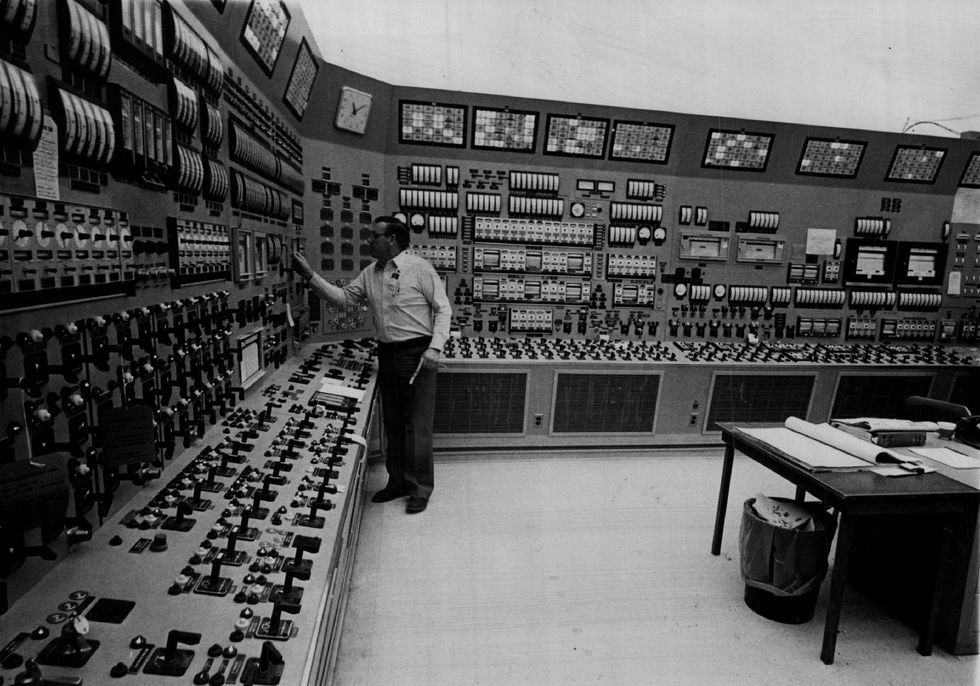
X-energy’s won’t be the nation’s first commercial high-temperature gas-cooled reactor, however. That was the Fort St. Vrain plant, Colorado’s only nuclear station, which shut down in the early 1990s after only a few years due to operating challenges. X-energy has told me it’s taken a lot of lessons from that plant’s failure into account in its design. The NRC permit offers “further validation” of the company’s plans, X-energy CEO J. Clay Sell said in a statement. “This is an important day,” he added. “Getting the construction permit earlier than expected is reflective of the thorough and efficient work of the NRC.”
3. Louisiana landowners sue regulators over Meta data center approval
A coalition of landowners is suing the Louisiana Public Service Commission for fast-tracking Meta’s vast data center complex in the state. In a lawsuit filed Monday, the trio of groups argued that regulators violated the state constitution by adopting a “lightning directive” pathway that allowed utility giant Entergy to skip steps designed to protect ratepayers as it sought approval for seven gas plants and transmission lines to serve the Facebook owner’s largest-ever data center, known as Hyperion. “We want our elected officials to be accountable to the people who elected them,” Dustin McAnn, a cattle farmer whose land is affected by the directive, told New Orleans Public Radio — “not to corporations, not to NDAs, not to secrecy, but to the people who elected them to the office they serve.”
Sign up to receive Heatmap AM in your inbox every morning:
Email Address *Our Privacy Policy & Terms Apply.
4. Trump’s former nuclear consigliere launches a new data center company
Until this summer, Seth Cohen served as the Trump administration’s bulldog in the Department of Energy, pushing to overhaul what the White House’s Department of Government Efficiency saw as unnecessary hurdles to building new nuclear power infrastructure. He left in June to return to the private sector. Now he’s looking to bring that same streamlining to data center construction. On Monday, he announced the launch of Mavria, a startup to design and deploy modular data centers in weeks rather than years. The company told The Wall Street Journal that it had raised a $130 million Series A at a nearly $1 billion valuation. Mavria’s first product line is called Terrain, a modular data center that can be hauled in by truck.
“The fundamental design philosophy for Terrain was, instead of asking the supply chain to bend to our designs, why not bend to the supply chain?” Cohen told me by phone yesterday. “With our projects, we’re going in and trying to match with communities that actually want us there in the first place — or, if they’re skeptical of data centers, where we can earn their trust and figure out how we can come in as a productive and beneficial member of the community.” Working on nuclear power, he said, taught him how to select good locations for infrastructure that carries political baggage. “The closer you go to a nuclear plant, the more popular nuclear becomes,” Cohen said. “We believe in a world where data centers will be more popular the closer you are to a Terrain deployment.”
5. Is an LNG bust looming?
The market for liquified natural gas — the version of the fuel that’s superchilled to liquid form for easy transport in tankers — is booming as prices skyrocket in response to the U.S. war in Iran, the Russian war in Ukraine, and cold weather in Europe. But could a bust be looming? A new analysis by the investigative site Gas Outlook found that a “tidal wave of new LNG capacity is coming and the war may ultimately lead to a deep market downturn in the years ahead.”
“While some LNG exporters are raking in record profits from war-time pricing, the boom could quickly turn to bust,” the outlet wrote, citing analysts. “Indeed, the LNG market was headed for a colossal glut prior to the war. That supply overhang has been delayed, but not wiped out.” Gas consumption actually declined a small amount this year, according to the latest estimates from the Global Carbon Project, contributing to a slight, 0.4% projected decline in global emissions from fossil fuels in 2026. Other factors in that decrease include the proliferation of clean energy and electric vehicles and the oil supply shock from the war in Iran.

THE KICKER
Greta Thunberg rose to prominence in 2019 as a teenage protester who inspired students to boycott school over global inaction on climate change. In recent years, however, the Swedish activist has diversified her political portfolio to include virtually any left-wing movement in the Western world. She has become a high-profile figure in global protests against Israel, twice attempting to sail a flotilla to Gaza. She’s also appeared in support of the riots that tore through France in recent weeks. But after five years without attending a United Nations climate summit, Bloomberg found the now 23-year-old Thunberg standing in a long security line at COP31 late Monday afternoon at the start of the conference in Antalya, Turkey. “We’ve had 31 COPs now, and we’re still speeding in the wrong direction,” she told the newswire.