
GLOBALVARS
TEST TEST TEST
0
Products
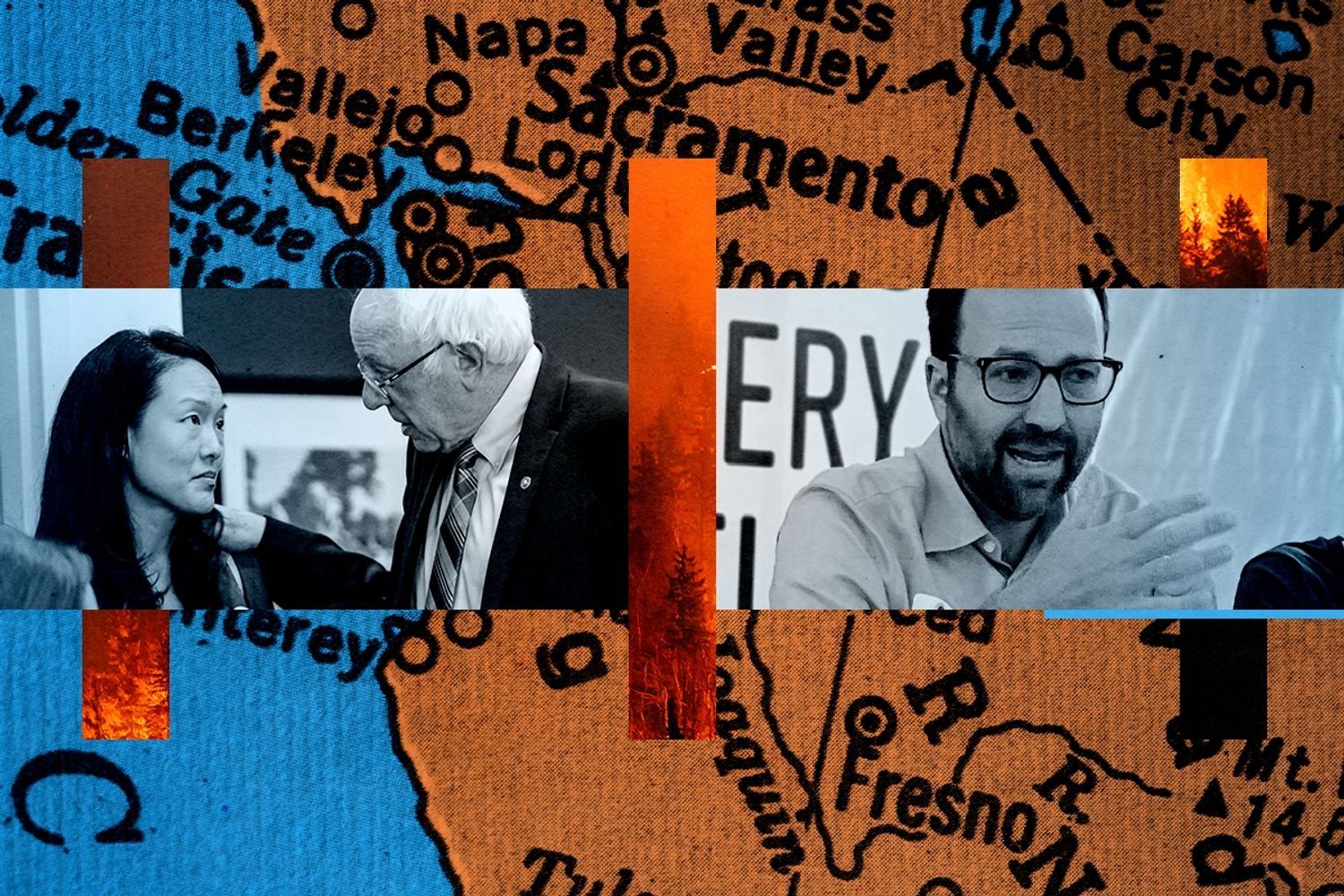
Few political wonks outside of California were likely paying much attention to the Golden State on Tuesday night, as Democrats’ anticipated blue wave crested. But the state did have one close, consequential race on the ballot: insurance commissioner. On Friday, Bernie Sanders-endorsed progressive Jane Kim won the race to lead the California Department of Insurance, which oversees the state’s $452 billion insurance market.
Kim declared victory over the more moderate State Senator Ben Allen, who was backed by the California Democratic Party, after reaching a nearly six-point lead on Friday. In a brief speech before supporters, Kim said Allen called to congratulate her that morning. (A spokesman for the Allen campaign confirmed the call to The Orange County Register.) Kim ran on a proposal for a state-run, single-payer insurance program that would cover homeowners against wildfire damage — though the plan would ultimately need approval from both the California legislature and Governor-elect Xavier Becerra.
The idea is that homeowners would automatically receive public coverage for wildfire-related losses, with payouts capped at roughly what it costs to rebuild a typical California home. Policyholders would keep their regular private insurance for other risks such as theft, burst pipes, or an ordinary kitchen fire. Kim says Californians wouldn’t pay more overall, since the money for the program would come from the share of premiums that already goes toward wildfire coverage, though each household’s bill would partly depend on its own wildfire risk.
“It would be nonprofit, and so any excess capital would stay in the state of California and would be used to drive down risk,” Kim told my colleague Matthew Zeitlin a few weeks ago. “That’s the most important piece about this actually, is that it would create another revenue stream for mitigation.”
The insurance commissioner job has taken on an increasing sense of urgency as wildfires — intensified by climate change — continue ripping through communities in California. Mounting losses from hotter, drier conditions combined with decades of new construction in the wildland-urban interface have squeezed insurers’ profits, leading many to drop policyholders in high-risk areas or simply stop writing new policies in the state altogether.
California’s homeowners insurance premiums climbed 84% between December 2020 and March of this year, according to Stanford researchers. Meanwhile, a growing number of residents have been pushed onto the state’s FAIR Plan, which my colleague Matthew described as “the barebones insurer of last resort.” The share of California’s single-family homes covered by the plan has nearly tripled over that same period, from under 2% to about 5%, as homeowners in even low- and moderate-risk wildfire areas increasingly find themselves with few alternatives.
The insurance crunch has become yet another front in California’s broader affordability crisis, alongside persistently high housing, electricity, and gasoline costs. Kim’s victory suggests frustrated voters are increasingly willing to support more radical solutions that once seemed politically out of reach. And while Kim doesn’t have a background in the insurance industry, she’s no stranger to public office. The former civil rights attorney served on the San Francisco Board of Supervisors from 2011 to 2019 before becoming a regional director for Sanders’ 2020 presidential campaign.
But throughout her run for the Insurance office, critics have continually questioned how, exactly, her plan would work. No state has attempted a public disaster insurance program like this before; critics argue there’s no relevant model to work off of, no white paper laying out the details, and no price tag attached to the idea. Kim herself acknowledges that there’s plenty of uncertainty surrounding the plan. “This is a concept and a proposal, and could look quite different by the time it works its way through the process,” she told Matthew. In other words, the program that eventually emerges from negotiations with lawmakers — if one does — could end up looking considerably different from what Kim campaigned on.
Her opponent, Allen, who chairs the state senate’s Energy, Utilities and Communications Committee, argued that creating a public wildfire insurance program would impose a significant financial burden on the state. The California Earthquake Authority, an agency that sells earthquake insurance and administers the state’s Wildfire Fund, examined the potential costs of such a program this spring, estimating it would require roughly $25 billion upfront to have a 75% chance of staying solvent for 20 years. But Kim points out in her policy brief that buying reinsurance — essentially insurance for the insurer — could cut that to about $6 billion.
Allen, on the other hand, pitched a series of reforms to the existing market, including speeding up rate reviews, rewarding homeowners and communities for wildfire mitigation, expanding financing for home-hardening projects, and discouraging development in high-risk areas.
Voters opted instead for the insurance revolution. But Kim argues that her plan isn’t totally without precedent. On the campaign trail, she frequently pointed to New Zealand, where the government’s Natural Hazards Commission provides homeowners with public coverage for disasters including earthquakes, landslides, volcanic eruptions, and tsunamis — though notably not ordinary wildfires. And while France and Spain also operate state-backed disaster insurance programs, these don’t cover wildfires either, a far more common occurrence in California than the comparably rare disasters these programs were built around abroad.
Ultimately, Kim’s ambitious plan will require a champion in the legislature to go anywhere. But in the meantime, there are other issues she could get to work on. On the campaign trail, she said she wants to push insurers to fund a disaster mitigation program run by the Department of Insurance, require companies selling auto policies in a region to also offer homeowners coverage there, and impose minimum loss ratios compelling home insurers to pay at least 65% of premiums in claims and auto insurers at least 70%. It’s unclear, however, whether Kim can implement either of the latter two proposals without new legislation.
Kim will also immediately face the question of what to do with outgoing Insurance Commissioner Ricardo Lara’s Sustainable Insurance Strategy reform package. Designed to entice insurers back to California, these new rules allow companies to set premiums using forward-looking risk models rather than relying on historical losses, and to pass a portion of their rising reinsurance costs onto policyholders. In exchange, insurers are required to write more policies in wildfire-prone areas.
Kim has criticized this approach, arguing that insurers have exploited loopholes to raise premiums on lower-risk customers while continuing to underserve high-risk communities, all without doing enough to address the underlying factors driving wildfire risk.
That leaves Kim in a tricky situation. Until she is able to secure legislative backing for some version of her proposed public insurance program, she’ll have to decide whether to scrap or simply build on the existing reforms. She hasn’t yet laid out any plan for doing so. But whatever direction she takes could ultimately reshape California’s insurance market well before a new state insurer gets off the ground.