GLOBALVARS
TEST TEST TEST
0
Products
This is Heatmap Daily, a weekday digest written by our executive editor. Subscribe here.
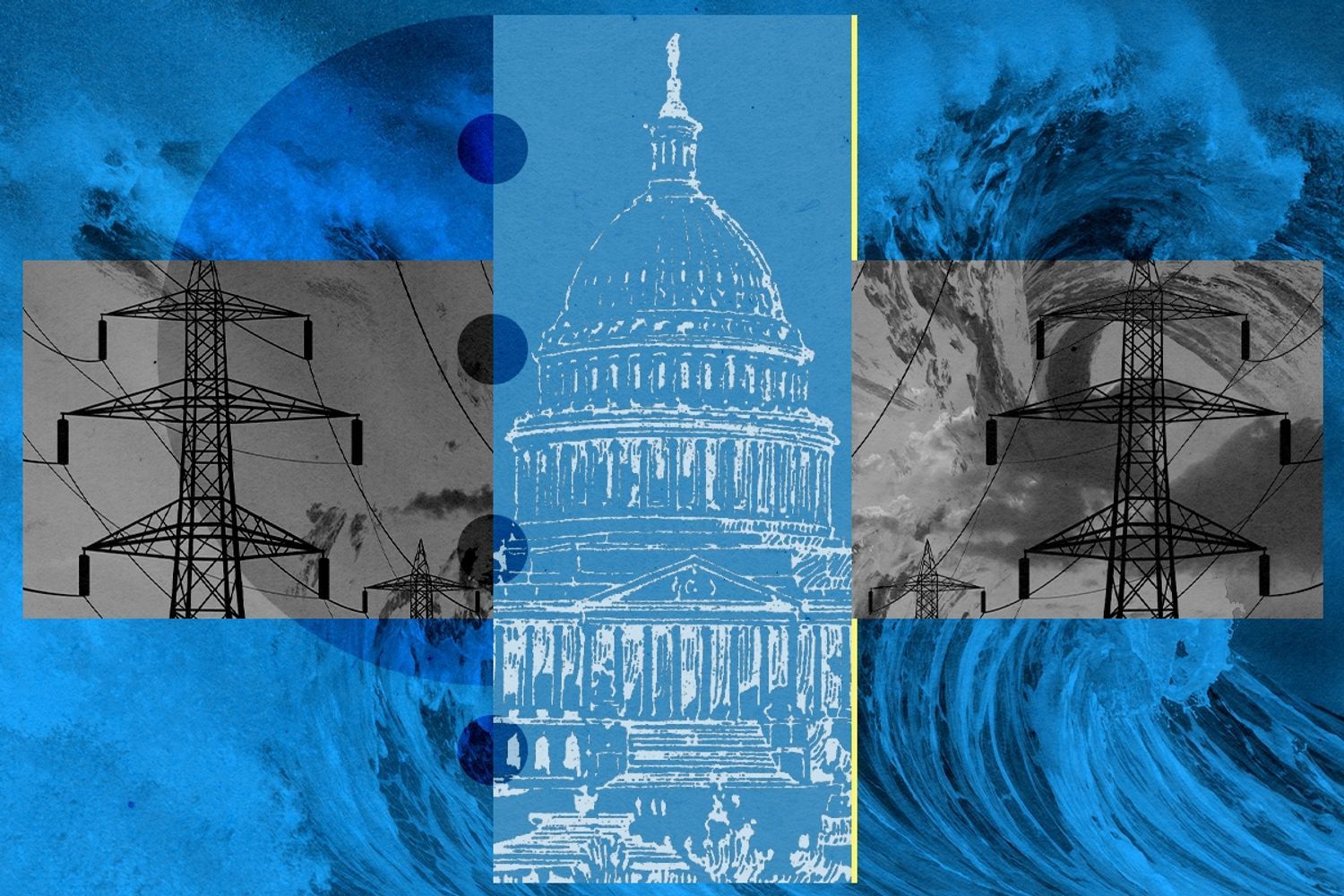
So here we are. The bipartisan permitting reform bill has cleared its first and most important procedural hurdle in the Senate. On Monday evening, 73 senators voted to end debate on the Bipartisan American Affordability and Jobs Act, or BAAJA, which would broadly make it faster and easier to build federal infrastructure projects of all sorts, especially power lines.
The bill will still undergo what its backers call a “healthy amendment process,” and it will face procedural and substantive votes for the next week or two. But its path to passage, at least in the Senate, is getting clearer.
That’s more than a little surprising. Going into the midterm elections, the conventional wisdom in Washington was that the bigger the Democratic wave, the harder it would be to pass BAAJA. Supporters feared that Democrats, newly flush with confidence, would drop the compromise and choose to restart negotiations anew in the next Congress. That’s certainly what Representative Jared Huffman, the likely incoming chair of the House Natural Resources Committee, has pushed for on X over the past week. And soon after the scale of the electoral deluge for Republicans became clear, Heatmap reported that the bill’s odds of passage had gotten a little steeper.
And yet the bill has actually gotten closer to becoming law, not further, since last Tuesday. And as I pondered the situation over the weekend, I realized the original conventional wisdom was misguided. The midterm elections have strengthened the politics of permitting reform. Tuesday’s results can help explain why the Democratic Senate caucus is now speeding toward passage.
The first dynamic is obvious: This is an affordability bill — it’s right there in the name — and Democrats just won an affordability election. The bill’s projected energy affordability benefits are small but real, and proponents argue (plausibly) that the bill’s most important changes are impossible to quantify in an energy model. The bill will make federally funded public transit much faster to build, for instance, which will have big affordability and emissions implications but is essentially impossible to model.
What’s more, much of the incoming Democratic Senate class ran on a policy platform that looks a lot like BAAJA. James Talarico of Texas, Adam Hamilton of Kansas, Annie Andrews of South Carolina, and — if they win — Scott Colom of Mississippoi and Mary Peltola of Alaska all promised an all-of-the-above energy policy that would expand the supply of fossil fuels andclean energy. That is what BAAJA does, according to its supporters and detractors.
South Carolina’s Andrews even went one step further and explicitly committed to finding a permitting reform compromise with Republicans. “Nobody has the political will to get to work and pass this bipartisan plan. It’s embarrassing,” she wrote. “In the Senate, I'll work to bring members of both parties together to finally get this done.” Now Democrats can get it done before she even gets to the Hill.
BAAJA mirrors Democratic policy commitments in more specific ways, too. Seven of the incoming 11 Democratic senators campaigned on forcing data centers to pay the full cost of their electricity use; it was even one of Abdul El-Sayed’s mandatory “terms of engagement” for the facilities. The rest of the winning Senate class made more vague pledges that data centers should not make Americans’ power bills go up.
The permitting bill would accomplish this goal, too. BAAJA would force data centers and crypto miners to pay the full costs of their connection to the grid, and it would let states go even further in transferring additional system costs from other ratepayers onto data centers.
Last week’s elections could help ease data center worries around the bill in other ways, as well. Some of BAAJA’s critics have feared that the bill could accelerate the nationwide data center buildout. And in a world where data centers are growing fastest in Republican states, activists might be loath to surrender any federal tool — no matter how feckless — that would be useful to fighting them. But many of the states where data centers and behind-the-meter gas plants are growing most quickly — such as Texas, Ohio, New Mexico, and Pennsylvania — will now have new Democratic governors or outright trifectas next year. The most effective tool for slowing the data center buildout remains state, county, and municipal land use laws. BAAJA would not touch those ordinances. And its data center electricity provisions would actually expand the ways that incoming Democratic governors could make data centers pay for the rest of the grid or even build new infrastructure.
Likewise, BAAJA’s new utility oversight tools look far more powerful in a world where state politicians have promised to fight utilities. Democrats likely also find it easier to write those powers into law in a world where public utility commissions are trending Democratic.
And there is one more reason Democrats might feel more comfortable passing this bill now: Tuesday has made their odds of gaining even more power in the future look better, and this bill will improve as Democrats pass other clean energy or climate policies to augment it.
If Congress soon restores the wind and solar tax credits, for instance — as virtually every incoming congressional Democratic has vowed to do — then BAAJA’s transmission provisions will go from being merely somewhat good for the climate to being very good. When the Inflation Reduction Act fell short, it was because the United States could not build new power lines fast enough; marrying the IRA’s clean energy tax credits to BAAJA’s transmission mandates would supercharge them both. If a future Democratic Congress chose to fund and build a national macrogrid, then passing BAAJA now would make it easier, because some of the hardest political tasks — such as creating a federal backstop siting mechanism for new power lines — will already be done. There’s a reasonable political argument that Democrats should eagerly welcome Republican co-ownership of BAAJA’s transmission provisions, so that the party does not have to own the political consequences of such a buildout alone in the future.
Likewise, BAAJA will disproportionately benefit the party that wins the next presidential election, because the bill’s greatest affordability benefits will start accruing to the president who follows Donald Trump. Like all big energy bills, BAAJA will take time to work its way through the energy system. Americans won’t immediately experience cheaper bills or faster projects; after BAAJA’s passage, independent agencies such as the Federal Energy Regulatory Commission will need to write rules governing the law’s new programs and communicate them to states, utilities, and grid managers.
Many of those effects will start to be felt right around the time the next president takes office in January 2029 — or even in the early 2030s. If Democrats feel better about their chances of taking the White House today than they did a week ago, then they may very well feel better about passing this bill now, too.