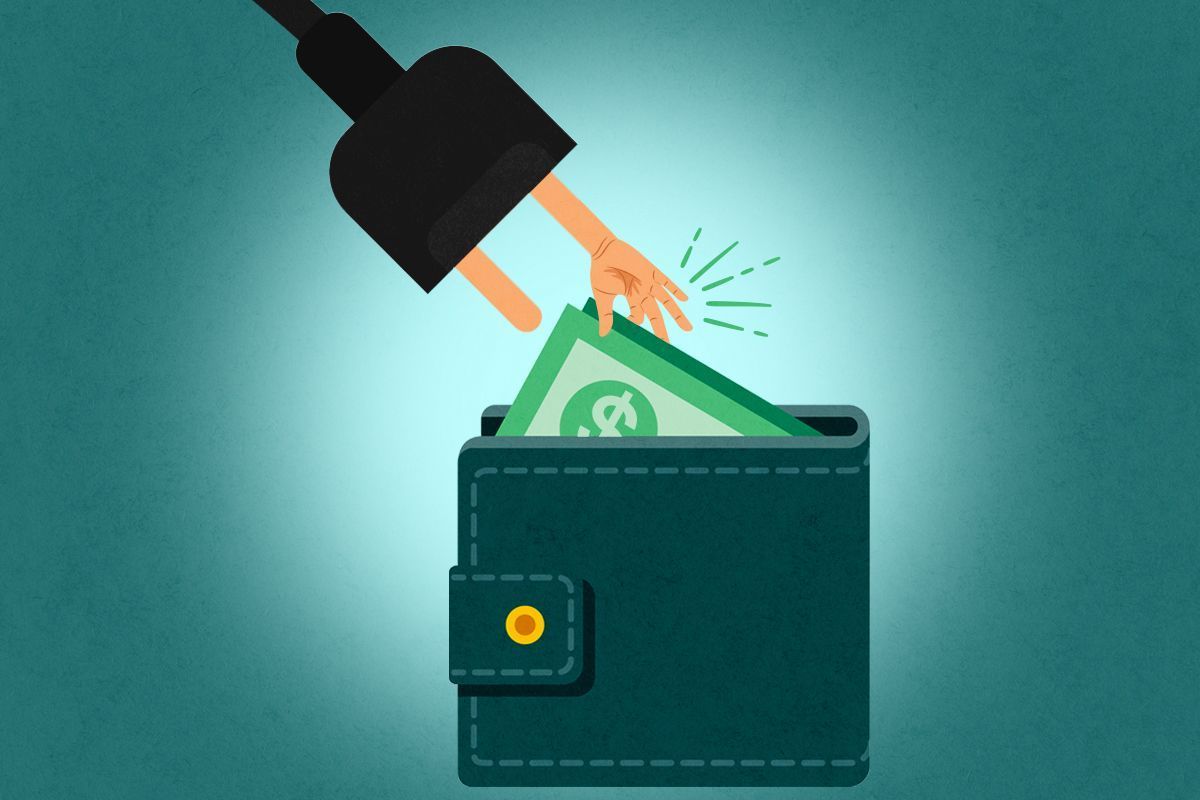
Most Americans say that rising electricity bills are having at least “a decent amount” of impact on their household finances, according to a new Heatmap Pro poll.
The poll, which surveyed more than 3,700 registered voters last month, gives context to how electricity prices have come to dominate national headlines in recent months — and why they’ve become an urgent issue at the state and local level in a few key regions.
On the 2024 campaign trail, President Donald Trump promised to cut voters’ power bills in half within a year of getting elected. So far, that hasn’t happened: Electricity prices have risen more than twice as fast as inflation over the past 12 months and are still rising, according to government data.
Voters are beginning to feel the squeeze from that inflation. In our poll, 26% of American registered voters said that rising electricity prices were having “a lot” of impact on their personal finances. Another 31% said that rising prices were having a “decent amount” of impact.
Still, for about 40% of the country, those high prices are more a pinch than a pain. Thirty percent of registered voters said that rising prices only had “a little bit” of impact on their personal finances, while 9% said they were having “none at all.” There wasn’t a significant partisan division in sensitivity to the high prices.
The survey did show some regional distinctions, however. In the Northeast, 63% of registered voters reported that rising power prices were causing them “a lot” or “a decent amount” of trouble. In the Midwest, only 52% of voters told the poll the same thing. The South, with 56%, and the West, with 61%, landed somewhere in between.
As might be expected, lower-income voters described more trouble. More than 70% of voters with household income below $50,000 a year said that rising power bills were having “a lot” of impact on their finances. Some 62% of voters earning less than $100,000 also described issues. So did 59% of white voters without a college degree.
The rising cost of power has become a major question in New Jersey’s political race, where it has haunted ads and led Representative Mikie Sherrill, the Democratic candidate, to promise to freeze power rates for a year if she is elected.
Energy Secretary Chris Wright has said that rising electricity costs are his No. 1 concern as energy secretary, although he has conceded the Trump administration is “going to get blamed” for surging power rates. The Trump administration has revoked permits for new offshore projects along the East Coast, and congressional Republicans have ended tax credits for solar and wind energy.
Wright told Politico in August that he blames “momentum of the Obama-Biden policies” for the surging power rates. Donald Trump was president from 2017 to 2021, after Obama and before Biden.