GLOBALVARS
TEST TEST TEST
0
Products
Is Rosemont about to be BAAJA blasted away?
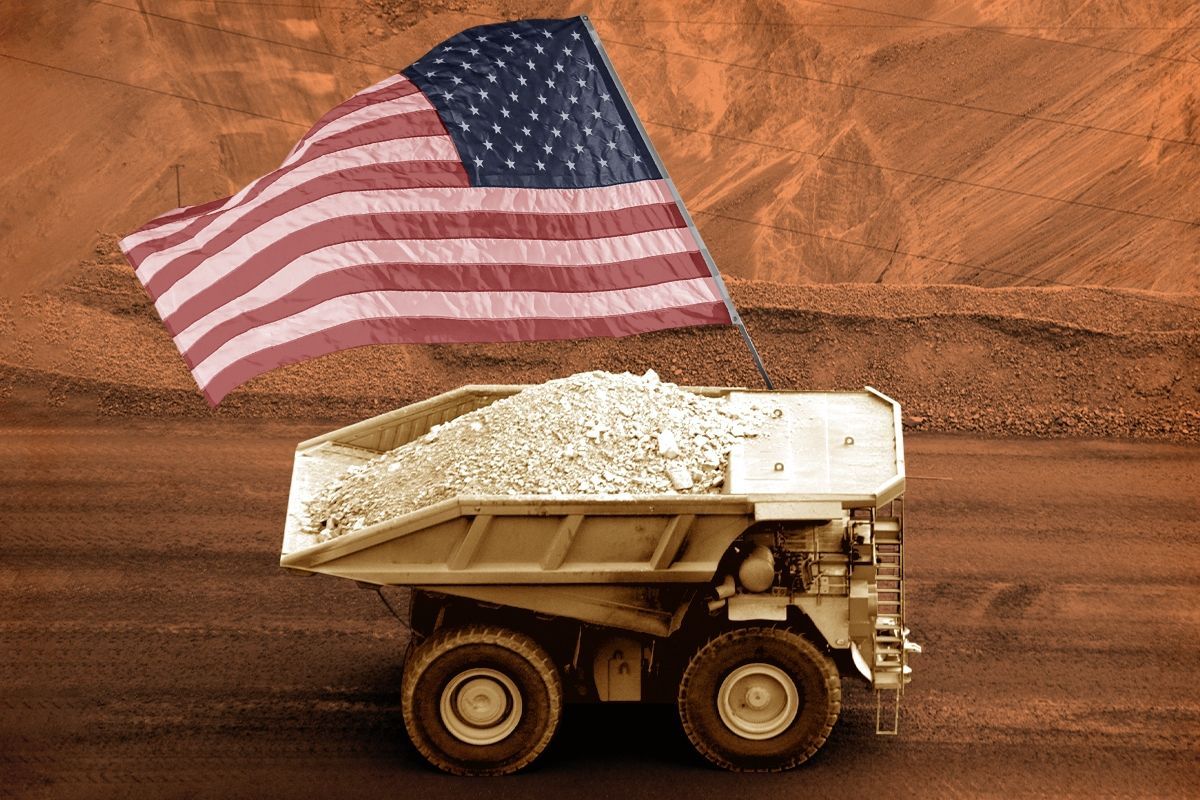
In a 2022 decision formally titled Center for Biological Diversity v. U.S. Fish & Wildlife Service, the Ninth Circuit Court of Appeals ruled that Rosemont Copper Company dump literally millions of tons of waste rock on Forest Service land adjacent to its claim under the General Mining Act of 1872. Though Rosemont argued that the use fell under the law’s provisions for “mill sites” on public lands used for mining, the court found that because the parcel in question lacked valid mining claims of its own, the Mining Act did not justify its use under its own permissive regime.
The conservative energy group ClearPath Action described the decision as “a significant departure from long-held mining practices.” Industry groups said that the decision would vastly extend and complicate the process of mining on public lands by putting areas with mineral claims into a separate legal and permitting category from adjacent land that had customarily been considered part of the mining development.
Almost immediately after the court decision, the mining industry and its allies in Congress got to work trying to “fix” the Rosemont decision in order to restore the pre-2022 status quo.
One proposed fix — the Mining Regulatory Clarity Act — has been introduced several times in both houses of Congress, including as far back as 2023 in a Senate bill co-sponsored by Catherine Cortez Masto of Nevada and Jim Risch of Idaho.
Another version of the bill, sponsored by Nevada Republican Mark Amodei, Nevada Democrat Steven Horsford, and Alaska Republican Mark Begich, passed the House of Representatives late last year with a handful of Democratic votes. Both bills would have explicitly established that miners could claim public land for waste rock disposal as long as it was “reasonably necessary” and “reasonably incident” to mineral development.
Now they may all be getting their wish. The comprehensive permitting bill introduced by Republican and Democratic leaders in the Senate known as the Bipartisan American Affordability and Jobs Act, includes the full text of the Mining Regulatory Clarity Act
Both parties have been trying to jumpstart the domestic mining and critical minerals industry, especially for materials key to energy sectors, such as copper and lithium. The long lead time it takes to permit and open a mine is one of the major barriers to developing the domestic mining industry (along with nasty price competition from overseas miners and refiners, especially those controlled by Chinese firms).
This is not the first time a bipartisan permitting bill has included what’s known a “Rosemont fix.” There was also one in the 2024 Energy Permitting Reform Act, and in the Senate FREEDOM Act introduced by Cortez Masto and Arkansas Republican Tom Cotton this past summer.
You may have noticed lots of Nevadans associated with these bills. That’s because “Nevada is to mining as Texas is to oil and gas,” Aaron Mintzes, deputy policy director of Earthworks, a frequent and vigorous adversary of the mining industry, told me
While environmental groups generally supported the Rosemont decision, some groups supporting the clean energy industry backed the Mining Regulatory Clarity Act, including Bipartisan Policy Center’s lobbying arm, the clean energy trade group Advanced Energy United, and the Zero Emission Transportation Association, which includes several copper and lithium companies among its members. (Mintzes described ZETA as “the lithium mining lobby” and an “outlier” among clean energy groups in supporting the Mining Regulatory Clarity Act.)
Instead of a technical fix that would comply with the spirit of existing law, Mintzes described the changes to mining regulation in BAAJA as giving mining companies “a nearly unlimited amount of public lands for their waste dumps, for their roads, for their pipelines, for their transmission lines, and for any other purpose that would be reasonably incident to mining.” That goes beyond the mill sites envisioned by the 1872 law, he said.
The National Mining Association, on the other hand, praised the bill Wednesday, with its president Rich Nolan saying in a statement that the existing permitting process is “mired in duplication, endless litigation and uncertainty,” and that “elected officials on both sides of the aisle have long acknowledged that the status quo cannot continue.”
Albert Gore, the executive director of the Zero Emission Transportation Association, told me that there was a “broad recognition” among miners, refiners, and operators that the Rosemont decision required a statutory fix.
“It needed to be clarified in order to remove uncertainty. It's hard enough to invest in mineral production in the United States,” Gore said.
BAAJA’s mining provisions also include the Abandoned Hardrock Mine Fund, which would be funded by maintenance fees collected by the Department of the Interior under the same 19th century mining law. This fund would support a program established by the 2021 Bipartisan Infrastructure Law to clean up abandoned mining sites.
In a transcript of a strategy call between environmental organizations on the BAAJA published by Punchbowl, Mintzes described the fund as “the one good thing I spotted in this bill so far.”