GLOBALVARS
0
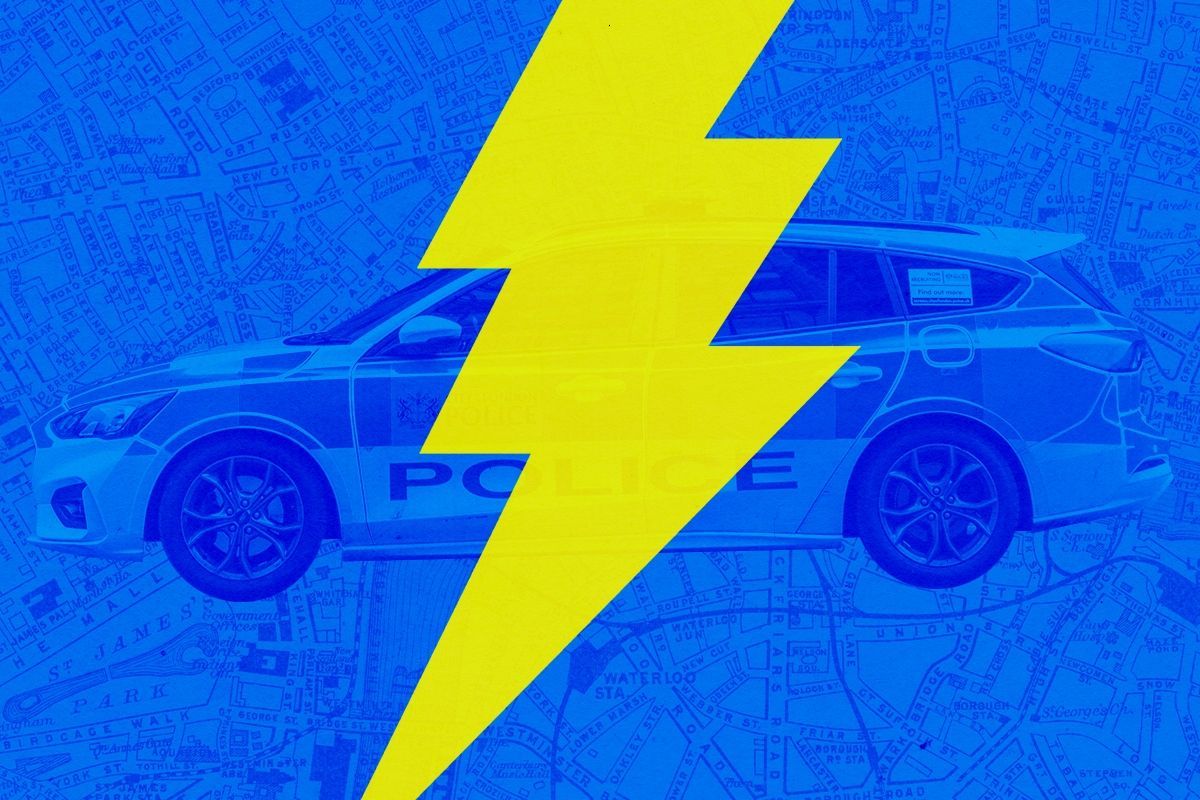
Police officers can’t be stuck waiting for their black-and-whites to recharge when an emergency call comes in. That urgency makes it especially tricky to transition their fleets away from fossil fuels and the lightning-fast gas fill-ups that get cars back on the road.
But some cities and departments have begun to make the move, aided by artificial intelligence models to manage their many vehicles and ensure electric cars can do not just the next job, but every job. Around the world, trucking companies, buses, municipal vehicles, and other huge fleets want to go electric to save money on fuel and maintenance, and they’re looking to AI to give them the confidence to take the plunge.
A cleaner fleet of cop cars is already coming to London, where the Metropolitan Police Service has turned over nearly a third of its fleet to hybrids or EVs. Last week, the MPS announced a partnership with the firm BetterFleet to manage how and when it charges its EVs, helping the service pursue its goal of a net-zero carbon emissions fleet by the end of the decade.
Much of the challenge is psychological, says BetterFleet CEO Dan Hilson. His solution is to use the power of data to overcome whatever anxiety an organization might have about switching to EVs, whether it’s range anxiety or fear of dealing with fluctuating electricity prices or something else entirely. During our interview earlier this month at the ACT Expo, a conference on advanced technology in fleets and trucking, Hilson told me that his company was able to prove to the London police that, with enough information and planning, “there’s no route you can’t do. There’s no day that you’ve done in the last three years that you couldn’t have done if it was electric.”
To demonstrate, BetterFleet builds digital twins of an operation — data-driven models that consider anything that would impact a vehicle’s range, from its own weight and cargo and the condition of its battery and motors to its planned route and speed. Even external conditions such as weather and traffic must be included to create as accurate a picture as possible of the vehicle’s condition and state of charge at any given moment.
While the approach sounds straightforward enough, hiccups come from unexpected places when you’re simulating the real world. BetterFleet found while working with King County Metro and its Seattle-area bus fleet that recharging times could vary widely between two pieces of charging equipment that look identical. “We thought, Hey, this is physics. It should just work in a particular way. But it really doesn’t,” Hilson said.
You also can’t always get what you want, data-wise. For example, Hilson said he thought automakers had access to battery information about things like degradation over time or what’s happening with the battery’s chemistry or temperature at any given moment. “Almost none of them have that, believe it or not,” he said. “And that’s because some of the original manufacturers of the batteries don’t seem to be able to give it.” His team had to work around it, building their own algorithms based on observed data to model how fast, say, an electric semi truck’s battery life would fade and adjust for it in the numbers.
BetterFleet had previously modeled and managed fleets such as London’s buses and the EV semi trucks that have been moving soft drinks around for Pepsi. But the electrification of emergency vehicles represents a next-level challenge. Bus routes are unchanging; trucking paths are predictable. Police may have beats and typical areas of service, but they must be able to respond elsewhere at a moment’s notice. As such, Hilson told me that part of his firm’s deal with the MPS was the inclusion of priority charging, so that critical vehicles could get back on the road faster. BetterFleet also must consider the possibility of when and where cop cars might use DC fast chargers to fill up quickly — an issue for departments everywhere. I often see a police Tesla or two refueling at a Supercharger in South Pasadena, California I often visit.
Indeed, while AI could have cascading benefits for EV fleets — think of predictive maintenance systems that learn which parts are likely to fail when — charging is one place where this kind of machine learning could be an enormous difference-maker right away. Trucking companies that want to go electric and steer clear of diesel price shocks don’t need to buy a $100,000 fast-charger for every truck; they need AI to tell them how many they really need if their whole fleet spreads out and optimizes its charging schedule. Grizzled lifelong trucking fleet managers don’t particularly want to become experts in complex energy markets in order to maximize their savings by charging EV trucks at the cheapest times, Hilson says. They just want AI to do it.
A variety of firms are moving into this space to help out companies that want to dip their toes into EVs. Katie Siegel, CEO of the charging management service FlipTurn, said at ACT that AI-managed charging has helped her firm balance the electrical demand of fleets by moving much of it to off-peak hours. While that approach netted thousands of dollars of savings per month, especially during summer, the benefits weren’t just monetary. For one client, such a demand-flattening approach got trucks and chargers up and running four to six months sooner than expected because it meant they didn’t have to wait for the utility to deliver extra capacity.
With so many data insights available, the trick now is deciding what matters. “The worst customers really says, It’s all important,” Hilson says. “Every single thing is important. I want my battery to be saved. I want energy savings. I want it to always be ready for trucks to pull out. So it’s about sitting with customers and really getting to that crux of what really is important. What’s the hierarchy?”