GLOBALVARS
0
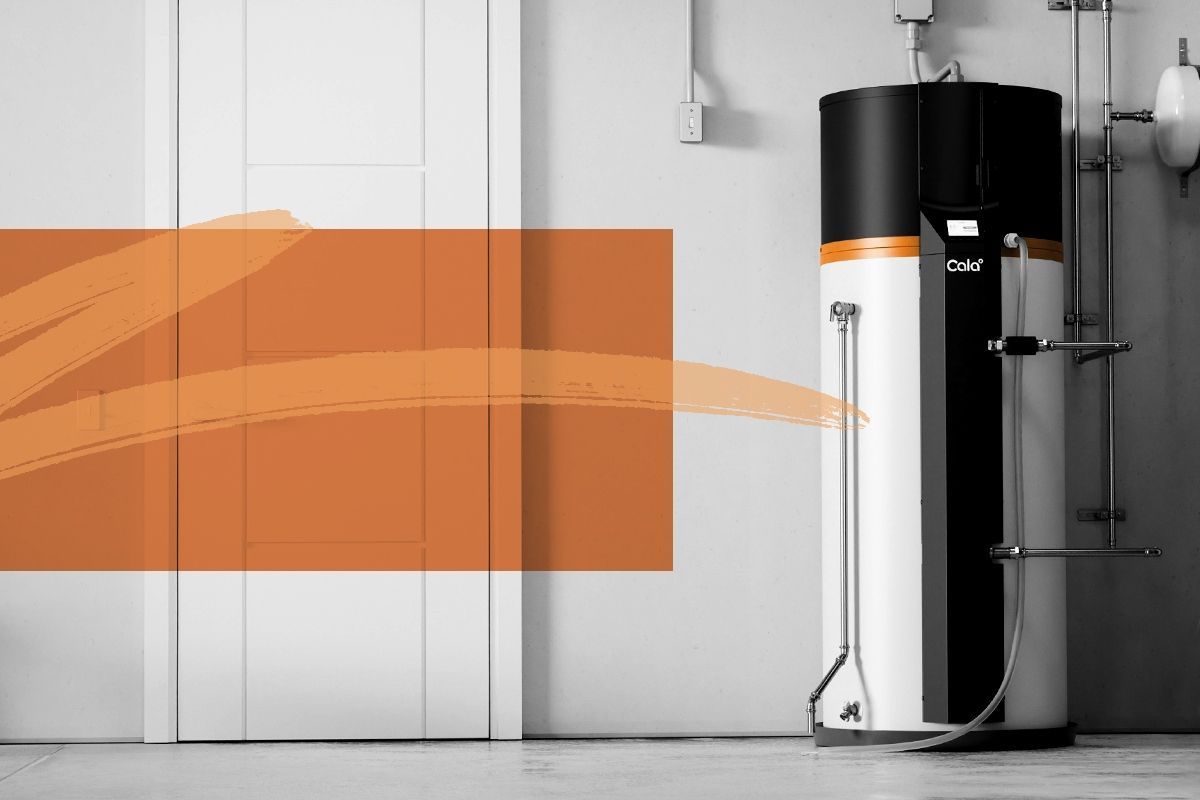
Electric vehicles. Heat pumps. Rooftop solar. Home batteries. Over the past decade, electrification has been transforming how American homes produce and consume energy and, in so doing, has begun to turn passive utility customers into active grid participants. But one device has lagged behind: The water heater is the last frontier of home electrification. And it's a big one.
The Right Technology, Designed the Wrong Way
Water heating is the second-largest energy use in American homes, accounting for nearly 20% of household consumption. At 4% of U.S. greenhouse emissions, water heating contributes more than aviation. And the technology is largely unchanged in a century: About 46% of water heaters use electric resistance, the same tech that’s in a toaster, while 47% burn natural gas and 6% use oil and propane.
Heat pump water heaters are how electrification transforms water heating. More efficient than gas and cheaper to run over time, they’re becoming the dominant path for home electrification. Although more expensive upfront, they more than make up for it. Consider that a family of four pays an average of $714 a year to run an electric resistance water heater at national average electricity prices. HPWHs cut that number by more than half, and Cala’s smart water heater slashes costs by significantly more, according to Cala Systems cofounder and CEO Michael Rigney. It all adds up to thousands in lifetime savings over electric resistance, oil, and propane. These operational savings make HPWHs the only viable electrification path as homes convert away from fossil fuels. Consumer appetite for all-electric homes is growing, and state rebates and incentives offset some of the higher upfront cost.
But getting heat pump water heaters into our homes is only half the story. The other half is what we do with them once they’re installed. For now, the answer is very little. Today’s heat pump water heaters are designed to operate exactly like their predecessors: heat the water, wait for it to be used or cool down, heat it again. They could be doing so much more. Think of a water heater as a thermal battery, storing energy as heat rather than electricity. An intelligent heat pump water heater could “charge” the same way an EV does: when electricity is cheapest, when solar is most abundant, when the grid needs load shifted. The potential has been there for years.
Indeed, utility demand response programs for electric resistance water heaters were proven decades ago but have not gone mainstream. Meanwhile, VPPs and demand response programs that include heat pump water heaters are nascent and hampered by current product design. It’s a series of missed opportunities: for homeowners who could be saving more, for the grid that could be using these devices as flexible resources, and for the climate goals that depend on getting electrification right, not just getting it done.
Michael Rigney saw this gap clearly. A mechanical engineer in the thermal sciences who spent years at EnerNOC, one of the early pioneers of demand response and virtual power plants, Rigney had the background to recognize what a heat pump water heater could become. He identified three converging forces. First, electrification arriving at an overlooked yet critical part of the home energy system. Second, energy systems becoming dynamic via time-of-use pricing, grid constraints, and virtual power plants. Third, consumers who now expect devices that learn and adapt. “It’s an innovation trifecta,” he says, “that a smarter heat pump water heater is ideally suited to address.”
How It Actually Works
The Cala heat pump water heater is not an appliance upgrade. It is a planning system, closer in spirit to a combined smart thermostat and battery than to the water heater it replaces. Four components make that possible.
An integrated flow sensor measures water use in real time, providing the data needed to understand each home’s unique usage patterns and optimize its water heating. Cala’s predictive control software, licensed from the National Laboratory of the Rockies, utilizes each household’s hot water usage patterns, temperature data, and external signals like electricity pricing to plan the optimal heating strategy — rather than simply reacting when the tank runs cold. Optimized water heating is only possible with enhanced hardware. Cala’s system combines a variable-speed compressor, which adjusts the heating rate and runs up to 25% more efficiently at low speed, with an integrated mixing valve that allows the tank to store water at higher temperatures and mix in cold water at the outlet. Together, these features effectively turn the unit into a thermal battery that stores cheap or solar energy for later use.
Together, these four elements let the system coordinate when, how fast, and to what temperature water is heated, while factoring in a household’s specific needs, solar production, real-time electricity pricing, household noise preferences, and whether a recirculation pump is in use. The hardware and the software are designed as one system — the intelligence isn’t layered on top, but built in.
What This Looks Like in Practice
For most homeowners, the value proposition is simple: lower energy bills and a reliable supply of hot water, even at times of peak demand. The system learns when the family showers and heats water optimally without anyone in the home adjusting a setting. From that starting point, Cala does the rest. For homeowners with TOU rates, Cala shifts water heating to low-priced periods but still ensures ample hot water at times of high usage. For homes with solar but not net metering, the system shifts the load to midday when the panels generate surplus. And at grid scale, a fleet of connected Cala units can enroll in VPPs or follow the continuously variable prices now under development in California and other states.
For contractors, this performance reliability matters just as much. Cala’s predictive controls, remote monitoring capabilities, and consistent hot water output help reduce troubleshooting and costly callbacks, while giving installers greater visibility into system performance over time. The result is a more reliable customer experience and a product designed to work with—not against—the realities of field service.
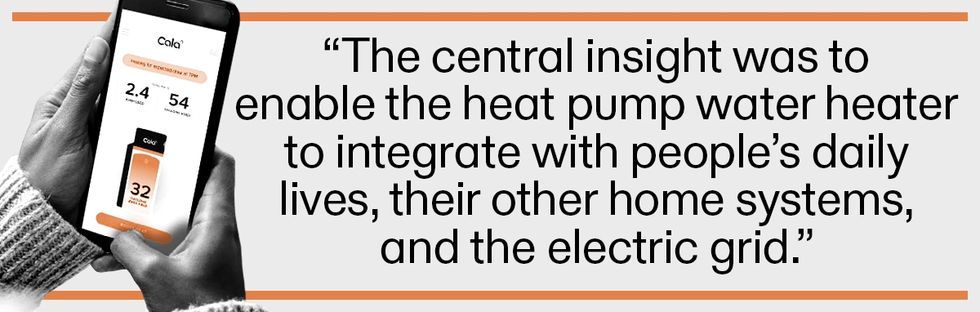
“There’s so many things that we can do as a result of how we run it,” Rigney says. “The central insight was to enable the heat pump water heater to integrate with people’s daily lives, their other home systems, and the electric grid. The early results back that up. Cala units deliver over 90% of their energy with the heat pump vs 65% for traditional HPWHs. The Cala heat pump runs at low speed and high efficiency 70% of the time. Finally, 99.7% of water from Cala units is delivered at the target temperature.”
10 Million a Year
Ten million water heaters are replaced in the U.S. each year. Heat pump water heaters are growing at 30% annually and are on track to exceed 20% of total sales by 2029, making them a $4B category. The conditions that make intelligent water heating valuable are not approaching. They are already here.
“When we started Cala, heat pump water heaters were a niche technology — most homeowners and many contractors had never heard of them,” Rigney says. “That’s changed. Energy prices are high and homeowners are paying attention. Over 95% of contractors are aware of HPWHs now. More and more people want an all-electric home, and they’re looking for products that deliver on that.” The market isn’t waiting for the technology to catch up. It’s the other way around.
The scale of what’s possible is hard to overstate. If the country’s roughly 125 million water heaters were intelligent and grid-connected HPWHs, they would represent approximately 300 gigawatt-hours of flexible energy use per day — energy that could be shifted around the clock in response to grid conditions. That’s the equivalent of 140 hundred-megawatt data centers’ worth of highly controllable energy use. A fleet of connected water heaters doesn’t just save homeowners money; it is a continent-scale grid resource.
Built to Scale
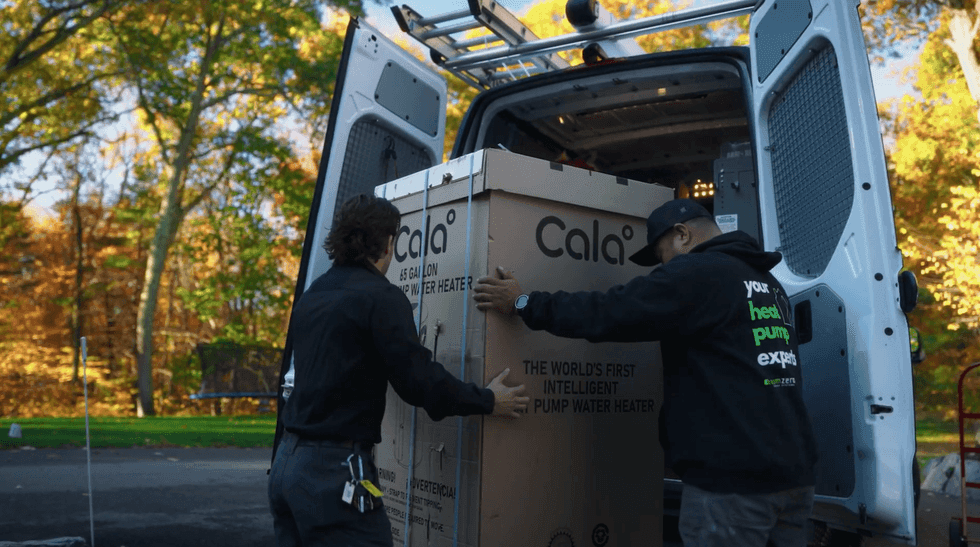
The path to scale for a water heater looks different than it does for consumer tech. Water heaters are replaced when they break, age out, or get caught up in a renovation. Homeowners initiate the purchase process, but 85% of water heaters are installed by professionals. Cala’s go-to-market strategy is built around that reality, with a dedicated contractor network active in the field across 46 states. Hundreds of units are deployed. Manufacturing is owned, not outsourced.
“We’re building awareness with both homeowners and contractors because both influence the purchase decision,” Rigney says. “At the same time, contractors remain central to the water heater category, and many homeowners ultimately look to us for a referral to a local Cala Pro — the people already trusted to evaluate the home, recommend the system, and install it. That’s not a future distribution strategy. It’s already how the company operates.”
Getting It Right
There’s no doubt that Americans will install tens of millions of heat pump water heaters over the next decade. Rigney’s chief concern is that we won’t realize their potential. The first challenge is product capability. “Water heaters are among the most flexible resources in America,” he says. “It’s literally a battery for heat. With the right design, you can move the energy use around in time and deliver ample hot water. We’ve shown this can be done with Cala.”
“The grid of the future is taking shape — dynamic pricing, home solar and batteries, renewable surplus that needs somewhere to go. A continent-wide network of 125 million intelligent water heaters is one of the most valuable resources that the grid can have.”