GLOBALVARS
0
It was just yesterday that I wrote about the Ratepayer Protection Act, a bill that would transform into law the voluntary pledge big tech companies signed with the White House to take on additional electric grid costs from their data centers. My argument was that it’s not so much an anti-artificial intelligence or anti-data center bill, but rather a move to insulate further data center development from political pressure stemming from rising electricity costs.
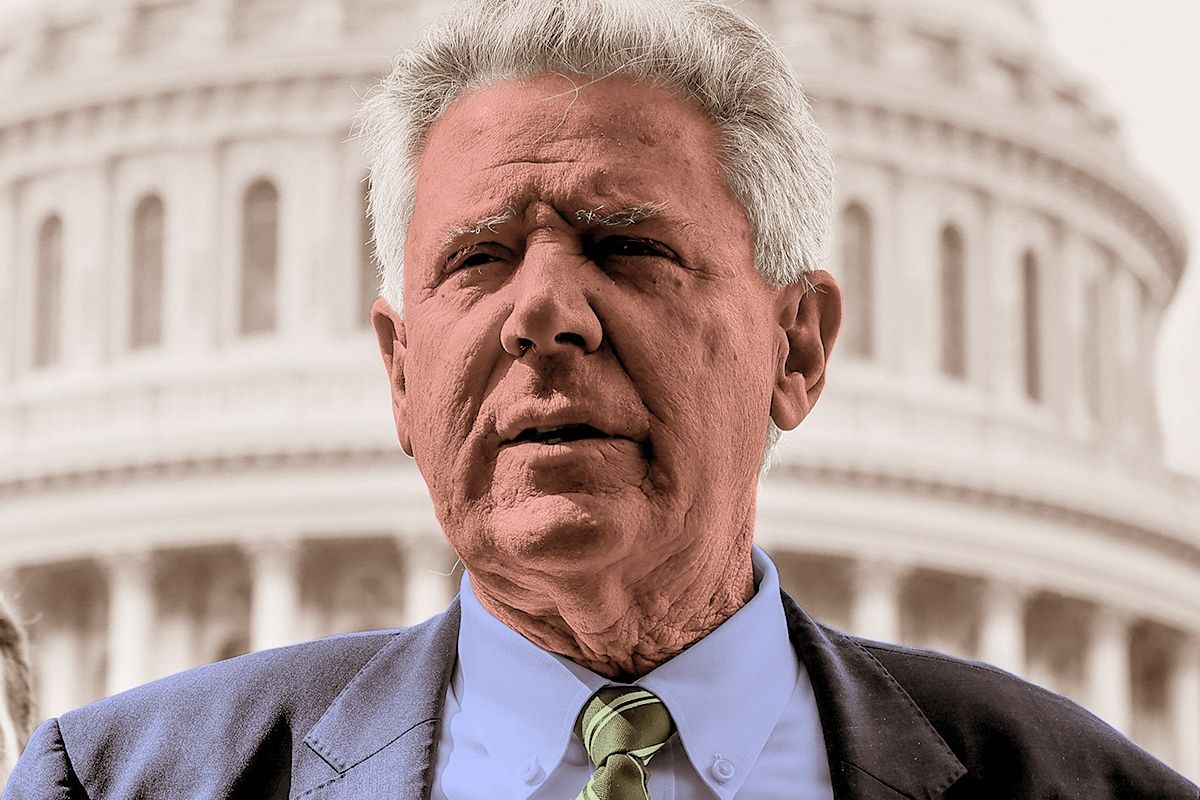
Well, at least one influential lawmaker seems to agree with me. The Democratic ranking member of the House Energy and Commerce Committee, New Jersey Representative Frank Pallone, called for a national data center moratorium before the Wednesday afternoon markup of a series of data center-related bills, the Ratepayer Protection Act among them.
Pallone described the proposals being discussed at the markup as a “useful first step,” but that “compared to the challenges the American power grid is facing, they are not nearly enough.” Instead, he called for “a national AI data center moratorium until we can find a way to ensure they don't harm our nation's air, water, and power bills.”
Pallone cited a slew of efforts in his home state to slow the rapid proliferation of data centers, including a resolution in Asbury Park calling for a statewide moratorium and the city of New Brunswick rejecting a planned data center project earlier this year.
“This simply cannot continue,” Pallone said of the pace of data center development. (When asked for comment, Pallone’s office pointed to his prepared remarks.)
Pallone is not the first Democrat to call for a data center moratorium, but he’s the moratorium supporter who is most closely involved in energy policy at the national level. Senator Bernie Sanders and Representative Alexandria Ocasio-Cortez, two of Congress’ most prominent progressive Democrats, have called for a nationwide moratorium, sponsoring a bill that would enact “a reasonable pause to the development of AI to ensure the safety of humanity,” including a halt to data center construction until a laundry list of conditions were met related to both energy prices and AI safeguards.
The Democrat-controlled New York State legislature also passed a one-year data center moratorium earlier this month, although the bill is still sitting on the desk of Governor Kathy Hochul, a Democrat, awaiting her signature or veto.
Politicians calling for moratoria are trying to catch up with a public that has quickly soured on data centers. A majority of the American public supports a nationwide moratorium, according to polling done by Heatmap, with 40% of respondents giving the idea their strong support.
One reason why Americans increasingly oppose data centers is that they blame the developments for inflating their electricity bills. When Heatmap polled this question last August, 28% of respondents blamed “the construction of new data centers” for rising electricity prices. When we asked again last month, 53% did.
Analysts have looked at electricity price increases in the past five to 10 years and found little consistent relationship with data center construction, though that is not necessarily true everywhere and at all times.
In New Jersey, which is part of the PJM Interconnection electricity market, prices have likely risen based on current and planned data center construction within a grid area that has long had trouble bringing on new generation or building out sufficient transmission. PJM’s independent market monitor has attributed $23 billion in added costs to “existing and forecast data center load” in the system’s capacity auctions.
New Jersey Governor Mikie Sherrill implemented a rate freeze almost immediately following her inauguration earlier this year after years of price hikes and rising bills. Average electricity bills in the state have risen from around $91 per month to $140 per month, according to the Heatmap-MIT Electricity Price Hub, while electricity prices have risen almost 52% in the past five years.
Pallone was skeptical that any intermediate steps have or could work to protect ratepayers.
“Promises by the data center industry and Big Tech that these facilities will bring down costs have fallen flat,” Pallone said at Wednesday’s markup. The Federal Energy Regulatory Commission’s efforts to prompt regional electricity markets to overhaul their interconnection policies “may have promise, but it will take months, if not years, to come to fruition,” he said. The Ratepayer Protection Pledge, meanwhile, has “no enforcement,” and constitutes a “toothless promise from Big Tech.”
“Americans across the country have expressed concern and opposition to the rampant construction of AI data centers, and Congress should take this political groundswell seriously with a data center moratorium,” Pallone concluded. “That's what we need.”