GLOBALVARS
TEST TEST TEST
0
Products
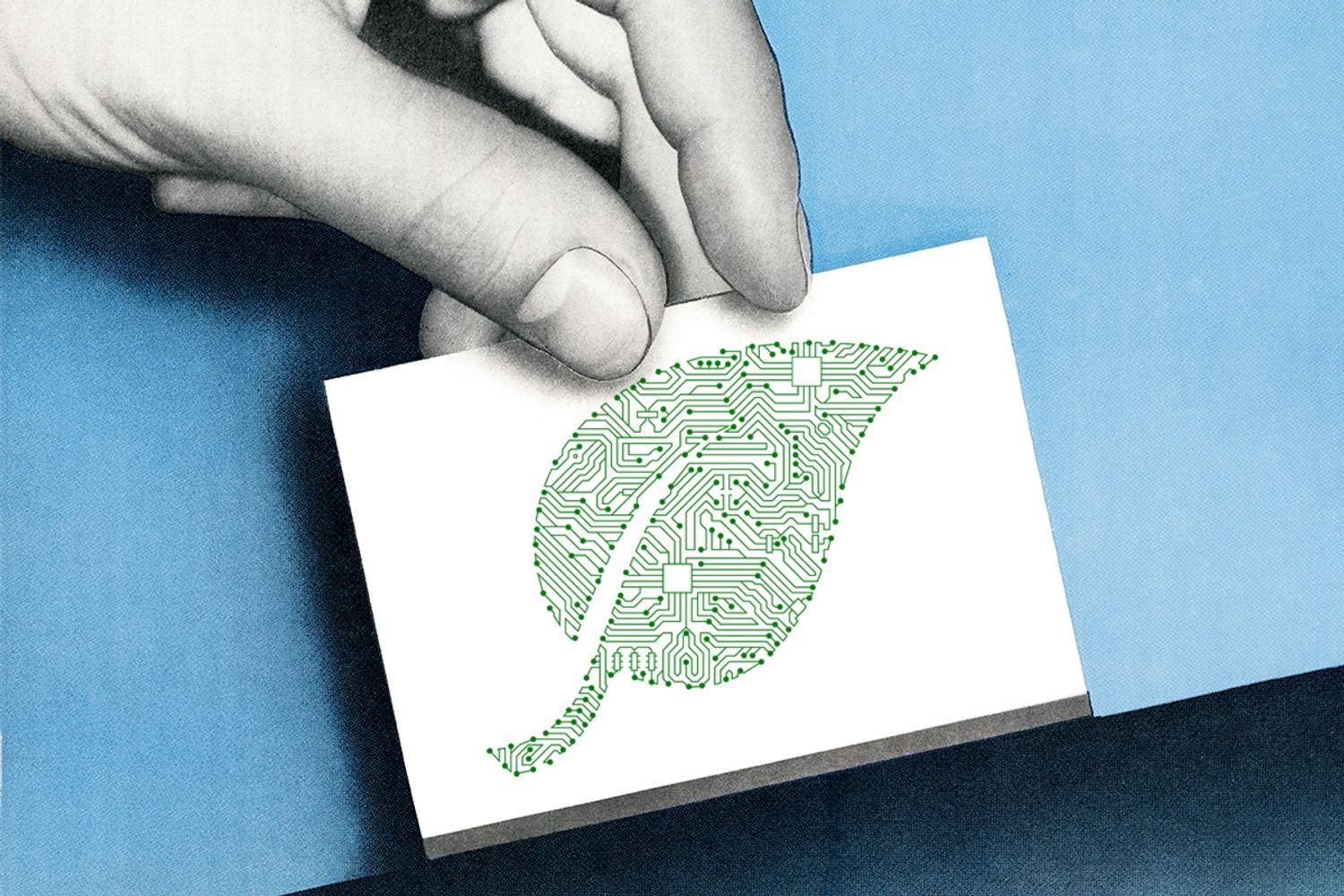
After Donald Trump won his second term two years ago, I wrote about “the death of climate tech” — or at least the death of the term. That largely held up. Climate-focused investors and startups increasingly dropped the label in favor of energy security, efficiency, and infrastructure resilience, often reframing their pitch to serve the booming data center industry along the way. Following the Democrats’ midterm sweep on Tuesday, I checked in with “climate tech” investors to see whether the industry might be ready for a rhetorical — and ideally literal — comeback.
On the rhetoric, they were largely unconvinced. On the substance, they were a bit more hopeful.
“This was not an election that was a referendum about climate or energy or anything even close to that,” Lara Pierpoint, managing director at the philanthropic climate tech firm Trellis Climate, told me. The consensus was that voters were far more concerned with affordability, Trump’s deep unpopularity, and, to some extent, the data center backlash. Sure, all of these issues touch on climate, but it was by no means anyone’s central message.
But that doesn’t mean Tuesday wasn’t still a win for the energy transition.
“This new Congress, controlled by Democrats, will focus mostly on energy affordability and access,” Gabriel Kra, managing director at Prelude Ventures, told me. That, he said, will likely encompass a push for more solar, wind, and batteries in energy planning — but “all in the name of affordability and reliability, not focused on climate.”
Susan Su, a climate investor and analyst, expects this El Niño cycle to bring climate back into the conversation, but “maybe more in the form of adaptation, extreme weather, and just resilience,” she told me.
“I don’t think we’re going to rush back to talk about climate this or that. I think we will rush back to acknowledging that this is the macro of all macros,” Andrew Beebe of Obvious Ventures told me, meaning climate remains one of the biggest forces shaping the global economy, whether or not investors and policymakers choose to call it that. “Maybe it’ll just get more attention in whatever name, I don’t really care.”
Still, investors aren’t expecting an immediate flood of federal climate action in the lame-duck session, although, of course, passing the permitting bill would ease the way for economy-wide electrification. And Kra told me it’s still too soon to know whether some of the Trump administration’s canceled or frozen grants for technologies like clean cement, steel, hydrogen, and carbon capture could be revived under a Democratic Congress. Restarting that funding would certainly offer a beacon of hope for clean industries that have yet to move down the cost curve and into the realm of true affordability.
Investors’ most realistic near-term hope is that Tuesday’s results mark the beginning of a more stable era for the clean energy ecosystem. “The Trump administration has just introduced so much chaos, and markets hate chaos. They love certainty,” Su told me. She pointed out that as the results rolled in, the 10-year Treasury yield dipped. Su read that as a sign that investors were rushing to lock in today’s higher rates, betting that a more stable political environment would lower borrowing costs down the road. That would both make first-of-a-kind projects cheaper to finance and push investors to chase riskier, higher-return bets in the venture market.
“Even just the perception of more certainty via a potential check on Trump — a legislative check on Trump — could bring cost of capital down, which is going to have a positive halo effect across our whole sector,” Su told me.
Kra expressed a similar hope: that the next two years will lay the groundwork for a more durable U.S. energy and industrial policy framework. “By durable, I mean guidelines and rules and laws that can survive a changed administration and a change of control of Congress,” he told me. “That will unlock affordable reshoring of American manufacturing. That will unlock an industrial and commercial response that will really catalyze growth in the economy, in clean electricity and energy, and in the innovation economy.”
I also heard some optimism that Republicans, battered by Tuesday’s results, might start to find their voice on clean energy as they begin to break free from Trump’s yoke. “My big hope would be that we finally enter a phase where Republicans can not be threatened to say what I think most of them already know, which is that the climate issues are real and need addressing,” Beebe told me. “It’s truly possible that a lot of people will wake up and realize that the spell is broken from Trump, and they will be able to, in the plain light of day, evaluate things at face value again.”
That could help depoliticize and expedite the rollout of technologies like electric vehicles and heat pumps, which have become partisan products in recent years. Meanwhile, Rajesh Swaminathan of Khosla Ventures told me via email that he sees lots of potential for bipartisan momentum behind superhot rock geothermal, fusion, critical minerals, and cost-competitive clean cement and steel.
Now, Su told me, it’s time for climate technologies that have talked a big game on affordability to prove it, giving investors and Republican skeptics no reason to dismiss them. “For years, founders have been talking about, ‘Oh, we’re not just cleaner, but we’re actually cheaper and better.’ Okay, so now it’s time to put your money where your mouth is,” she told me.
She’s also optimistic that this younger generation of newly elected lawmakers will be more open to the full spectrum of climate solutions, from adaptation and carbon removal to more speculative and unconventional ideas like solar geoengineering. “It’s not going to be Al Gore anymore,” she told me. “I think younger people have a very different view on, let’s do what we need to do to make ourselves have a livable future versus sticking to older mental models.”
But perhaps the most liberating takeaway from Tuesday night for Su and her fellow investors? “We don’t have to pretend that we’re friends with Donald Trump anymore.”