GLOBALVARS
TEST TEST TEST
0
Products
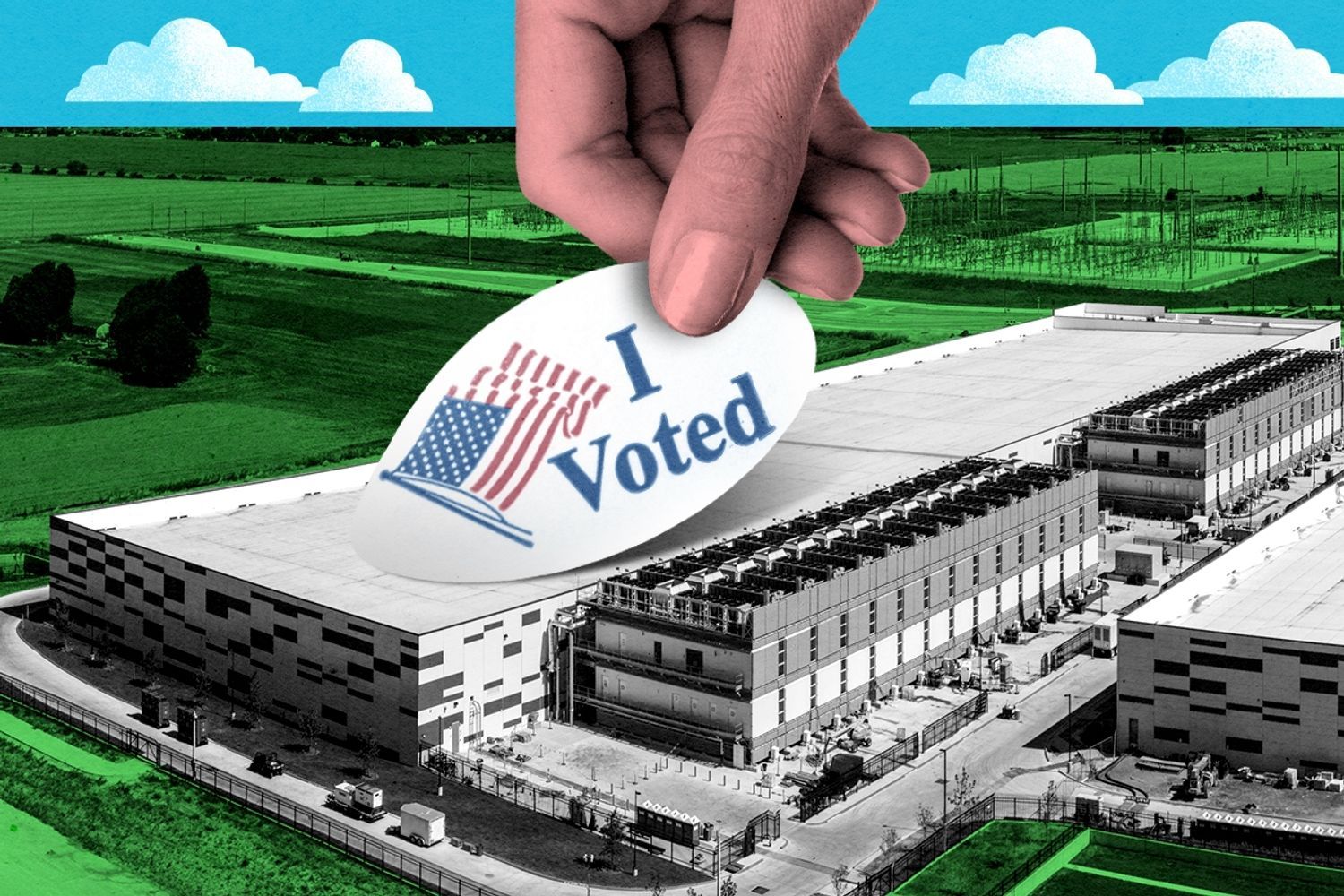
We’ve seen enough: If this was the data center election, it was a really bad night for the industry.
Democratic campaigns and their affiliated Super PACs spent bigly on data center-themed attack ads. The ads came in various flavors. Some ads painted a vote for tax cuts as aiding data center developers. Others brought up candidates’ previous support for data centers or stock the candidate may have held in the tech industry or AI infrastructure developers. As Election Day approached, the data center industry sought to bat back claims that their sector’s poor reputation with the electorate would sway the results. People may have soured on their industry, they argued, but people weren’t going to vote based on that position.
Results are still coming in, but so far congressional races heavily featuring these data center attacks are heavily going in Democrats’ favor. In addition, these races have so profoundly shifted that it’ll be challenging for the industry to argue they played no role in the outcome.
Some of the most illustrative examples are obvious. In Georgia, Democrat Keisha Lance Bottoms campaigned on a statewide data center moratorium and won control of the governor’s mansion, becoming the first black woman to ever lead a U.S. state. Similar results in Ohio where Amy Acton flipped party control of the governor’s seat with a campaign that included going hard against data centers. In Pennsylvania, two Democrats who focused on data centers in their races have flipped Republican districts: Scranton mayor Paige Cognetti and firefighter Bob Brooks. In New Jersey, Cape May mayor Zack Mullock rode data center attacks to defeat Rep. Jeff Van Drew, the biggest opponent of the offshore wind industry. In Virginia, Democrat Shannon Taylor rode data center-laden attacks to take control of the Richmond area congressional seat from Rep. Rob Wittman.
If you’re arguing this election was decided by data centers, your best proof point: Democrat Gina Hinojosa has taken control of the governor's mansion in Texas, defeating incumbent Greg Abbott, who’d sought recently to take a hard line against the industry. Hinojosa ran on going further, calling to pass a law completely pausing data center development across one of the industry’s favorite states. She won a decisive victory. So did Democratic Texas Agriculture Commissioner candidate Clayton Tucker, who I explained months ago became one of anti-data center Facebook’s favorite online personalities.
But it makes sense that data centers would matter a lot in Texas, which could be compared to Virginia in terms of their buildout. When you inspect the election results more closely, they tell a more complicated story about the upper boundaries of these data center attacks.
For decades, Greenville and Spartanburg County have been GOP vote strongholds and reliable for both Republican congressional candidates and statewide campaigns. The congressional district gave Donald Trump at least a 20-point cushion in the 2024 presidential election, according to Decision Desk HQ. Last week, I explained for subscribers to The Fight how Courtney McClain, a novice candidate living one mile from a controversial data center proposal, was running against incumbent Rep. William Timmons. I couldn’t find much in the way of online ad spending on either side in this race and it’s never been on the radar of most political observers as a campaign that could somehow flip party control. But the data center debate in Spartanburg County has been immense.
Tonight, Timmons kept his ordinarily ruby red district by slim single digits after running even for most of the night. But this swing was essentially the same as the national margin. And because Timmons didn’t lose, this actually feels like a crucial distinction – data centers were not deciding races themselves in all cases. Democrat Annie Andrews defeated Republican Darlene Graham in a result driven by Democratic overperformance and GOP underperformance in this area, but it’s challenging to tie this result to the data center issue at all. Anything from the economy and the Iran War to Graham’s deceased brother and his baggage could be blamed for this result from this heavily evangelical region.
However, it will be challenging for the data center sector to differentiate themselves from this outcome, especially since a pro-data center Super PAC – Building the Future – publicly waded into the race in support of Graham only to lose. “Darlene Graham’s loss is a black eye for the data center industry,” wrote Teddy Schleifer of The New York Times on election night.
The same story played out in Georgia’s 1st district, which includes the city of Savannah. OpenAI is developing a controversial data center project in Effingham County, northwest of Savannah and the congressional race – which like South Carolina’s 4th had comparatively little spending – has been chock full of data center mudslinging, with the Democrat Amanda Hollowell calling for broader moratoria on development.
Effingham County went for Trump by almost 50 points in 2024. As of this story’s publication, the Republican, Jim Kingston, is winning by a single percentage point with 93% of the vote in. Most of what’s left is in Effington. Should this candidate win, it’s safe to say it’s because voters in this county looked past data centers, or did not link their vote for a national candidate to the local development.
On Election Night, Effingham County formally tabled any decision on the OpenAI data center. So at least on the ground level, people are paying close attention to these results.