GLOBALVARS
TEST TEST TEST
0
Products
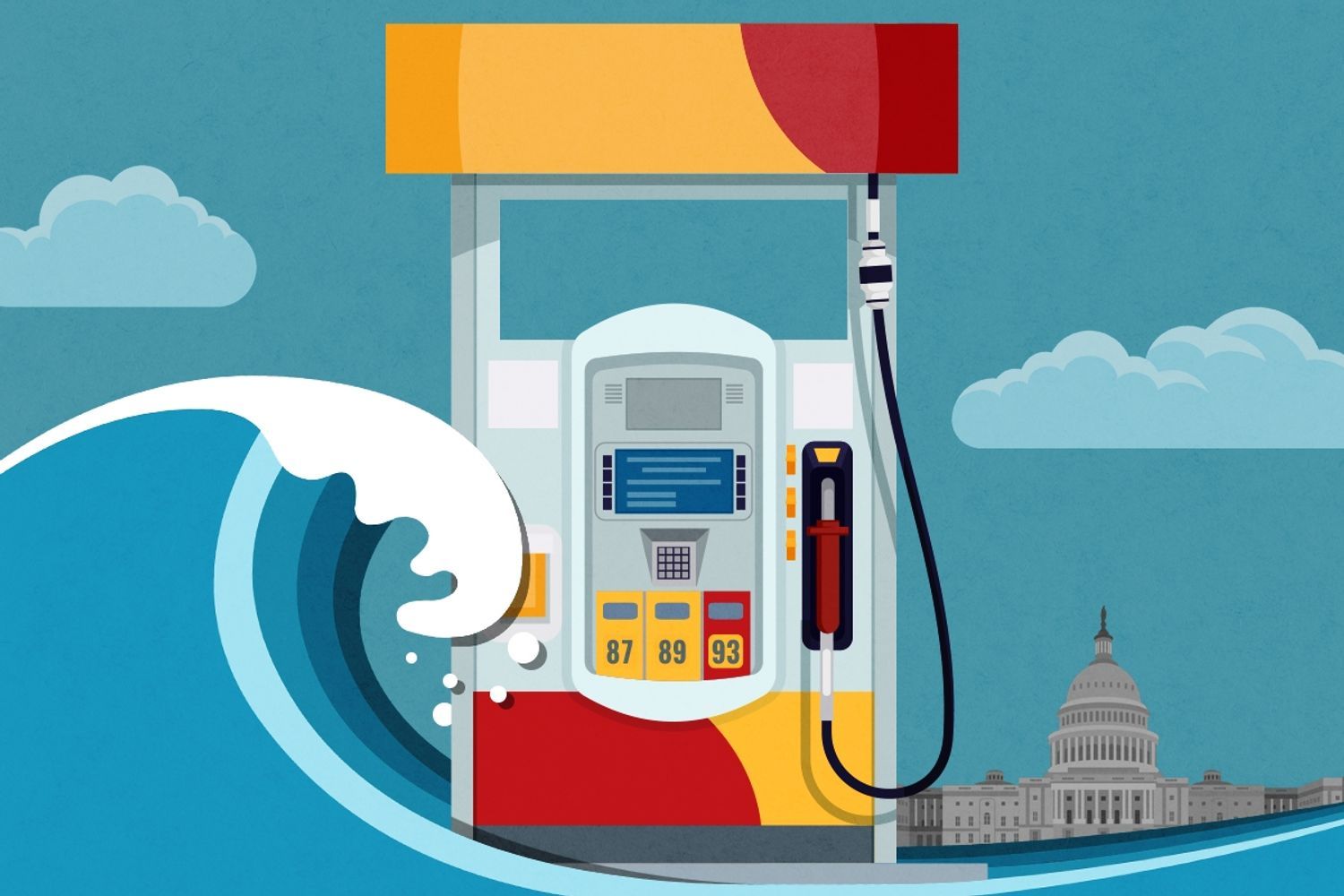
It’s bad when gas prices are high.
This was close to the consensus explanation for the size and scale of the Democratic victory on Tuesday, with even Donald Trump admitting it in his own way, telling Fox News, “We actually have the greatest economy … but because of the gasoline price, people don’t see it as much as they would have without it.”
In exit polls, 87% of respondents told NBC they were somewhat or very concerned about the price of gas and diesel. Annie Andrews, who had perhaps the most shocking Senate win of the night (at least at the time of publication) in South Carolina, called for suspending state and federal taxes on diesel and gasoline.
At first blush, this may seem awkward for advocates who want more aggressive action on climate change. After all, decarbonization requires moving towards electrified mass transit and personal transportation — not lowering gas prices.
But climate groups were happy to point to high gas prices as an explanation for the Republican humiliation at the polls. “Republicans backed Trump at every turn, blocking cheaper clean energy and supporting a war that drove up gas prices. Tonight, that record cost them,” Climate Power President Lori Lodes said in a statement.
And it wasn’t just gas! Scott Colom, who may yet pull off the most shocking upset when all races are called, ran a viral ad slamming his Republican opponent Cindy Hyde-Smith for her suggestion that, in response to high beef prices, Mississippians should realize there are “so many proteins to choose from.” We’re a long way from the notorious Green New Deal factsheet and its lament that “we aren’t sure that we will be able to fully get rid of, for example, emissions from cows.”
For Democrats and climate advocates, the midterm wave is a clear sign that their approach to energy policy — and politics — has been proven out. “This was the affordability election,” Climate Cabinet Executive Director Caroline Spears said in a press call Wednesday. “Utility bills, electricity prices, gas prices, affordability came up over and over and over on the doors.”
Americans’ outrage over high gas and electricity prices provides the perfect opportunity to pivot to advocating for increased deployment of renewable power, the thinking goes. “These are winning issues, and we proved that big time last night, because simultaneously everything we do to get people cheaper energy, we’re also getting them cleaner energy,” former Washington Governor Jay Inslee said on the Climate Cabinet call. “It’s our responsibility and our advantage to add some discussion of climate when we lead with the discussion of cost in these clean energy systems,” he added.
But some Democratic strategists were more cautious, seeing some of the most notable Democratic victories as vindicating a strategy of being more open to the oil and gas industry.
Adam Jentleson, founder and president of the Searchlight Institute, said in a statement that Democrats benefitted from adopting “heterodox” positions, pointing specifically to James Talarico “embracing the fossil fuel industry as critical to the Texas economy.” Bobby Pulido, another victorious Texas Democrat supported by Searchlight, has defended the oil and gas industry as a major job provider in his South Texas district.
“Voters gave us a mandate to focus on affordability,” Jentleson told me. “There are things we can do that tackle both carbon emissions and affordability, starting with permitting reform. Let’s focus on those priorities.”
While Democrats on the trail spoke little about decarbonizing the electric grid by 2035 or reaching net zero by 2050, all the happy talk in the world about how “cheap is clean and clean is cheap” won’t resolve real conflicts and tradeoffs when it comes to energy and fossil fuels. The Bipartisan American Affordability and Jobs Act, which several analysts say will lower energy costs compared to the baseline, has already split the Democratic Party — with the main line of criticism being that it’s too friendly to fossil fuel projects.
Climate advocates are convinced they can turn dissatisfaction with expensive gasoline into support for non-emitting alternatives powered by renewable energy. Any new Democratic administration would immediately face pressure to not just support renewables deployment, but also to restrict oil and gas exploration and production and the construction of new fossil fuel infrastructure, thus potentially raising prices and hurting the domestic industry.
In short, “cheap is clean and clean is cheap” isn’t an axiom, but an argument that needs to be won.