GLOBALVARS
TEST TEST TEST
0
Products
Current conditions: The Pacific’s highly active hurricane season just came to an end with a record 25 named storms and 11 major hurricanes • Following a wet, wintry weekend, the U.S. Northeast is poised for a dry, sunny rest of the week • Hong Kong is under a severe fire warning.
THE TOP FIVE
1. Hydropower is drying up in the American West
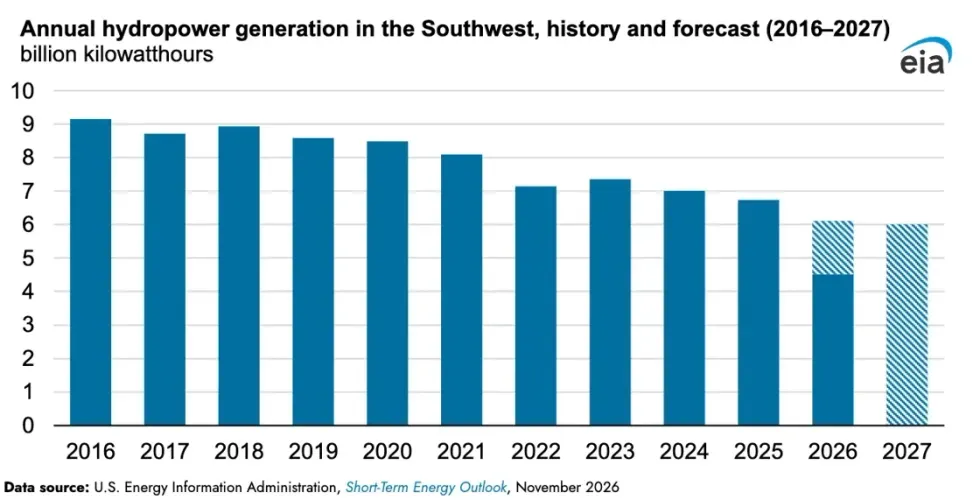
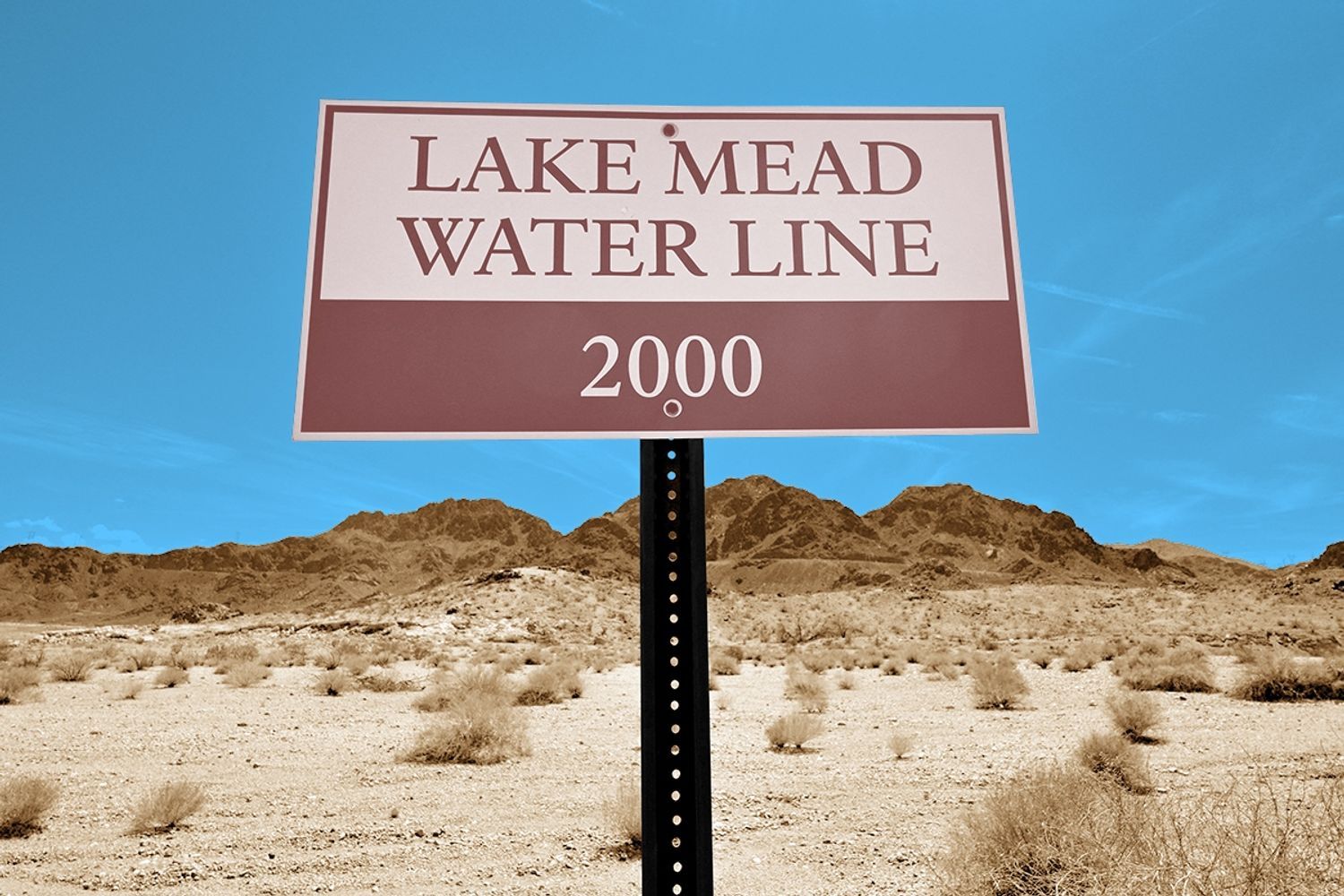
Hydropower generation in the American Southwest fell to a record low this summer as prolonged drought conditions in the Colorado River Basin sent water levels throughout the reservoir system plunging. Electricity output from the hydropower dams fell 19% below the same period last year and 28% beneath the 10-year average, according to a new analysis by the U.S. Energy Information Administration. At the end of September, water levels at Lake Powell and Lake Mead were within a single-digit percentage above the minimum needed for power production at the Glen Canyon and Hoover dams. In total, the agency’s researchers expected hydropower generation to end the year 9% lower than last year and 24% below the 10-year average. Next year is forecast to be slightly worse.
2. Amazon throws Fermi a lifeline
Amazon is the secret buyer of 600 megawatts of computing capacity from Fermi America, the troubled startup promising to build a Texas data center complex powered by a series of large nuclear reactors. Fresh chaos engulfed the company’s board of directors earlier this month, throwing founder and former Texas Governor Rick Perry’s role into question. Then last Thursday, the company announced that it had struck a 600-megawatt deal with an unnamed hyperscaler. The Financial Times reported that Amazon was the mystery counterparty behind the arrangement seen to salvage the megaproject.
3. Exxon greenlights its largest offshore drilling field in Guyana
American oil majors hit big when they gambled on drilling off the coast of what was previously one of the western hemisphere’s poorest nations. I have written frequently about the patches oil companies are betting on next, including Trinidad and Tobago, Mozambique, and Newfoundland. But the most obvious place to expand is where the crude is already flowing. Exxon Mobil last week made the final investment decision for its Longtail offshore development in Guyana, with plans to start producing in 2030. The project marks Exxon Mobil’s eighth in Guyana, according to Offshore Energy.
“Guyana is home to one of the world’s most prolific energy developments, and Longtail represents the next phase in realizing the full potential of its resources,” Dan Ammann, the president of the Exxon Mobil Upstream Company, told the trade publication.
Sign up to receive Heatmap AM in your inbox every morning:
Email Address *Our Privacy Policy & Terms Apply.
4. Canada inks a deal to potentially sell Turkey a CANDU
Canada is looking to get its nuclear mojo back. Its flagship reactor project in Canada is behind schedule and over budget, as I told you last week, all to prove out an American-Japanese small modular reactor that might not work. Meanwhile, the company behind the country’s homegrown reactor, the CANDU, is competing against the U.S. and China to help Singapore expand its nuclear industry, and has inked its first deal to come to the U.S. Now the developer with exclusive rights to the publicly-owned technology has brokered a deal to potentially sell a CANDU to Turkey, which is hosting the United Nations climate summit and seeking a vendor to build its second nuclear power station after the Russians complete work on its first. NucNet reported that Turkey is now officially in talks with Ottawa about studying the CANDU’s feasibility.
5. Ireland’s data center tees up a legal test
Ireland infamously lacked paved roads in many places when the tech industry first arrived on its shores. Today the country’s tax haven status has transformed it into a hub for an industry that has, in recent years, sought to take advantage of the European nation’s temperate weather and sparse population to build out data centers. Irish regulators responded to the boom by requiring data centers to build their own on-site power generation or battery systems and run on 80% renewable energy after six years. But green groups accused the officials in court of violating European law by trapping Ireland in decades of greenhouse gas emissions in allowing data center construction to move forward, Bloomberg reported. The case will get its first hearing this week.
THE KICKER
It looks just like a squat version of a private jet. But rather than two roaring jet engines on either side of the fuselage, the red aircraft features five spinning engines. China’s COMAC CE-25A, a 19-seat battery-electric commuter plane, flew with a crew for the first time on Saturday in Binzhou, Shandong, Electrek reported, marking a landmark in autonomous flight. The plane had already completed 19 autonomous flights, but this was its first with a two-member crew.