GLOBALVARS
TEST TEST TEST
0
Products

The rise in household electricity costs over the past couple of years followed elected officials to the ballot box last week. But the pattern didn't hold evenly: Congressional seats flipped most often in states where bills rose fastest, while governors and regulators, the officials closest to rate decisions, were judged on very different terms.
No analysis can account for exactly why someone voted the way they did. Still, polling just before and after the election has made clear that soaring utility bills and the cost of living were at the forefront of voters’ minds. It’s easy to imagine that a South Carolina voter who backed Trump in 2024 and is now paying about $20 per month more for electricity might have been more inclined to vote for Annie Andrews for Senate than the president’s pick, Darline Graham. While we can’t yet make a causal claim about how increases in voters’ average monthly bills influenced their decisions, we can look at where bills rose and where seats changed hands.
To do that, we use data from Heatmap and MIT’s Electricity Price Hub to unpack the correlation between rising electricity bills under the second Trump administration and the electoral swings of this year’s midterms. Nationally, average electricity bills are up 10% since the start of the Trump administration. Meanwhile, the House popular vote swung 15 points toward Democrats compared to 2024’s presidential results, according to data from The New York Times.
A swing that size would have flipped many seats regardless of bills. The more telling question is whether seats flipped beyond what the swing predicts. Among seats where the incumbent party was vulnerable (those won by less than 15 points in 2024), states with above-average bill growth matched or exceeded the expected losses. States with below-average growth flipped fewer seats than a uniform 15-point swing would predict.
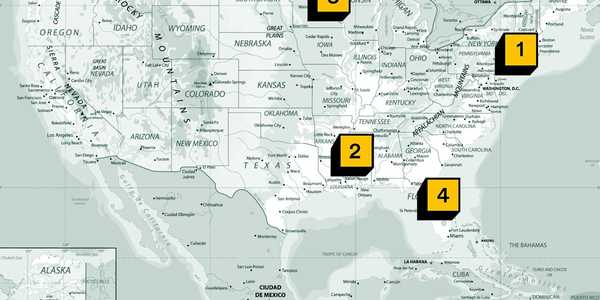
Further, nearly two-thirds of the 44 House seats Democrats flipped were in states where the average electricity bill grew faster than the national average over the past year, and one in five were in states where bill growth was double the national average. If Democrats flip the Senate seat in Alaska, then seven out of the nine Democratic pickups in the Senate will be in states with above national average one-year bill growth.
States with fast-rising bills differ in other ways, from their mix of competitive seats to their exposure to broader economic trends. Our bill growth figures are also statewide averages, and bills can vary widely within a state. The overall trend is in line with expectations, but the relationship between rising bills and electoral outcomes goes deeper.
Elections for governor or other statewide positions are historically less nationalized than their federal counterparts. That makes them a weaker test of national frustration with bills, but allows for additional analysis on how local conditions shape voters’ choices.
State races are not fully isolated from national trends. The Blue Tsunami flipped five gubernatorial seats, with zero pickups in the reverse direction so far. (Alaska is still undecided.) But those flips weren't concentrated in high-growth states. Three of the five (Georgia, Iowa, and Texas) came in states with some of the lowest bill growth over the past year. Meanwhile, the incumbent party held governorships in high-growth states at a higher rate than the national environment would predict, though Alaska could affect these results.
A few moderate Republican governors even held on in otherwise blue states. Incumbency certainly played a part, but the holds also demonstrate where voters targeted their backlash. In the Northeast, New Hampshire re-elected Governor Kelly Ayotte by four points, despite the Democratic Senate candidate carrying the state by 14 points. Vermont voters re-elected Phil Scott by six points. Both states had double-digit bill growth since President Trump took office, with average bills increasing by 18% and 15%, respectively.
On the other end, Democratic candidate Rob Sand flipped an open governorship in Iowa, outperforming the Democratic Senate candidate on the ballot. Statewide average bills in Iowa have grown at some of the slowest rates nationally; however growth rates vary across the state. Governor-elect Sand ran furthest ahead of his party’s Senate candidate in counties where bills rose the most.
The lessons of state-level races are less clear than federal ones. In states with popular incumbents, affordability backlash may have focused on a Republican-controlled Congress, while voters most affected by rising costs within a state sought new leadership in their state capital.

Another set of key players in electricity affordability, state energy regulators, were also on the ballot in these midterm elections. The general election mostly spared these races from the anti-incumbent party fervor, with only one state out of nine (Georgia) flipping control of their commission. These races, which were in more predominantly Republican states, largely followed partisan voting shares of other races in these states, with the greatest fervor around unseating establishment officials occurring during the primaries or last year’s off-cycle elections. That is not the end of the story, however: Utility commissioners are appointed, rather than elected, in most states, meaning there is more turnover to come.
The lack of electoral backlash toward the regulators who sign off on rate increases may indicate a lack of voter awareness of how different policymakers influence their bill. It may also highlight how national coverage has focused on rising generation costs, such as the Mid-Atlantic’s capacity cost spike, which pushes greater blame towards federal officials than state regulators that have less purview over generation prices that pass through to residential customers.
Utility costs alone didn’t produce this year’s Democratic wave, and the data can’t tell us precisely how much they contributed. But a below-the-hood look at the data shows a consistent pattern: the party broadly in power in Washington lost the most ground where bills rose fastest, while governors and regulators were judged on local circumstances, from incumbency to long-running rate fights. With new majorities in both chambers and rate cases pointing to more increases, there is an opportunity for this new Congress to meet voters’ demands and bring costs down.